Despite rich LGBTQ+ history, Detroit doesn't have a single lesbian bar

Add Axios as your preferred source to
see more of our stories on Google.
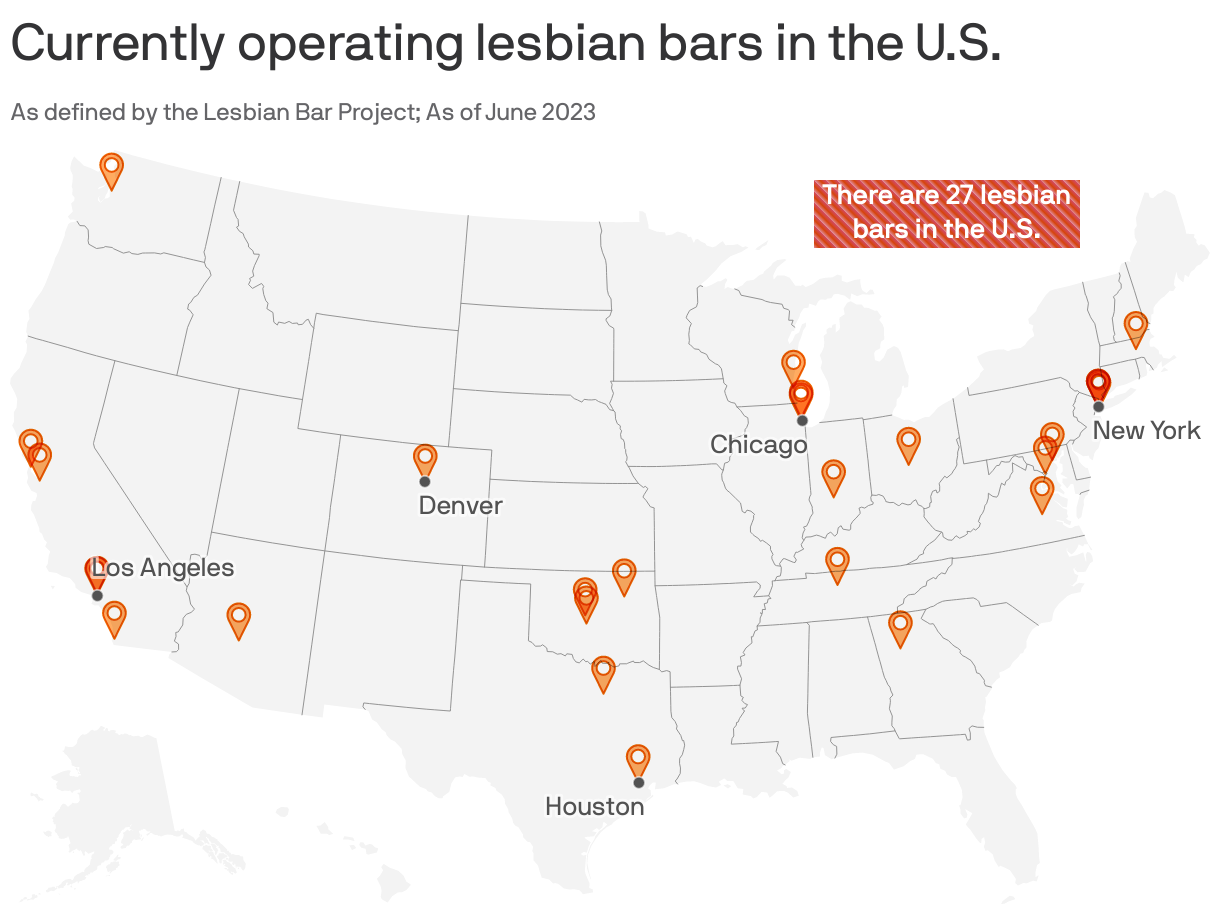
Dasia Werts feels called to action when thinking about the estimated fewer than 30 lesbian bars left in the U.S. — and zero in Detroit.
- "We need a space where we can come in and feel like, 'This is for us,'" Werts, a local drag king who's part of the city's lesbian community, tells Axios.
Why it matters: America's lesbian bars have been on a steady decline since the 1980s when there were around 200, per the Lesbian Bar Project (LBP), which documents the few remaining spaces focused on queer women, trans and nonbinary people.
- The change concerns members of these communities like Werts, who helps combat the lack of permanent spaces here by hosting lesbian-centric events like speed dating and drag brunch.
- Metro Detroit has several LGBTQ+ bars, but the closest lesbian bar is Slammers, a 30-year-old mainstay that's 200 miles away in Columbus, Ohio.
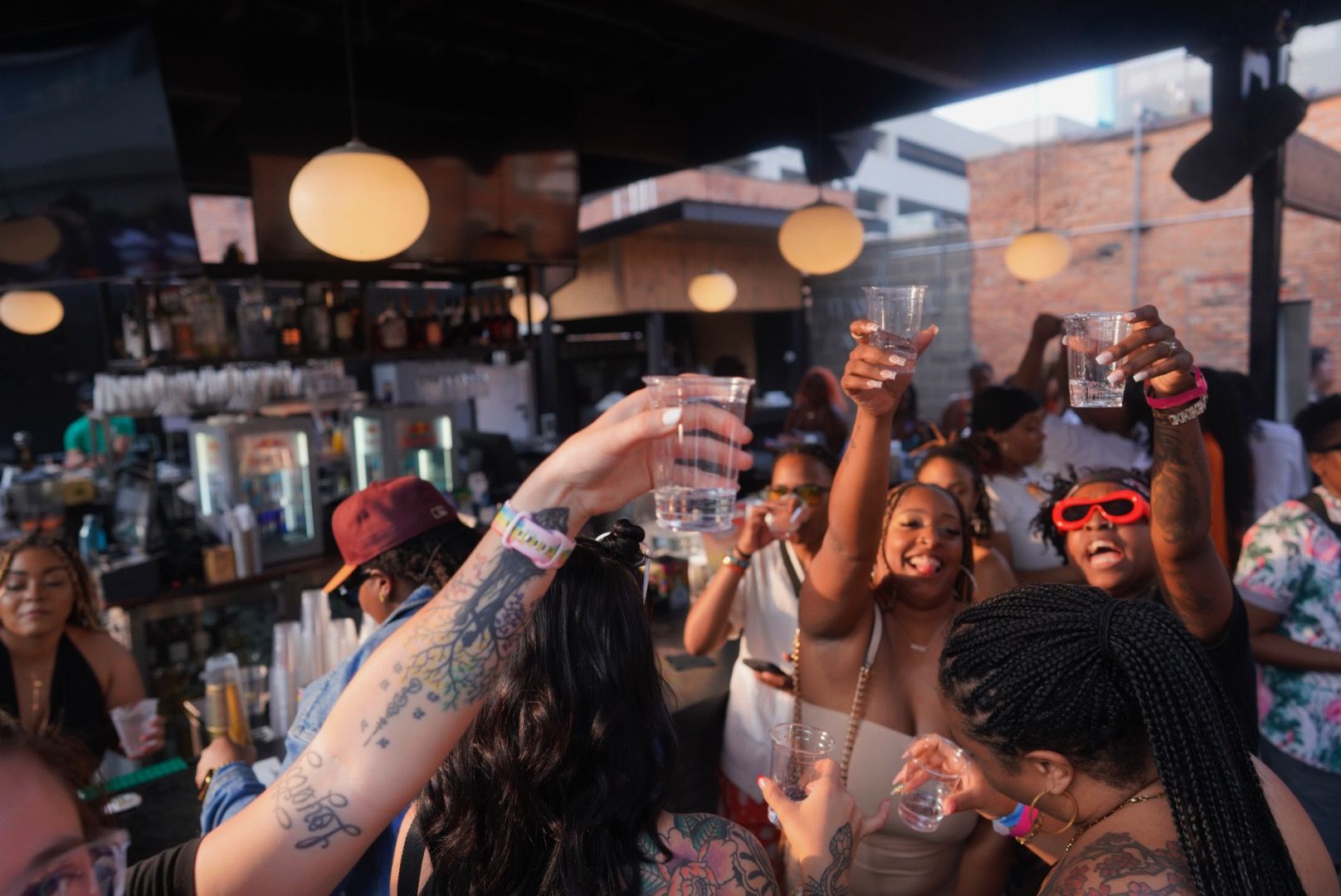
State of play: These physical spaces historically provided connection away from wider prejudice. Community members say that space for authenticity is still needed.
- "What I've noticed in the city of Detroit is that we're kind of scattered," says Chelcea Stowers, founder of pop-up event organization Lesbian Social Detroit.
- Stowers says creative alternatives like pop-ups keep the scene "fresh" and have been gaining steam. Those include Lesbian Social and another pop-up, Litty Committee, which host hangouts and rooftop bar parties. Lesbian Social's big Pride block party last year drew 800 people.
The big picture: Many factors are behind the drop in lesbian bars in the U.S., including growing online communities, a desire for inclusivity with other LGBTQ+ populations and gentrification.
- Over recent decades, growing acceptance also led to less of a need for these bars — a trend now challenged by parts of the country's increasing anti-LGBTQ+ sentiment.
- Historically, many lesbian bars also excluded women of color and transgender people, and some of those spaces either lost relevance or evolved to a more inclusive clientele.
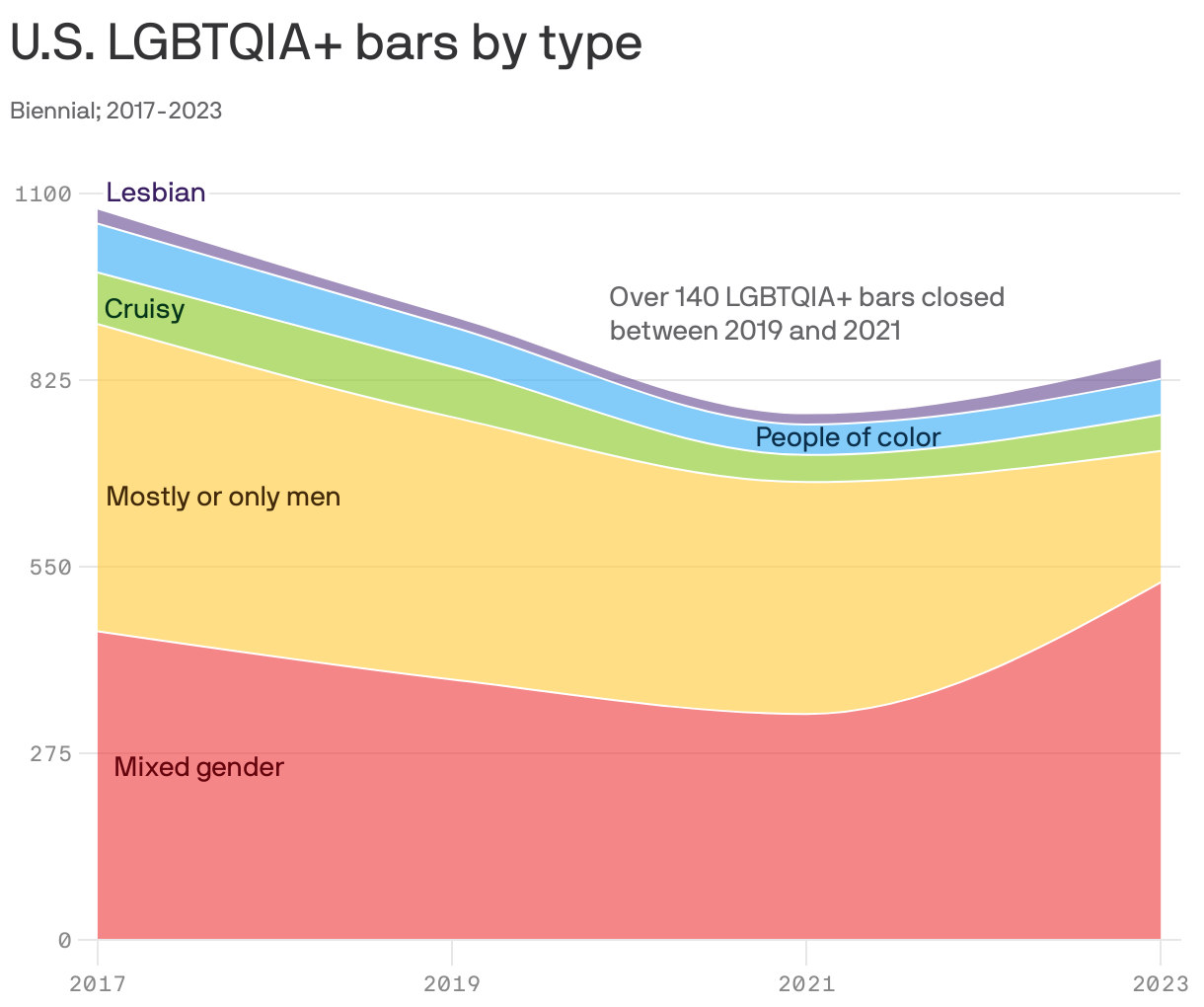
Context: The total number of queer bars in the U.S. fell 37% between 2007 and 2019, from 1,357 to 860, per research from Oberlin College based on business listings.
- The number of lesbian bars has always been smaller but still dropped a greater amount in that time period: 52%, from 31 down to 15.
- Then, between 2019 and 2023, lesbian bars doubled from a 1.7% share of total LGBTQ+ bars to 3.6%, per the same researcher.
Of note: The LBP and Oberlin figures are estimates, as watering holes open and close constantly and the definition of "lesbian bar" can be gray.
- Plus, many of these spaces have changed over time as language to describe LGBTQ+ identity has evolved.
What's next: "I see the scene getting bigger," says Stowers, who wants to build a place like the community's "neighborhood 'Cheers' bar" that's part of a larger queer district.
- "We should be able to take up space," Stowers says.
A snapshot of the past
Though Detroit no longer has lesbian bars, it still has a rich LGBTQ+ history.
Flashback: The metro saw an "explosion" of queer bars in the late 1960s through the mid-1980s, LGBTQ+ historian and MSU adjunct professor Tim Retzloff tells Axios.
- By 1985 there were about four dozen in the city and a couple in the suburbs. Of those, somewhere around five would have been primarily women's bars.
- "They could be expensive to operate, that's part of why there have traditionally been fewer lesbian bars and certainly fewer bars for people of color," he says.
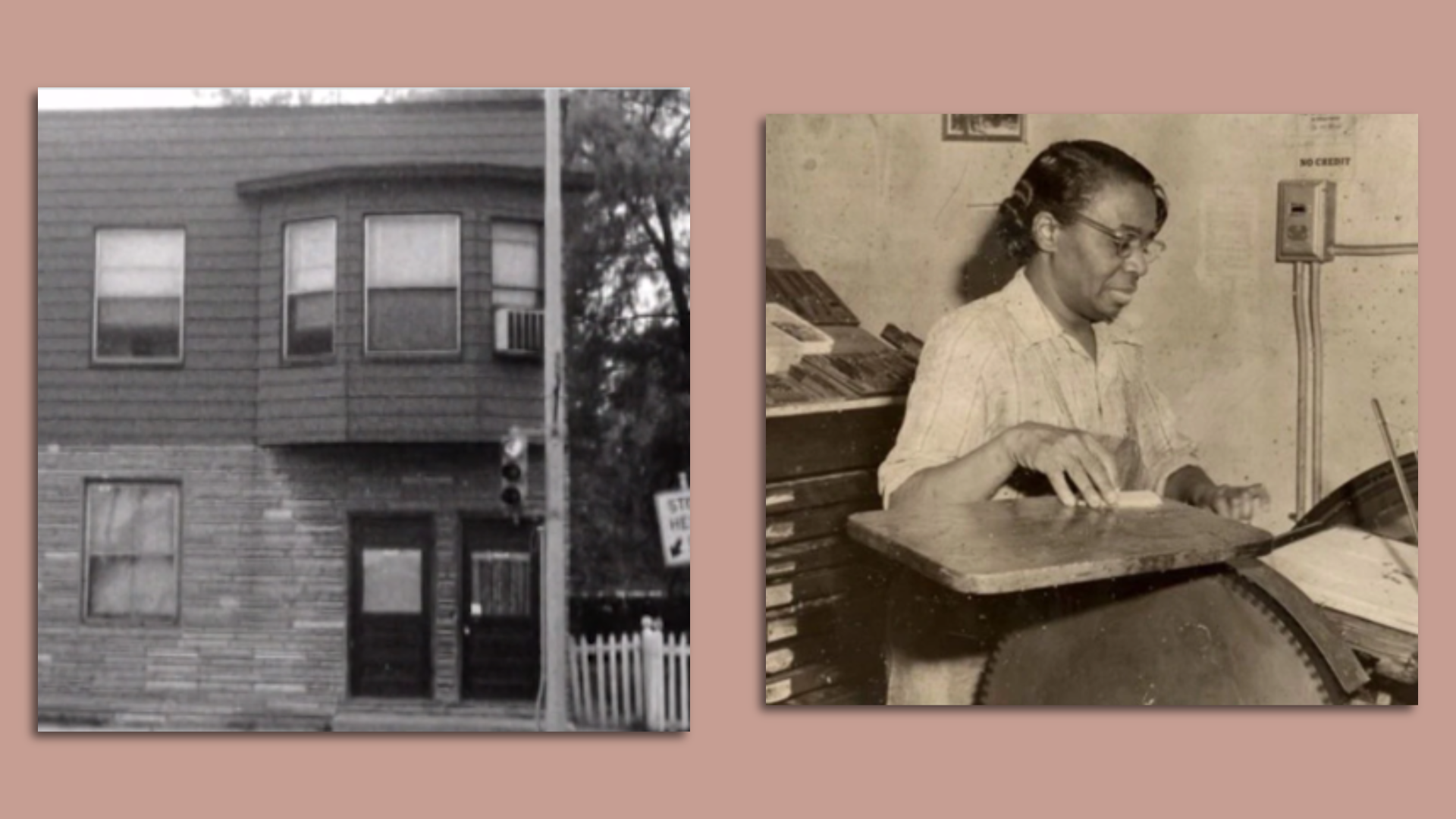
Zoom in: One of the earliest spaces that provided queer connection was the home of late LGBTQ+ activist Ruth Ellis, which became the city's primary safe hangout in the 1940s-60s for Black gays and lesbians who weren't welcomed at white gay bars.
- The famous activist died in 2000 at the age of 101.
One notable local bar that stayed open for more than two decades was The Palais, which opened in 1949 in the space that's now the Detroiter Bar. It catered to white working-class lesbians, researcher Roey Thorpe wrote.
- Patrons would put money into a glass and when it got filled, the bartender would host a picnic in a park.
- The picnics were much more public than going to a gay bar, so attending "required courage and mutual support … the threat of violence was very real," per Thorpe's essay.
Between the lines: The region's last known specifically lesbian bars were Stiletto's in Inkster, which closed around the mid-2010s, and Pink on Detroit's east side, which opened in 2006 and closed several years later.
- The owner of both, Alana Faulk, wanted to create a space for lesbians every night of the week — not just once a week or month, per local LGBTQ+ publication PrideSource.