Dallas heat islands can be 12 degrees hotter than other neighborhoods

Add Axios as your preferred source to
see more of our stories on Google.
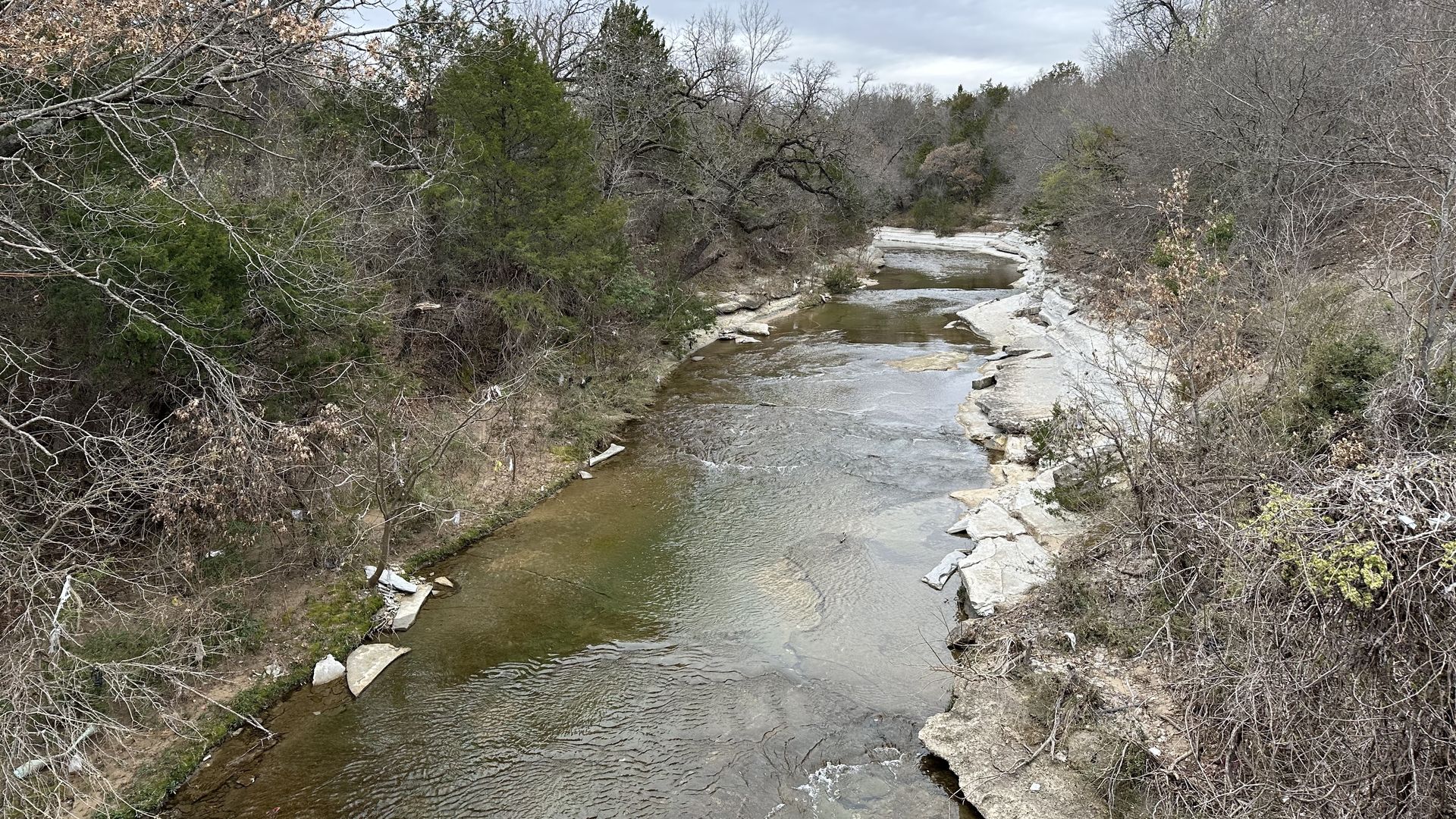
Not all of Dallas is concrete and high-rises. Nature, like Five Mile Creek, is tucked in there too. Photo: Tasha Tsiaperas/Axios
The average temperature in Dallas-Fort Worth was nearly 6 degrees warmer than normal last month, per the National Weather Service, but some neighborhoods likely felt much hotter.
Why it matters: Dallas has mapped its heat islands for two years now, helping city planners determine which neighborhoods need more trees.
- Concrete urban settings can make a hot day feel worse, while tree-lined streets and less concrete can have a cooling effect.
The big picture: Urban heat islands are a problem nationwide, but the burden isn't equally shared. Historically segregated neighborhoods tend to experience higher temperatures than white communities.
- Researchers have released reports illustrating heat disparity in other U.S. cities this year, including Charlotte, North Carolina, and Santa Fe, New Mexico.
Driving the news: Lush green space in Dallas was about 12 degrees cooler than the hottest parts of town on Aug. 10, 2024, when the temperature reached 101 degrees.
- An updated joint study by the City of Dallas and the National Oceanic and Atmospheric Administration has now mapped 350 square miles of the city over two years to identify the hottest neighborhoods.
What they found: Built-up areas around highways and major roads stayed hot throughout the day, whereas neighborhoods near preserved land with a lot of trees on their streets stayed cooler.
- The difference can be seen in North Oak Cliff, where Bishop Arts was hotter than the neighborhood around nearby Stevens Park.
- Downtown, Oak Lawn, the Harwood area, West Dallas and Love Field are among the hottest areas.
The intrigue: Some Dallas neighborhoods can be in the low 70s at 6am while hotter neighborhoods start the day above 82 degrees.
Threat level: Even with reduced emissions, researchers write, temperatures are still expected to rise in the coming decades.
- With high emissions, the average daily maximum temperature could increase 4 degrees by the 2060s. Even with low emissions, the temperature could rise 2 degrees.
- Dallas County could see 10 more days a year with a high over 90 degrees within 20 years.
The bottom line: City leaders plan to use the data to plant more trees in neighborhoods that have been identified as heat islands.
- The city is already prioritizing adding park space to give every resident access to greenspace within a short walk from their home.
Go deeper: See how hot your neighborhood is.