Most of Dallas lives on an urban heat island

Add Axios as your preferred source to
see more of our stories on Google.
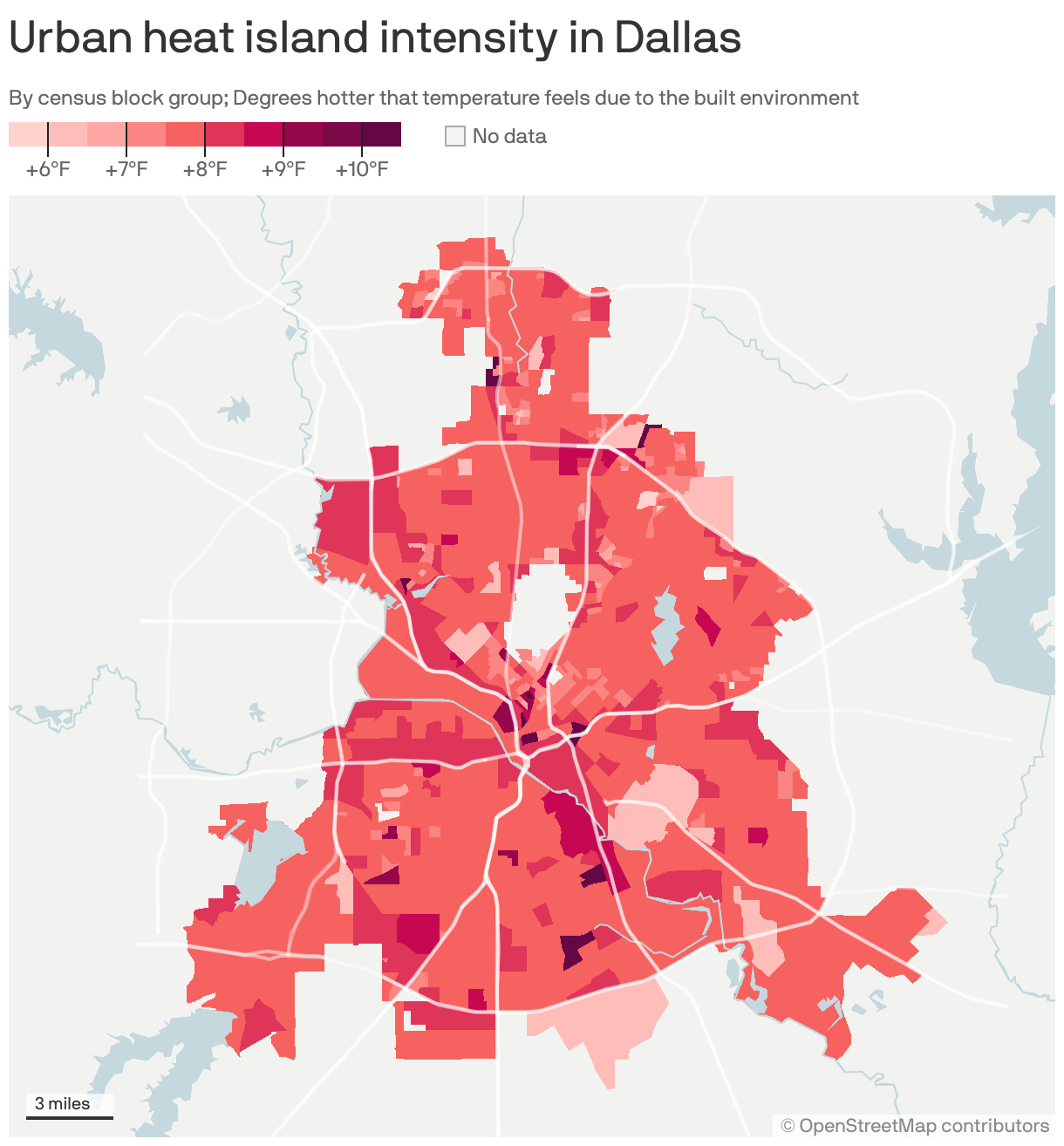
Dallas is one of six U.S. cities where at least 1 million people are exposed to urban heat islands, parts of town where temperatures feel at least 8 degrees warmer than in parks or wooded parts of the city.
Why it matters: City leaders are investigating which Dallas neighborhoods are the hottest to see where more trees should be planted.
- Concrete urban settings can exacerbate an already hot day, while trees and vegetation have a cooling effect.
What they found: Urban heat islands increase the temperatures in 65 major U.S. cities home to 15% of the national population, Climate Central researchers shared in a recent analysis.
- That heat burden isn't equally shared. A study from Columbia University found that historically segregated neighborhoods experience higher temperatures compared to traditionally white areas.
- In Dallas, 81% of the population resides in areas with an urban heat index 8 degrees hotter than shaded parts of the city.
Of note: The Climate Central analysis only focused on Dallas and did not include other cities in the region, including Fort Worth.
Zoom out: In San Antonio, 88% of people are in areas with an urban heat index 8 degrees higher due to the built environment. This percentage places the city fifth among other cities in the analysis, trailing Detroit.
The intrigue: What keeps us cool is making the outdoors hotter. Air conditioning can add 20% more heat outside, per the Climate Central report.
How to cool: Cities can lower temperatures by planting "green roofs" with gardens or other foliage and adding trees, especially along streets.