How Intel's $20 billion Ohio One project is reshaping the Columbus region


Add Axios as your preferred source to
see more of our stories on Google.

Illustration: Allie Carl/Axios
Cranes line the horizon, over a billion pounds of earth have shifted and miles of new roadways are beginning to crisscross the countryside.
Why it matters: It's hard to comprehend the magnitude of Intel's developing Ohio One semiconductor plant in rural Licking County — and how the massive transformation for our region extends well beyond that construction site.
State of play: Ohio beat out 39 other states for the $20 billion project, the largest private investment in state history, announced two years ago this week.
- It's set to create 7,000 construction jobs and 3,000 permanent jobs, with room for expansion, alongside additional tech-related investments from other businesses.
- President Biden champions the Silicon Heartland as a valuable investment in a U.S. future that forgoes offshore manufacturing of the fingernail-sized computer chips inside our everyday electronics.
![[ Insert title here ]](https://datawrapper.dwcdn.net/fbuvl/full.png)
Zoom in: The semiconductor industry is brand new for our area, notes Jennifer Chrysler, community development director for New Albany, where the site is located.
- Alongside new infrastructure like roads and sewers, that means building codes and training programs must also be built from the ground up.
- There's even talk of the plant spurring passenger rail to service it.
What they're saying: "Landing this project really started a cascade of opportunity," Chrysler tells Axios. "Our mayor keeps saying this is an opportunity for our kids to come home after college if they're interested in this field."
Yes, but: The project may also bring challenges as Central Ohio grapples with a housing crisis, some nearby residents question the site's environmental impacts and schools brace for explosive growth.
- The nearby Johnstown-Monroe district, with about 1,700 students, is hoping to cap enrollment at 4,600 and is already planning for the eventual replacement of its high school, superintendent Philip H. Wagner tells Axios.
- Plus: Policy Matters Ohio, a left-leaning think tank, says the public incentives deal is too corporate-friendly.
Meanwhile, Intel has pledged $50 million in statewide education efforts, says it invests in renewable energy, and patronizes community events, such as its sponsorship of an interactive STEM area for kids at last year's state fair.
What's next: New Albany's infrastructure projects are 60% finished and expected to be completed next year, Chrysler says.
- Production at Intel's first two factories is slated to begin in 2025.
What we're watching: Intel made a similar investment in the Phoenix area (more on that below) 44 years ago and continues to grow with the metro area, offering us a snapshot of what we might expect for Columbus' long-term future.
- "It's not just one and done. … There are always ongoing projects," Micah Miranda, economic development director for Chandler, a suburb with two Intel campuses, tells Axios.
Details: The company, which has about 13,000 employees in Arizona, reports its annual economic impact there is $8.6 billion. A $20 billion expansion is currently in the works.
- For each local Intel job, it's estimated another four jobs are created, from realtors to accountants and suppliers, Miranda says.
- Another semiconductor manufacturer, Taiwan's TSMC, is also coming to town now.
The bottom line: "It's hard to wrap your brain around that level of impact," Miranda says.
Training future tech workers

In another sign of progress, Columbus State Community College last week launched its new semiconductor program that fast-tracks industry skills education.
What's happening: Created with input and funding from Intel, the Semiconductor Fundamentals certification program prepares entry-level workers in just two semesters, or 21 credit hours.
- Students can then enter the workforce or earn an electro-mechanical engineering technician associate degree in another year.
The big picture: Intel awarded $2.8 million to 23 community colleges across Ohio, including Columbus State, to jumpstart such training — part of its promised $50 million higher-ed commitment.
- Before financial aid, the Columbus State program costs about $3,700 total.
- A semiconductor processing technician's median pay is about $45,000 annually, or $21.50 hourly, per federal data.
What they're saying: The goal is "creating an ecosystem" to get Ohioans trained for a new industry, Scot McLemore, the college's executive in residence, tells Axios.
Plus: K-12 districts like Licking Heights are also working on new pathways for students to graduate high school with the skills needed to enter a manufacturing career, a spokesperson says.
What we're watching: It's likely such efforts will evolve with employers' needs.
- In Arizona, three community colleges launched a new "quick start" program in June 2022 to feed the need for entry-level workers amid continued tech expansion. It condenses a three-credit-hour class into two weeks.
- It had a wait list of 600 before the curriculum was even finished and has since graduated 753 people, officials with Chandler-Gilbert Community College tell us.
Intel recruitment, then and now
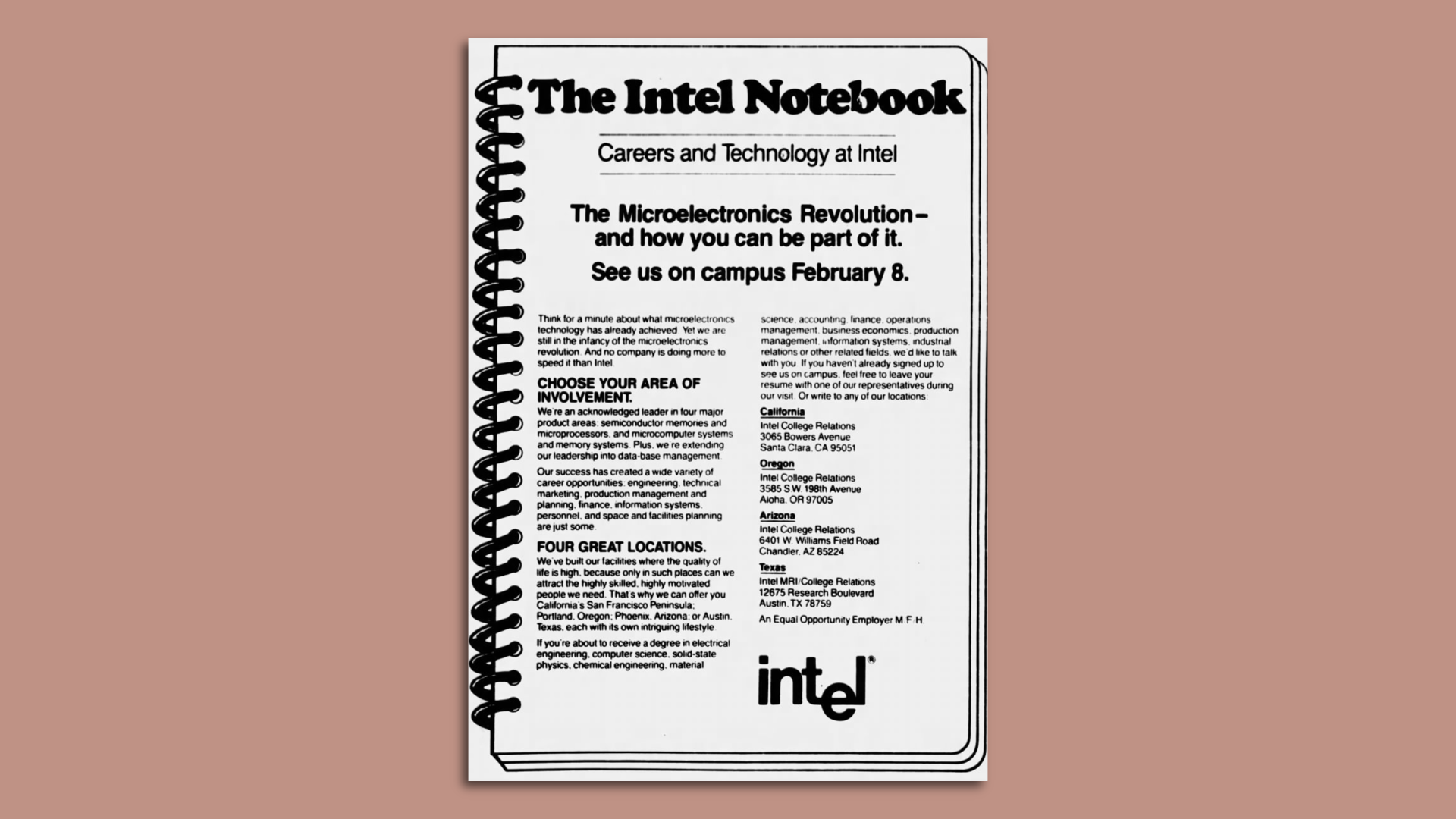
Just as Intel has advanced, so has its recruitment marketing.
- Compare the 1980 newspaper ad seen above with the present-day promo for CSCC's new semiconductor program.

Ohio One, by the numbers
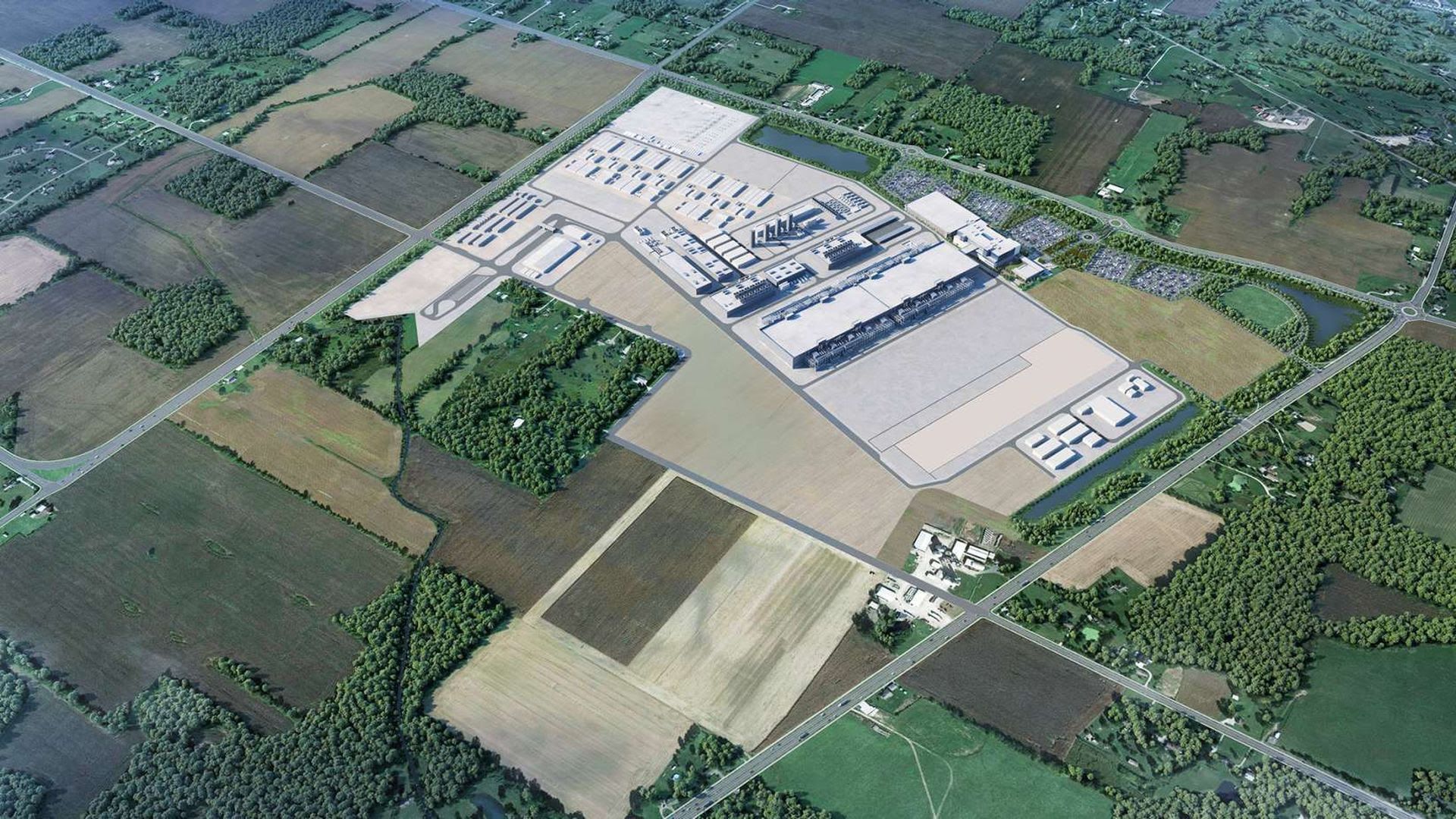
Trying to picture just how big this project is? These stats might help:
⌚ 15½: Hours per day of construction, 5:30am-9pm, six days per week.
💧 20,300: Feet of new water line installed by New Albany (almost 4 miles' worth).
🌎 750,000: Cubic yards of earth moved by New Albany to construct new roadways, or 240 Olympic-sized swimming pools.
🏞 20: Acres of wetland mitigated by Intel to offset construction impact.
💼 24: Intel jobs currently open in Ohio, though the number will spike as construction nears completion.
📆 1,805: Days Intel has left to fulfill its investment and jobs promises, in order to secure Ohio's $600 million "onshoring" grant.
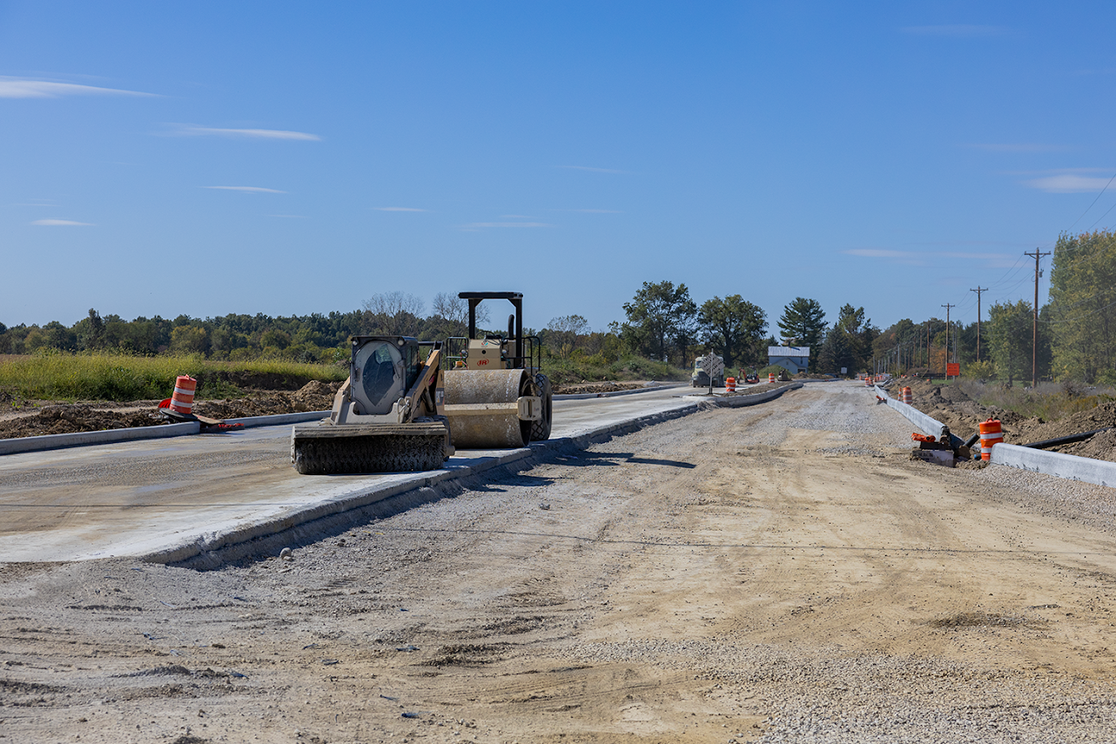
Intel insights from Axios Phoenix
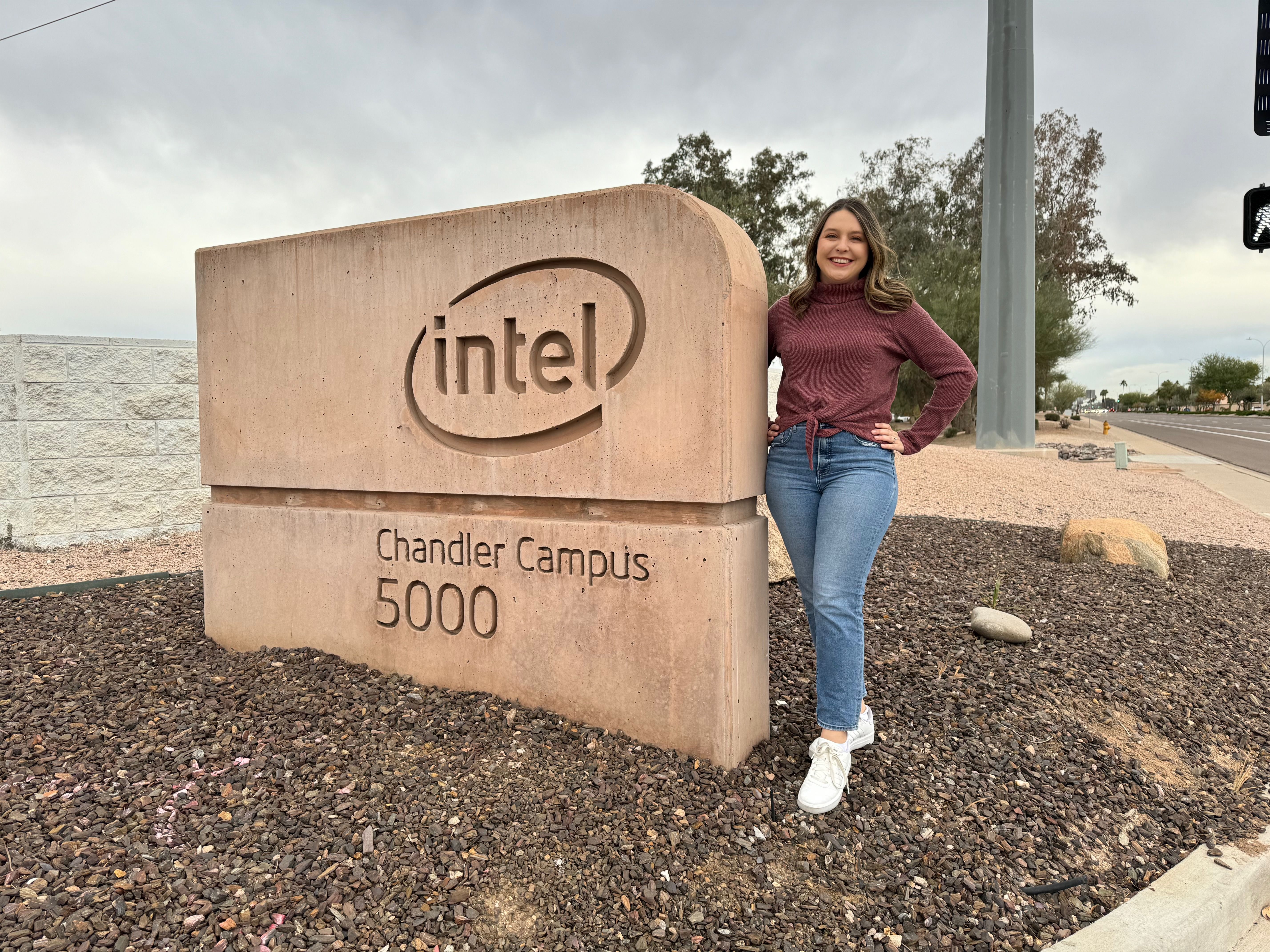
👋 Axios Phoenix co-author Jessica Boehm here.
- I grew up across the street from Arizona's original Intel fab in Chandler, a suburb about the same distance from Phoenix as Ohio One is to downtown Columbus.
- I've seen firsthand the impact the company made on our once sleepy, agricultural suburb.
The big picture: When Intel came in 1980, the city's population had barely cracked 30,000.
- By 2000, it grew to 180,000 and had one of the highest median incomes in metro Phoenix, which local leaders attributed almost exclusively to Intel.
Zoom in: My parents built their house in 1995 when hundreds of new subdivisions were popping up in the 5-mile radius around the fab to accommodate employees and their families.
- Growing up, nearly every one of my friends and neighbors had at least one parent who worked for Intel or, like my dad, at a company that supplied it.
Flash forward: In 1996, the company opened another manufacturing campus farther south. Around it, one of the most affluent neighborhoods in metro Phoenix sprouted from former farmland.
- Today, we're awaiting the campus' next $20 billion expansion.
The bottom line: With its capacity to support up to eight fabs, and its potential to attract additional companies, Columbus residents should buckle up.
- This project is likely just the beginning.