Ohio State's new president talks priorities

Add Axios as your preferred source to
see more of our stories on Google.
Photos: Courtesy of Ohio State University
Ohio State's incoming president, a retired U.S. Navy vice admiral, says he's ready to begin "steadying the ship" when he takes the helm Jan. 1.
Why it matters: Following former president Kristina M. Johnson's abrupt departure, OSU staff and students and the broader Columbus community are looking to Walter "Ted" Carter Jr. for stable leadership.
Catch up quick: The university announced Carter as its new leader Tuesday afternoon, the same day fall classes started.
- He has been the University of Nebraska system president since 2020 and is a former superintendent of the U.S. Naval Academy.
- Peter Mohler, OSU's executive vice president for research, innovation and knowledge, will serve as acting president until Carter starts.
- The university has been without an acting president since May.
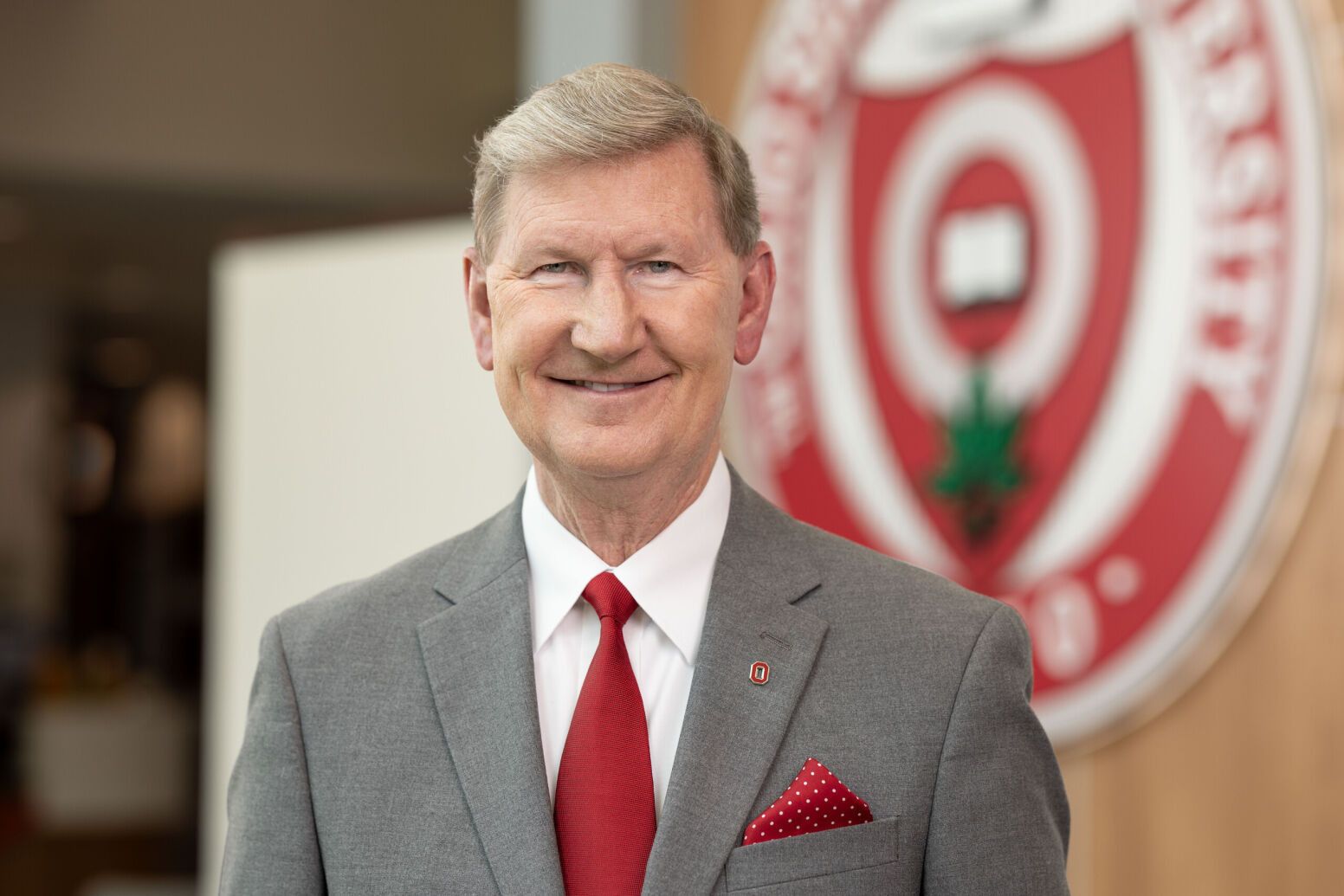
The latest: Carter agreed to a five-year term and $1.1 million in annual base pay, per an offer letter provided to Axios.
- That doesn't include a $250,000 "transition payment" to be paid within his first month, plus annual perks, such as performance bonuses and retirement contributions, that will push his yearly benefits package closer to $2 million.
Fun fact: Carter graduated from the Navy Fighter Weapons School, known as Top Gun — yes, like the movie — and holds the national record for carrier-arrested landings, with over 2,000 mishap-free touchdowns, per a statement from OSU.
What we're watching: How Carter will lead the school and make his mark in Columbus.
Making campus safer
The new president says this is a top priority.
What he's saying: "I know there's been some investments here recently. I promise to take another look at that, and if we need to make further investments to make sure we're doing everything possible, I will do that," he said at a recent news conference.
Hiring a new athletic director
"There's no replacing a legend like Gene Smith," according to Carter, but he's looking forward to working with Smith to assemble a new athletics leadership team before he retires June 30, 2024.
Working with lawmakers
State lawmakers hope to overhaul higher education to ward off perceived left-leaning biases, a proposal OSU generally opposes.
Yes, but: Carter says he's a transparent "straight shooter" who leads in "an apolitical manner."
- He engaged with all 49 of Nebraska's state senators and hopes to have productive dialogues with Ohio's regarding Senate Bill 83.
Stabilizing enrollment
College enrollment has been declining in Ohio and nationwide for years — and it's expected to get worse due to falling birth rates.
- OSU's main campus enrollment has held stable, but enrollment among all campuses declined by about 2,000 students in 2022, WCMH-TV reports.
What's next: Universities must "speak truth to power" about the importance of higher education, while also making degrees more affordable and accessible, Carter says.
Of note: OSU's in-state tuition has been increasing annually for the last several years, up to nearly $13,000 today for incoming first-year students.