CTA eyes tougher fare gates

Add Axios as your preferred source to
see more of our stories on Google.
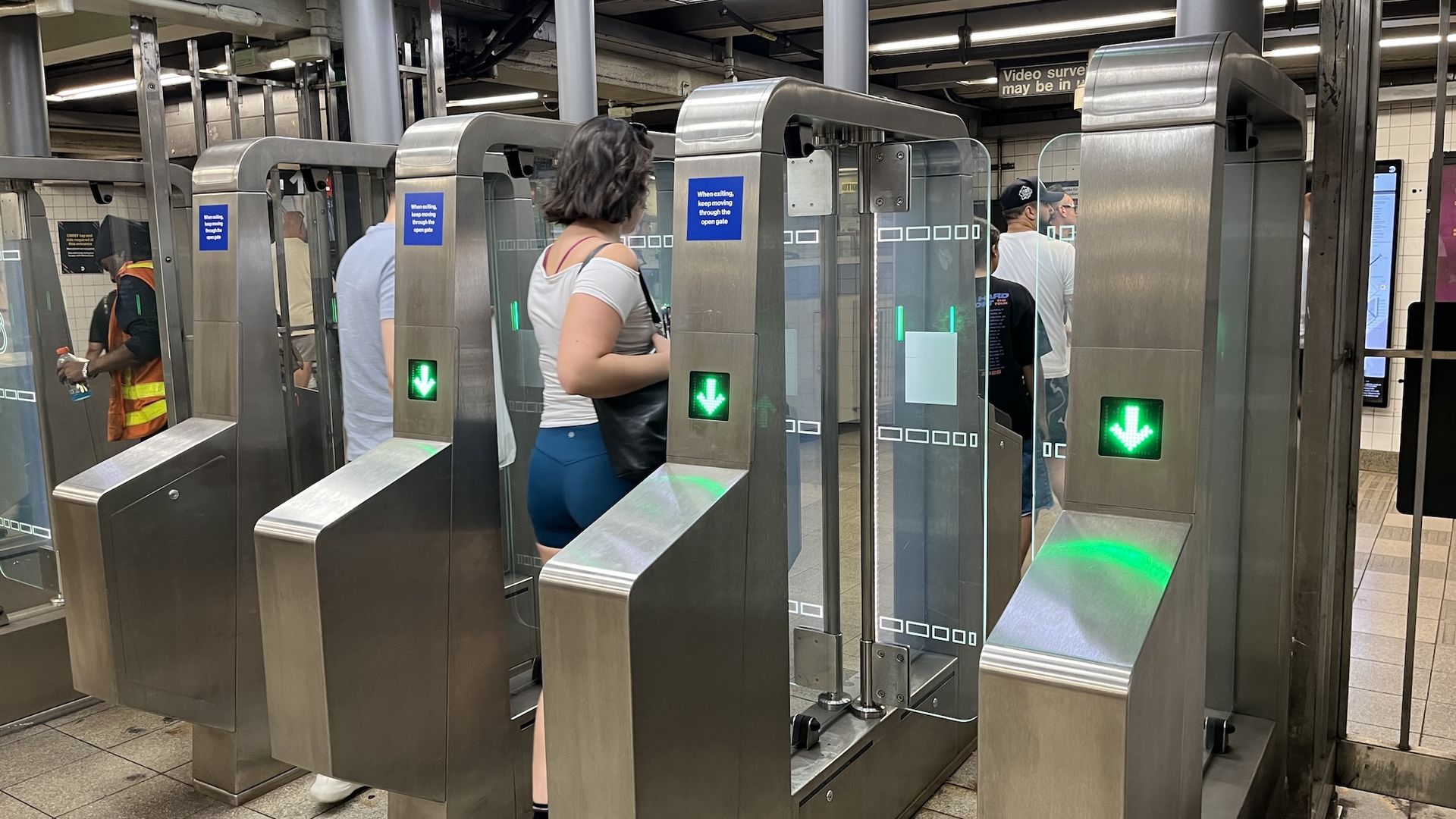
Automated doors at a New York City subway station. Photo: Carrie Shepherd / Axios
The Chicago Transit Authority is looking for modern fare gates that make it harder to skip fares, following similar investments in New York and San Francisco.
Why it matters: New York City, San Francisco and Chicago have all been fighting a post-pandemic uptick in transit-related crime. New entry gates that make it more difficult to skip payment are part of an overall strategy to stop small infractions before they become more serious crimes.
The latest: CTA put out a call this month for proposals on new technology to improve accessibility, address aging infrastructure and deter fare evasion.
By the numbers: The CTA May ridership report, the most recent available, shows that an average of 20,483 daily rides were "underpaid," meaning no fare or less than full fare was paid on trains.
- That number rises to more than 147,000 on buses, but the CTA's call for new tech focuses on train stations.
The big picture: New York City started installing modern fare gates last year as part of a $1.1 billion plan.
- The "paddle doors" open like saloon doors, retracting plexiglass doors on each side to clear a path for entry.
- All of San Francisco's BART stations have the taller fare entry gates, a project the city launched in 2023.
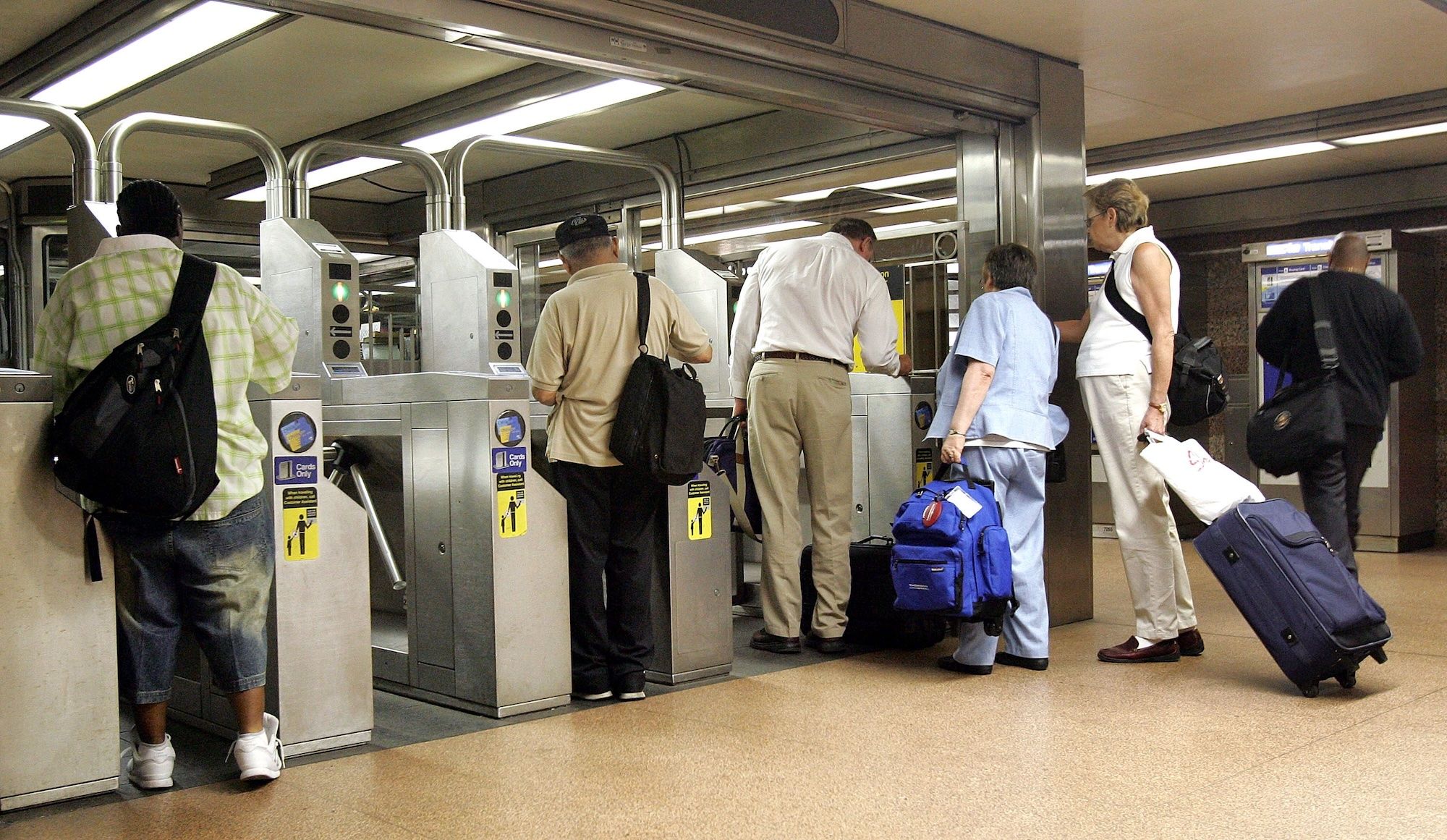
Between the lines: Violent crime on MTA and BART is down, but there's more to the story than just new fare gates.
- New York allocated $77 million for more cops on the subways.
- SF officials credited the new gates, but they also doubled officer presence, the San Francisco Chronicle reported.
- "The new gates are discouraging unwanted behavior, including instances that don't necessarily rise to the level of a criminal act," a spokesperson told the paper.
Zoom in: Cook County Sheriff Tom Dart thinks NYC and SF have the right idea.
- Sheriff's officers are patrolling trains and buses as part of CTA's 75% increase in policing hours announced this spring.
- "One of the obvious needs we've come across already is to improve turnstiles. We have to get the plexiglass ones that go from the ground to about seven feet up. It cuts fare evasion down to next to nothing," Dart told Axios during a media ride-along on the CTA last month.
- "You can put more officers on buses and trains since they no longer have to be standing next to the turnstiles. That would be a game changer," he added.
State of play: Downtown Chicago alder and Public Safety Committee Chair Brian Hopkins is also watching these other cities. He introduced an ordinance last week calling on CTA to look at BART's fare gates for ideas.
- A CTA spokesperson would not say which cities the agency is evaluating, only that they would have more answers once they select a proposal.
What's next: Phase I proposals for the modern fare gates are due Aug. 24.