Suburbs pay less than Chicago for lead line removal

Add Axios as your preferred source to
see more of our stories on Google.
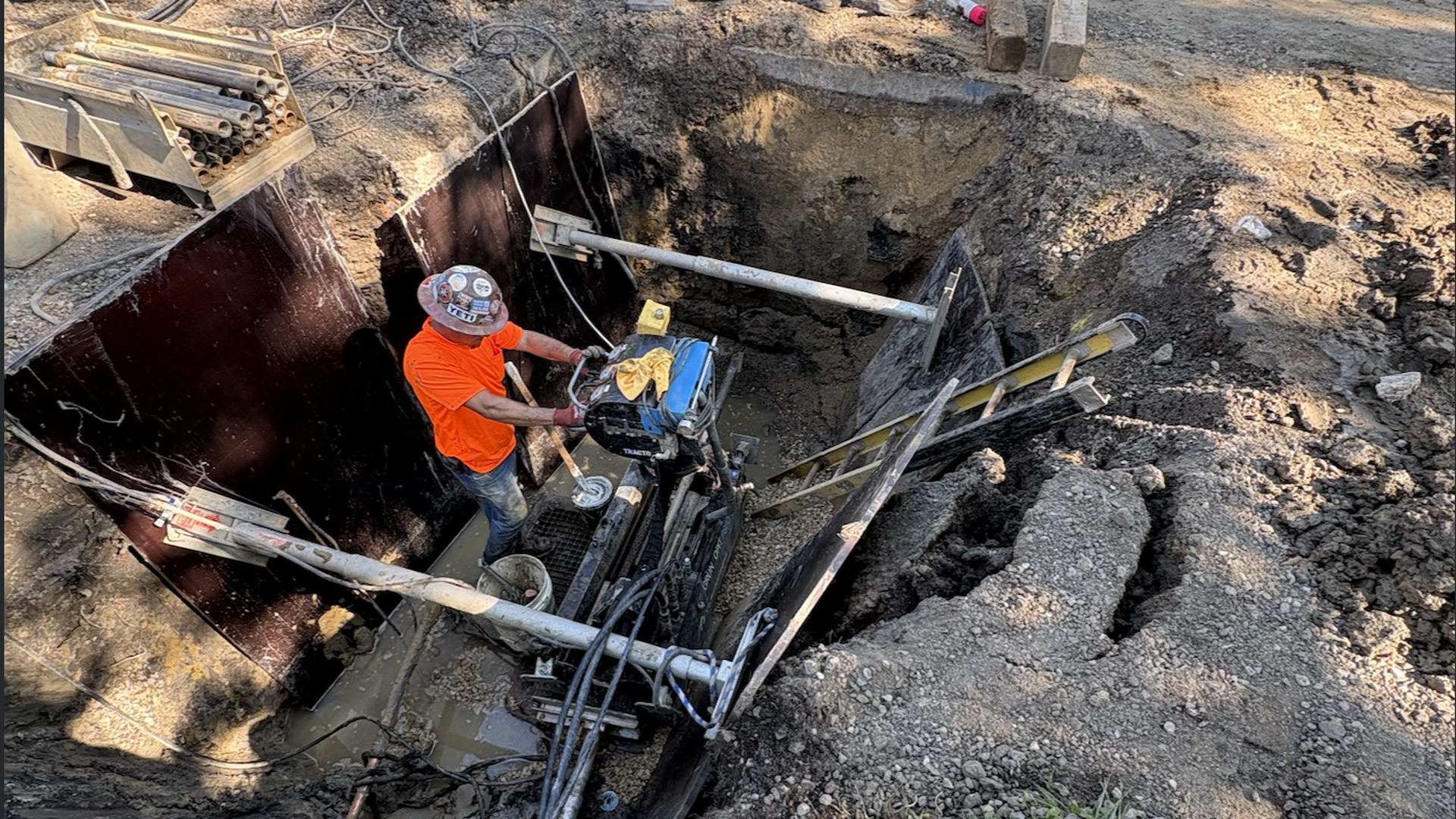
Crews remove and replace lead lines in Evanston this week in conjunction with water main replacement work. Photo: Courtesy of Joel Kennedy Construction Corp.
Nearby suburbs — including Evanston, Elgin and Riverside — pay less than half of what Chicago does for lead service line removal despite having access to the same local contractors to remove them, an Axios analysis finds.
Why it matters: While some federal funding goes to lead line removal, Chicagoans will shoulder much of the estimated $12 billion cost of removing our record 400,000 toxic lines over the next two decades.
Zoom out: A recent Sun-Times/WBEZ investigation found that Chicago pays more than any other U.S. city for lead service line removal, including nearly three times as much as taxpayers in New York spend, but city officials have offered only scant explanation for the discrepancy.
Catch up quick: Towns like Cincinnati banned lead pipes from their water systems in 1928, but Chicago laws required every home to use the toxic lines until the day they were outlawed federally in 1986.
- The Chicago Plumbers Union, whose members were uniquely qualified to install lead, lobbied to keep the requirement as late as March 1986.
- This law has left a legacy of 400,000 toxic lead lines in nearly every two-flat and house built before 1986.
Threat level: Health authorities stress that no level of ingested lead is safe, but one-third of all homes voluntarily tested by the city showed high levels of lead in their drinking water, according to a 2022 Axios analysis.
By the numbers: While Chicago is paying an average of $31,000 to replace a single line, officials tell Axios that Evanston spends less than $15,000, Elgin pays $10,950, and a Riverside bid came in at $9,200.
What they're saying: Joel Kennedy, whose company is working on the Evanston project, says the lower suburban costs are likely driven by multiple factors, including the suburbs waiving permit costs and planning multiple replacements on a single block, as well as some communities just being "much more contractor-friendly."
The other side: Chicago water officials did not respond to multiple Axios requests for an explanation of the city's high removal bills.
- But Mayor Brandon Johnson told Axios on Tuesday that the costs may be associated with the city's dense underground utility infrastructure, saying, "Chicago's situation is unique to other cities, it's not apples to apples."
- Rather than reducing per-line costs, the mayor said he's focused on pursuing collaborations and outside funding to help pay for the removals.
The intrigue: For decades, the Chicago Plumbers Union has wielded heavy clout a city where its former leader, Stephen M. Bailey, shared a close bond with former Mayor Richard J. Daley. The union's endorsement is still highly sought by local politicians.
- Given the Plumbers Union's crucial role in requiring mandatory lead installation until 1986, Axios asked union representatives what responsibility they believe they have to help fix the problem. They did not respond.
What's next: Starting in 2027, Chicago must begin replacing an average of 20,000 lead lines a year, which will cost $620 million annually unless the city shifts to methods that look more like those in Evanston, Elgin and Riverside.