E-bike concerns rise as Chicago data gathering falls

Add Axios as your preferred source to
see more of our stories on Google.
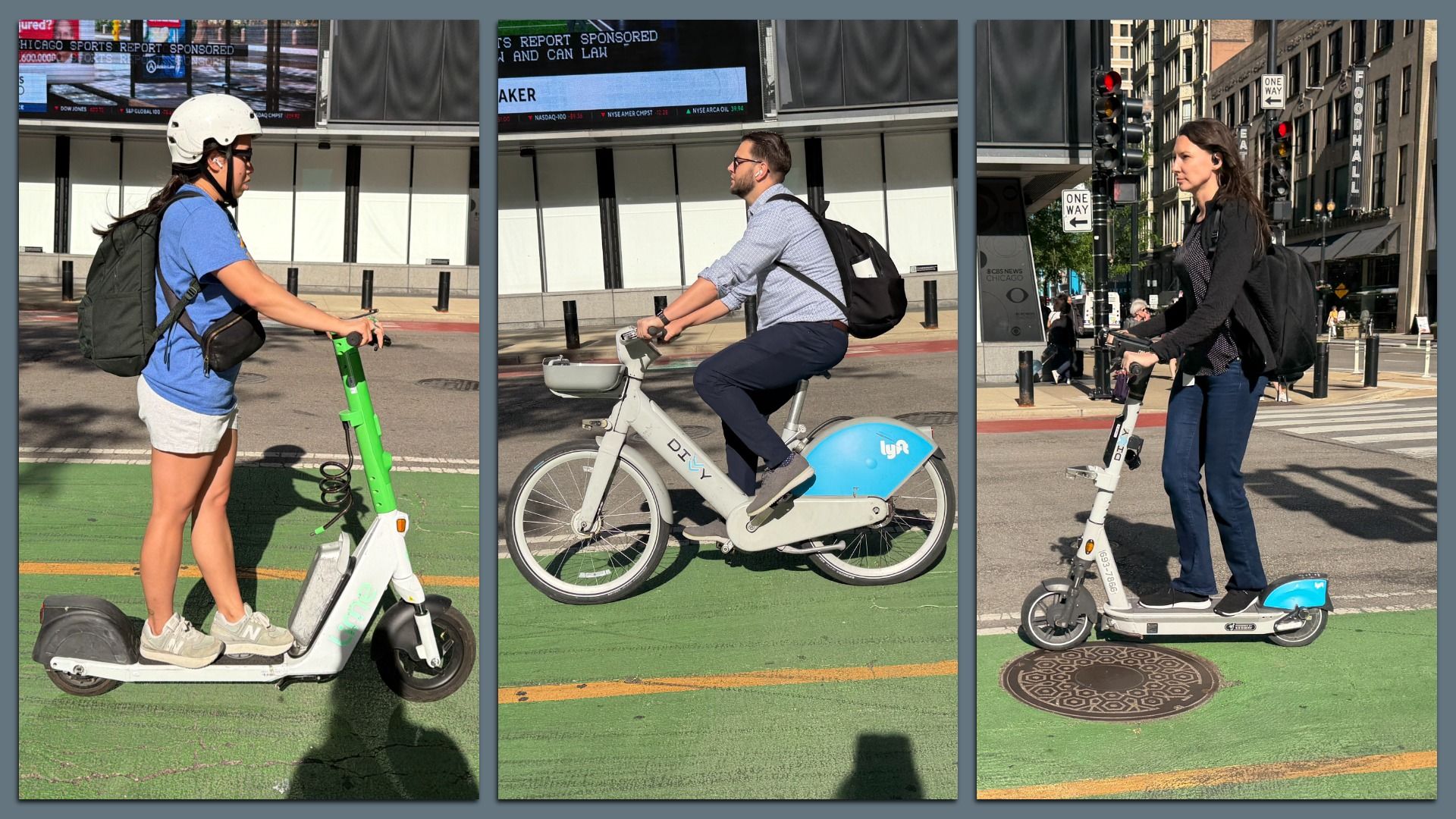
Downtown riders on e-bikes and e-scooters. Photos: Monica Eng/Axios
Chicago's e-scooter ridership has ballooned since 2020, but rider safety trends are unknown because the city stopped keeping track of these specific numbers several years ago.
Instead, the Chicago Department of Transportation lumps e-scooter and e-bike incidents in with police reports on regular bikes, and no longer collects hospital data as it did to establish an e-scooter injury baseline back in 2020.
Why it matters: Medical professionals stress that injuries from e-scooters and e-bikes are much more severe than those from traditional bikes, and needs to be tracked separately.
What they're saying: "Instead of cuts and scrapes and simple fractures, we're seeing deep lacerations, dental injuries … traumatic brain injuries, concussions and skull fractures," Michelle Macy, a pediatric emergency room physician at Lurie Children's Hospital, tells Axios.
- While e-bikes and e-scooters are "great for convenience, we need to make sure we understand the impact that they've had," Northwestern trauma surgeon Leah Tatebe tells Axios. "Between broken bones and head injuries, these devices track more like motorcycles than they do bicycles."
Tragic context: A string of e-scooter-related fatalities this spring — including teens Astrid Carrillo Noguera in Bronzeville and Violet Harris in South Shore and Lincoln Park restaurateur Xavier De Yparraguirre in Streeterville — have rocked communities and increased concern over the devices.
Friction point: Chicago previously collected comprehensive e-bike crash data when it piloted the devices, but Department of Transportation spokesperson Erica Schroeder says it no longer does so due to the limitations and variability in available data.
- Nevertheless, the department says trends are improving.
- "Fatalities are down, micromobility use is up, and we continue to see positive safety outcomes associated with infrastructure investments designed to protect vulnerable road users," Schroeder says.


The other side: Local emergency departments paint a different picture.
- "Every year since 2021, [Northwestern] has been seeing more of these injuries and it looks like we are on track again this year to have another increase," says Tatabe, who chairs the American College of Surgeons injury prevention and control committee.
- "We've seen a dramatic increase in the number of injuries due to falls while riding e-bikes and e-scooters over the past five years," Lurie Children's Hospital pediatric emergency physician Kristine Cieslak said at a press conference this month.
State of play: Several groups are trying to tackle the problem from different angles.
- Illinois Secretary of State Alexi Giannoulias just successfully championed a new bill in Springfield standardizing statewide rules on e-scooters, e-bikes and other transit devices that have been operating without any regulations for years.
- AAA recently launched an "E-Ride Safety Guide" to help parents navigate the risks of the devices for kids.
- The American College of Surgeons (ACS) is raising alarms over trends surgeons are seeing and has offered recommendations for prevention and better data gathering on injuries.
- Last month, CDOT launched a safety campaign using hot dog analogies to remind e-scooter riders to stay off sidewalks, use a helmet, park properly and ride solo.
What's next: Tatebe says the ACS is working with Medicaid and Medicare to create specific reporting codes to track hospital incidents related to e-scooters and e-bikes as their use grows. Chicago police are also scheduled to use new specific coding for micromobility incidents.
- Tatebe hopes the changes can guide better policies, education, injury prevention and regulation of the devices.