Report dissects Chicago's ETOD progress

Add Axios as your preferred source to
see more of our stories on Google.
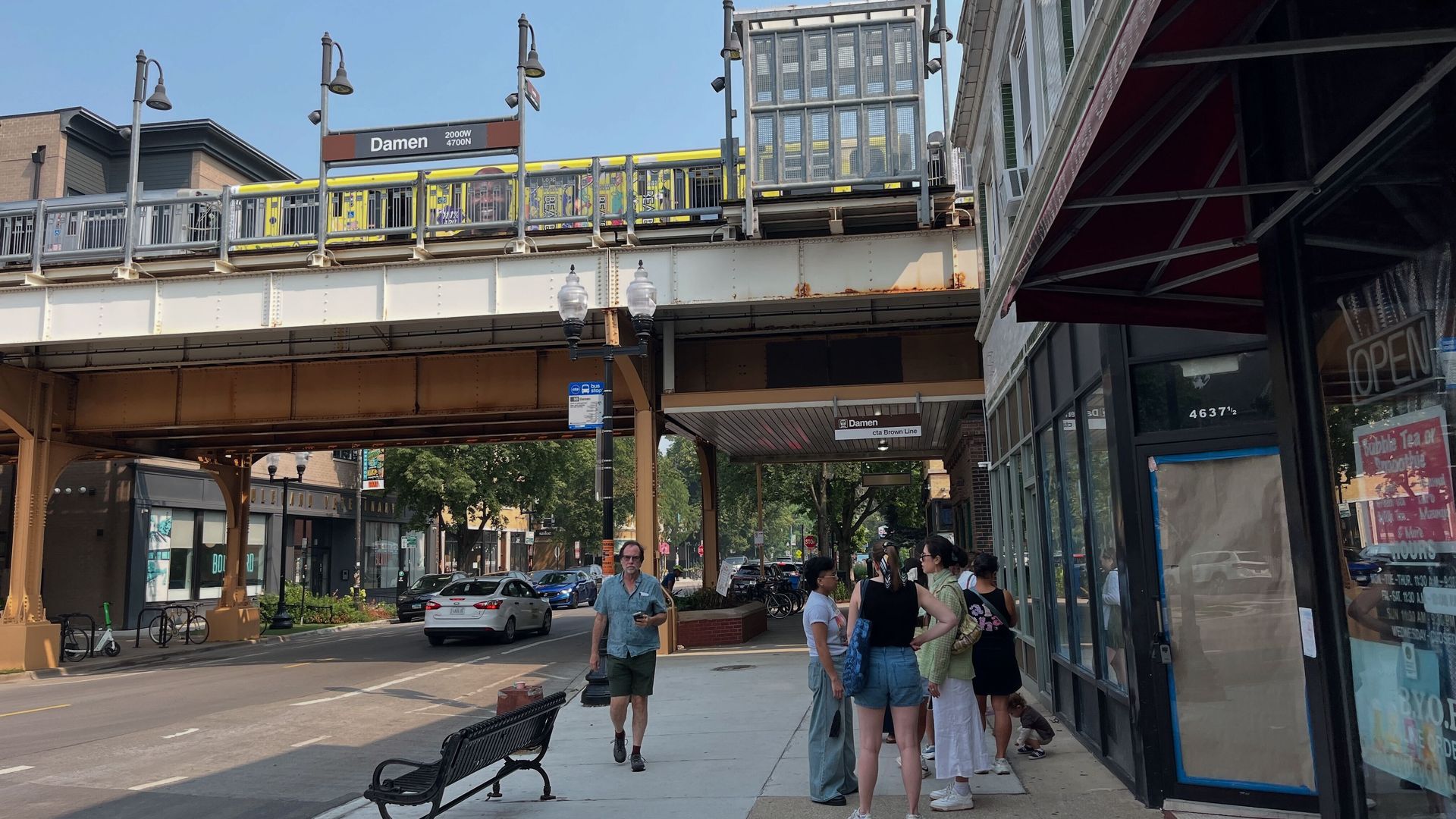
Near the Brown Line Damen stop. Photo: Monica Eng/Axios
Five years after Chicago adopted its first equitable transit-oriented development (ETOD) plan, a new report digs into the city's progress.
Why it matters: City and state leaders have implemented policies that prioritize access to public transit when building and revitalizing residential and commercial properties, but more work is needed to ensure ETOD doesn't favor wealthier, white neighborhoods as it has in the past, according to the report.
Driving the news: Transit and housing advocates released "The State of ETOD" on Tuesday, examining Chicago's progress five years after it adopted its first ETOD plan.
- Elevated Chicago, the Metropolitan Planning Council and the DePaul Institute for Housing Studies, among others, co-authored the report.
Flashback: Chicago's first ETOD plan in 2021 outlined 42 recommendations around affordable housing, access to public transit, walkable neighborhoods and investment in historically disinvested areas.
Context: In 2022, the city took the ETOD plan even further by passing the Connected Communities Ordinance (CCO), which revised processes, rules and incentives for development near transit.
Some of the progress from the CCO included:
- Removing parking requirements for development near transit, aiming to cut construction costs and use that space for more housing.
- Folding sustainable transportation incentives into the zoning code.
- Grants to make transit hubs more attractive through arts and culture programming.
Context: One of the most notable projects from the CCO is the Lucy Gonzalez Parsons Apartments, a 100-unit affordable-housing development on what was a parking lot next to the Logan Square Blue Line station.
Follow the money: In 2023 and 2024, the city allocated $10 million in American Rescue Plan Act funds to support ETOD as an economic recovery strategy, the first time the city ran a dedicated ETOD grant program.
- $1 million was used to create Elevated Works, a program that offered coaching and technical assistance to developers, many of whom were first-time or emerging Black, Latinx and female developers working in communities that had suffered from disinvestment.
Reality check: Vacant land near transit in parts of the South and West sides, such as the Far South Side, has still not attracted mixed-use development that residents say they need, according to the report.
Yes, but: Transit and neighborhood advocates remain hopeful that the long-awaited Red Line Extension will improve this.
What we're watching: Whether politicians will strengthen anti-displacement safeguards in development, preserve existing affordable housing, and make transit hubs more people-friendly through arts and culture programming and commercial attractions.
- Also, if there's political will to bring ETOD beyond the city limits and into the suburbs.