Judge questions CBP over Chicago tear gas use

Add Axios as your preferred source to
see more of our stories on Google.
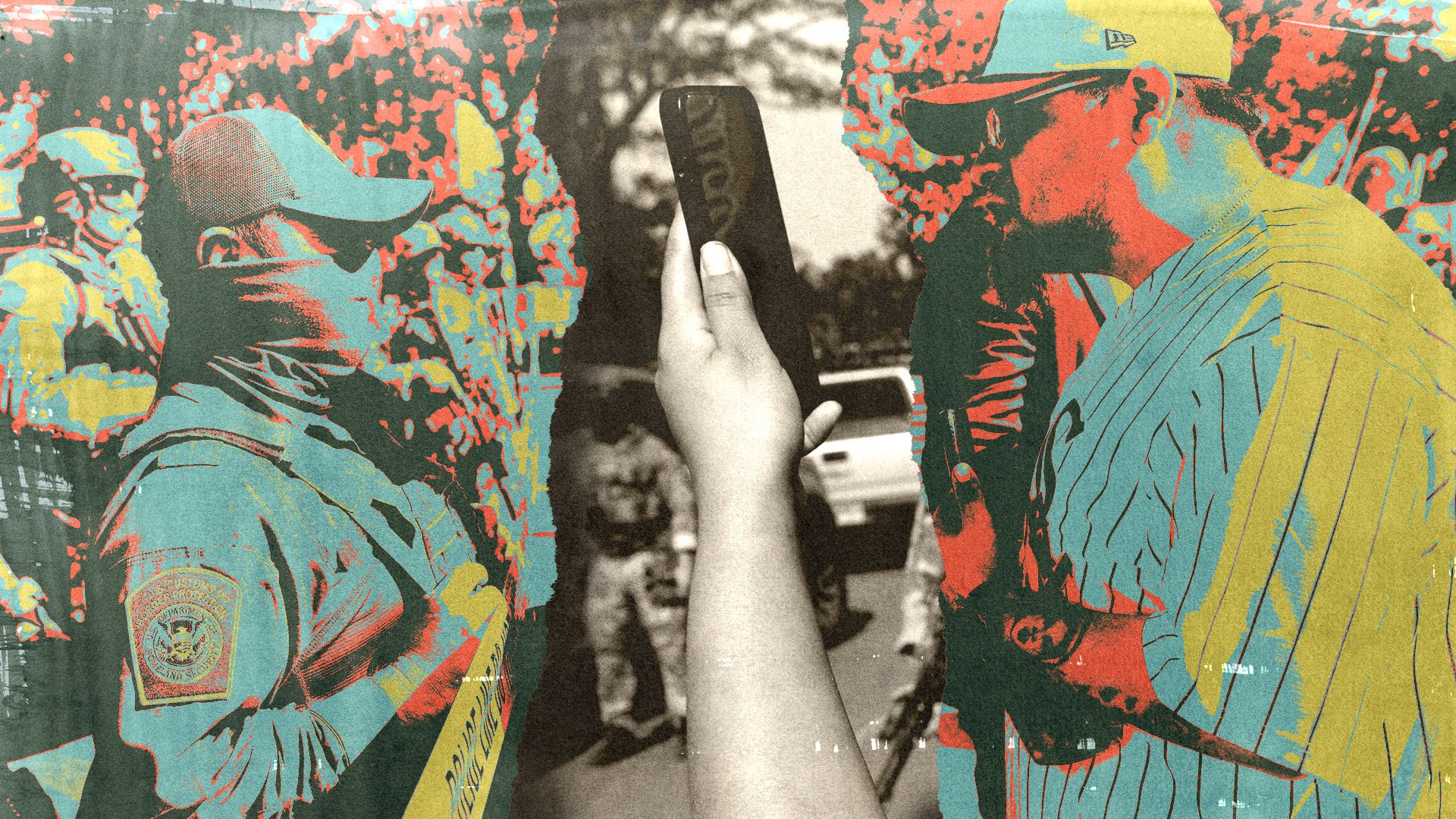
Photo illustration: Brendan Lynch/Axios. Photos: Octavio Jones/AFP via Getty Images
U.S. District Judge Sara Ellis calmly questioned a U.S. Customs and Border Protection officer for more than an hour Monday morning to determine how well federal agents are following her Oct. 9 orders.
Why it matters: Ellis' hearing offered one of the first public explorations of federal agents' tactics as they raided a South Shore apartment building, engaged in a Southeast side car chase and deployed tear gas there and in Albany Park after the judge put restrictions on its use.
Catch up quick: The orders came in response to an Oct. 6 lawsuit the Chicago Headline Club and other local journalists filed against DHS officials claiming "extreme brutality" against journalists outside the Broadview ICE processing facility.
- Last week, Ellis expressed concerns that her order was being violated and expanded the order to require DHS agents to wear body cams. She called both parties back into court Monday to testify on compliance progress.
- During the hearing, the journalism plaintiffs said they'll file a motion this week to make Ellis' temporary order permanent until a trial.
The intrigue: The arrival of hundreds of CBP agents last month puzzled many, who wonder why a border agency is operating in an interior city like Chicago. This has sparked debate in regions across the country.
- DHS officials tell Axios that CBP is here because it's "empowered by longstanding federal law to operate within 100 miles of an international border," which, they assert, includes airports. In this 100-mile zone, agents are technically entitled to engage in warrantless search.
Yes, but: Fred Tsao, at the Illinois Coalition for Immigrant and Refugee Rights says, "The 100-mile zone is measured from international boundaries" and federal code defines those as "land boundaries and the territorial seas."
- "The Great Lakes are not 'territorial seas' or a land boundary. Therefore, Illinois is not within the 100-mile zone," Tsao tells Axios.
- "The boundary with Canada also does not run through Lake Michigan, so the 100-mile zone does not include any place in Illinois."
Big moments: During Monday's testimony, CBP deputy incident commander Kyle Harvick stated that his 201 CBP officers in Chicago already have body cameras, but deputy field office director for ICE Shawn Byers said his 85 local officers do not have them.
- Ellis said she was "surprised" to learn that Byers hasn't reviewed any use- of-force reports filed by his agents at the Broadview facility in the last month. Byers also noted that no staffers had been disciplined for the incidents.
- When Ellis asked Harvick whether CBP agents wore face masks to conceal their identity, he acknowledged that wearing a mask is one reason but emphasized that the masks were also used to protect from tear gas and to keep warm.
What's next: The journalism plaintiffs are requesting depositions before early November from former interim Chicago ICE field office director Russell Hott, who was transferred back to Washington, D.C., on Friday, and CBP commander at large Greg Bovino.