Kratom and 7-OH: What to know about the morphine-like compound


Add Axios as your preferred source to
see more of our stories on Google.
The FDA is cracking down on a potent compound found in kratom supplements: 7-hydroxymitragynine, or 7-OH.
Why it matters: Products with 7-OH — which acts like an opioid and has been dubbed "legal morphine" by researchers — have surged in popularity.
What they're saying: "7-OH is a compound found naturally in the kratom plant. In carefully measured formulations, many users report it helps with pain, mood, and withdrawal, without the side effects of opioids," Jeff Smith, National Policy Director at the Holistic Alternative Recovery Trust (HART), said in a statement last month.
- "Of course, strong regulation is essential to ensure product consistency and public safety."
By the numbers: Federal survey data from 2021 suggests around 0.7% of Americans 12 and older use kratom products, but recent estimates from the American Kratom Association and Journal of Psychoactive Drugs put usage at 9.1% — or over 20 million people.
Catch up quick: Kratom 7-OH semi-synthetic products were introduced to the market in September 2023 — right as Narcan was made available on U.S. shelves, says Chris McCurdy, a professor of medicinal chemistry at the University of Florida who's studied kratom for over 20 years.
- In the years since, "it was like an unofficial war between these manufacturers to see who could get the most potent extract product out there," McCurdy tells Axios.
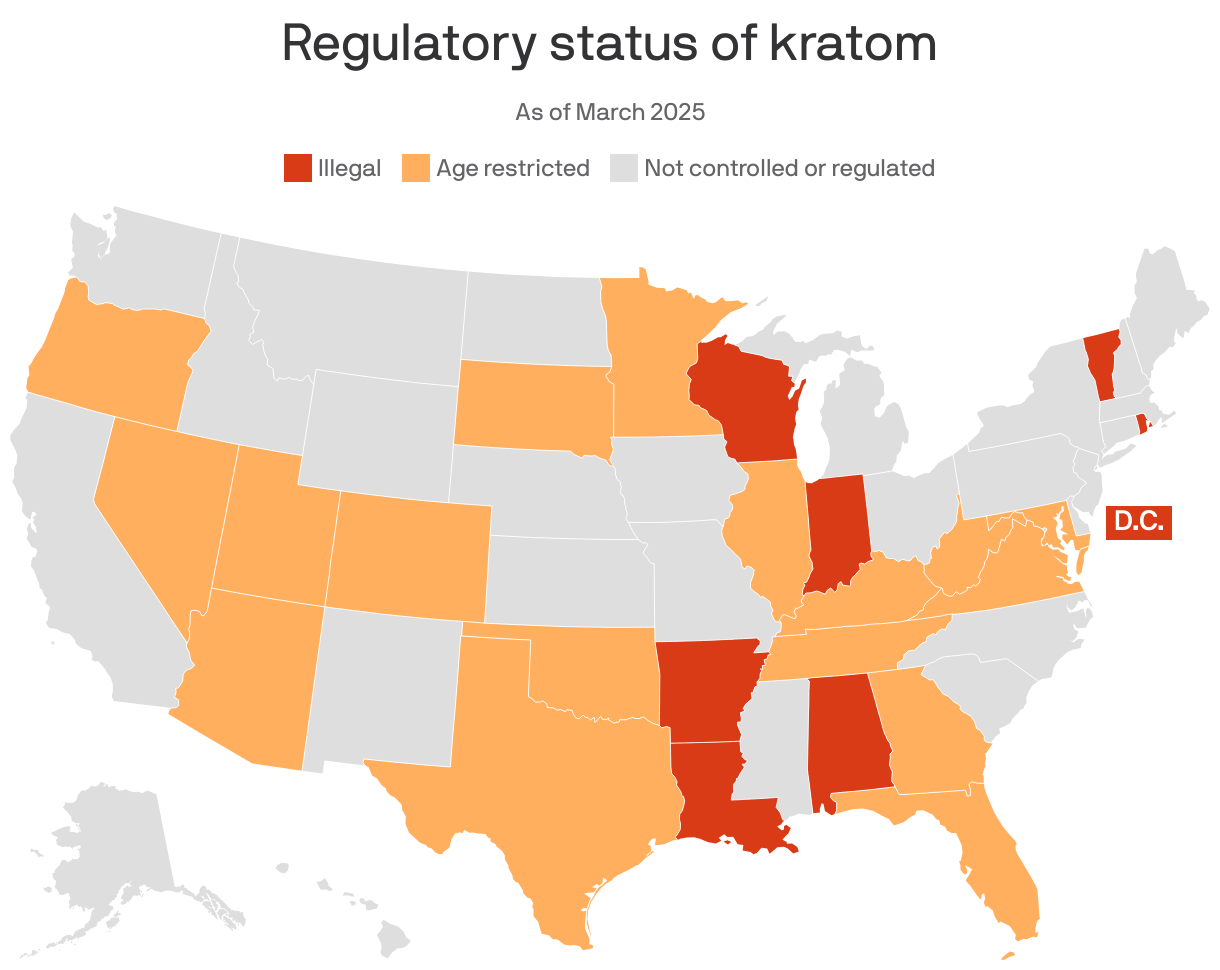
The big picture: As of March, 24 states regulate kratom or its components in some manner, per the Legislative Analysis and Public Policy Association.
- In states with kratom age restrictions, seven states set the minimum age at 18, while 11 require buyers be 21+, LAPPA reports.
- McCurdy says regulating access makes sense, particularly because "we don't know how it affects young minds."
Zoom in: Illinois state Rep. Marcus Evans, from Chicago's Southeast Side, introduced the Illinois Kratom Consumer Protection Act in March, which provides labeling requirements for kratom products and outlines enforcement and penalties.
Yes, but: The legislature failed to consider it during session.
What is kratom?
"Kratom" can refer to the plant or powdered leaf — or kratom-derived concentrates in forms like tablets, gummies, drink mixes and shots that are available in some smoke shops and gas stations.
It's been marketed as a mood booster, pain reliever and remedy for symptoms of quitting opioids, but that doesn't mean all kratom products are "natural and safe," according to the Mayo Clinic.
Is kratom dangerous?
Kratom leaf products are like "a light beer" in terms of potency, McCurdy says.
- But once you extract and concentrate compounds like OH-7 — removing the natural plant material — he says you're closer to Everclear, the grain spirit that can be 95% alcohol by volume.
- The kratom plant has OH-7 only in trace amounts, but potency in herbal supplements varies widely.
OH-7 "is a pure opioid," McCurdy says.
- That means it interacts with opioid receptors just like prescription opioids would, so researchers warn it could be highly addictive.
- "It's more potent than morphine in treating pain in animals," McCurdy says. "The fact that it's available without a prescription is really problematic."
Another potential danger: Residual oxidants and other contaminants could remain in concentrated kratom products made in unregulated labs.