Chicago's safety plan faces crucial test this Fourth of July

Add Axios as your preferred source to
see more of our stories on Google.
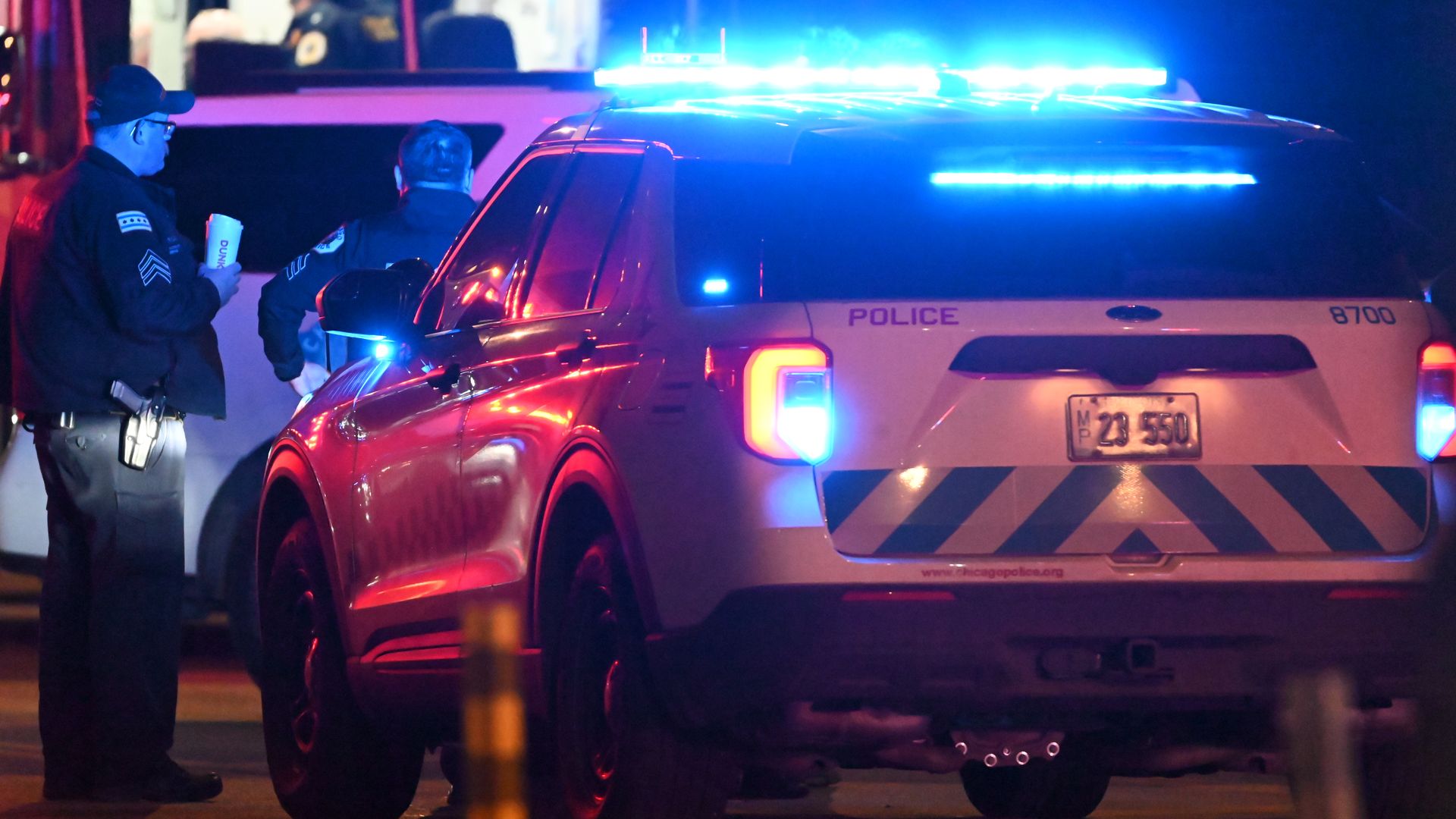
A Chicago police vehicle in May 2025. Photo: Kyle Mazza/Anadolu via Getty Images
The Fourth of July weekend is traditionally a time for families to come together for food, fun and fireworks. Unfortunately, the holiday weekend is also historically a violent time.
Driving the news: A mass shooting in Chicago's River North neighborhood Wednesday night left four people dead and at least 14 wounded, according to police.
Why it matters: Last year, 109 people were shot and 19 killed over the holiday weekend. 50 people were killed in the first half of July.
The big picture: So far, 2025 has seen steep declines in homicides and shootings in the city, with some of the lowest levels in decades. Chicago had remarkably low numbers for Memorial Day weekend and officials are hoping to see the same this weekend.
- There were 192 homicides in Chicago through June 30 this year, compared to 289 over the same period last year.
What they're saying: "The goal is, obviously, to not have any homicides this weekend," deputy mayor of community safety Garien Gatewood tells Axios. "But historically, the Fourth of July has been one of the hardest holidays in the history of the city of Chicago."
Zoom in: Mayor Brandon Johnson has been touting his community safety plan as the reason why homicides are dropping. The center of that plan was hiring Gatewood as the first-ever deputy mayor of community safety in 2023. Gatewood says success is all about communication between all the stakeholders.
- "I think the big difference is everybody is actually working together," Gatewood says. "Back in other administrations, you had too many folks working in silos. You'd have street outreach contracts, but no relationship with the police department. You would have deputy mayors who weren't out on the ground as much as we are."
- "I can't tell you the last day I haven't talked to either the superintendent or the chief of patrol."
State of play: Gatewood says the entire menu of resources will be used this weekend, including activating the city's emergency operations center and flooding the streets with more police officers and the skies with more helicopters. Officers will work overtime in certain high-crime areas.
- He also says the city has expanded contracts for community organizations to stay out until 2 or 3am. Last year, they were only out until midnight. The city will also feature more late-night basketball events with free food, designed to attract teens from the South and West sides.
Zoom out: While violent crime is dropping across the country, including in big cities like New York and LA, Gatewood points out that Chicago's levels are dropping even faster, which is a stark contrast to years past.
Reality check: Even though Johnson's plan seems to be working, Gatewood is well aware of the challenges this weekend, thanks to the combination of late-night outdoor celebrations and the heat. Last year, he spent his holiday weekend visiting crime scenes and consoling family members.
- "It's important we show up and put in the work," Gatewood says. "Because in a lot of situations, when people see me on their block, it could be the worst day of their lives. So we must show up in the good times and in the bad times."
What's next: After this weekend, Gatewood says the city will continue its "take back the block" events that flood one particular violent hotspot neighborhood with police, other city departments and community organizers.
The bottom line: The mayor's anti-violence plans may face a litmus test this weekend, but recent trends suggest the city, police and community stakeholders are prepared to meet the moment.