Public media funding cuts hit Chicago: WBEZ, WTTW brace for impact

Add Axios as your preferred source to
see more of our stories on Google.
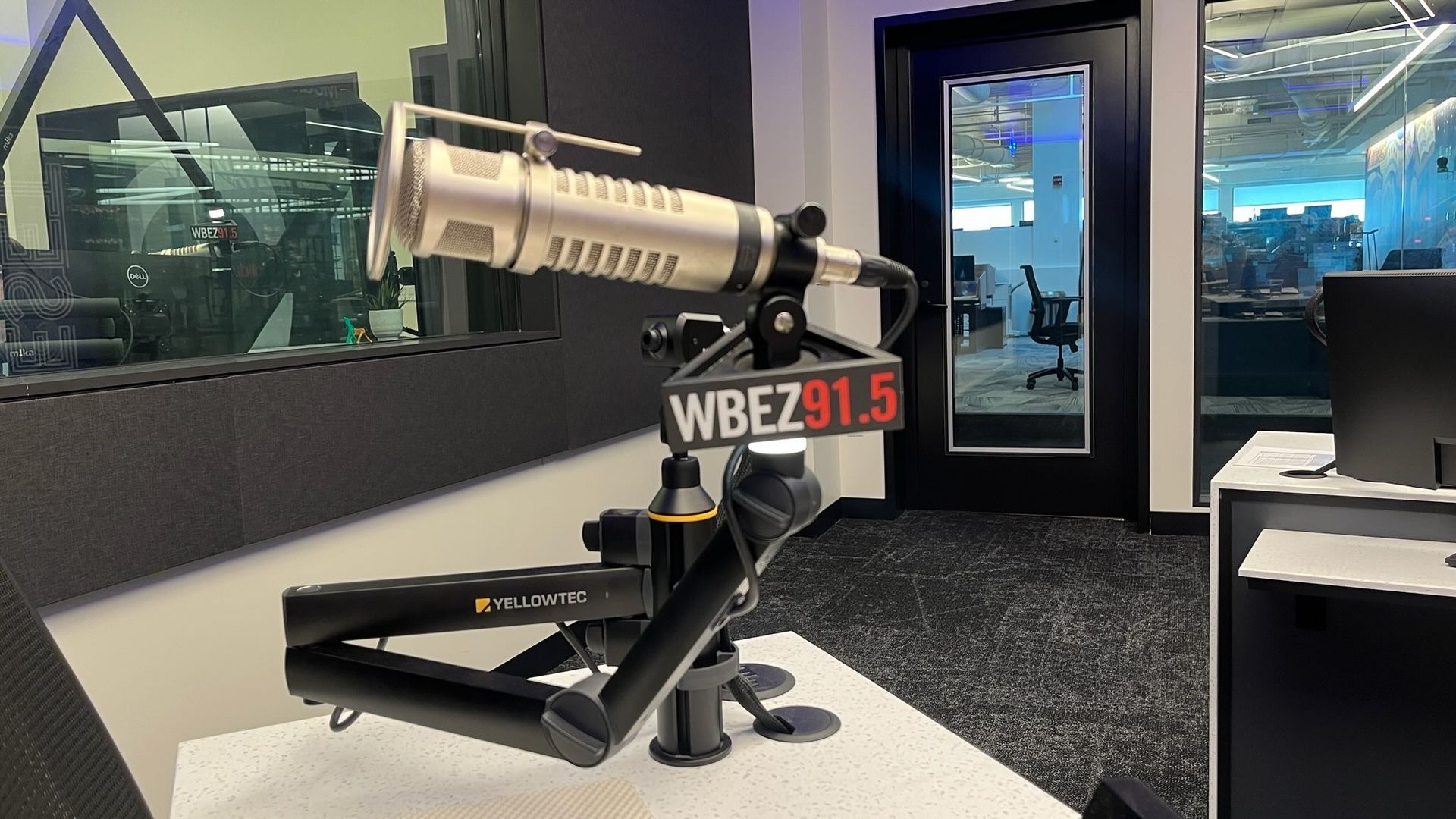
Photo: Carrie Shepherd/Axios
President Trump and the Republican-majority U.S. House moved one step closer to cutting funding for public media, putting local organizations in limbo.
The latest: The House passed a bill Thursday afternoon to cancel over $1 billion in funding for PBS and NPR, via the Corporation for Public Broadcasting. This funding was included in the 2025 fiscal year budget, but this action removes it.
Why it matters: Federal funding for public media could vanish — and Chicago stations like WBEZ and WTTW are bracing for the fallout.
The big picture: The move breaks decades of bipartisan tradition treating CPB funding as apolitical and throws public media companies into budgetary chaos.
What they're saying: "If approved, this cancellation of funding would eliminate critical investments, stripping resources that we use to power independent journalism, educational programming, emergency alerts and the infrastructure that supports the entire network of newsrooms nationwide," Chicago Public Media CEO Melissa Bell wrote to station members.
- "The rescission bill, if approved, threatens the ability of PBS and PBS member stations like WTTW to serve the American people with non-commercial educational programming, locally-focused documentaries and fair, accurate, unbiased, and nonpartisan news coverage," WTTW President and CEO Sandra Cordova Micek said in a statement.
By the numbers: The cuts would amount to about 6 percent of Chicago Public Media's budget, which the organization estimates to be about $3 million annually.
- That's not factoring in possible syndication costs handed down by National Public Radio, which is also losing funding from this bill.
- For WTTW, 10% of its 2024 budget came from federal funding.
Zoom in: Chicago Public Media and WTTW (which also includes WFMT-FM) are among the largest public media organizations. Chicago Public Media (WBEZ/Sun-Times) reported revenue of $70 million for 2024, while WTTW had a total operating budget of $32.7 million.
- Both organizations receive significant revenue from member donations.
Yes, but: Smaller Illinois radio stations, such as WILL-FM in Urbana, WUIS-FM in Springfield, and WNIJ-FM in DeKalb, have significantly higher federal funding, in some cases accounting for half of their budgets.
- Those stations are attached to local universities.
Zoom out: It's unclear if the organizations will supercharge fundraising to attract more private donors or cut back on programming and staff.
- Chicago Public Media recently cut staff at both the Sun-Times and WBEZ.
The intrigue: The rescission package aims to claw back funding that Congress previously approved for fiscal year 2025. It primarily consists of cuts identified by DOGE, which include funding for foreign aid programs such as USAID.
- The Corporation for Public Broadcasting's funding is usually allocated every two years, so this cuts the second year of funding and puts future allocations in serious doubt.
- The rescission bill is rare in government. Trump attempted to use it during his first term, but was defeated in the Senate.
Between the lines: Republicans have increasingly painted public media as left-leaning and biased, citing PBS programs like "Sesame Street" as "woke propaganda."
- Trump's recent executive order calls for ending CPB funding altogether.
The other side: Public media offers a variety of independent programming from news, culture, food and children's programs, funded to avoid programming influenced by corporations and commercials.
What's next: The bill moves to the Senate for a simple majority vote, which means if the Republicans don't break ranks, they'll have enough votes to pass it.
- Leaders say they'll take up the measure in early July.