Sun-Times fallout: Fake book list raises red flags over AI


Add Axios as your preferred source to
see more of our stories on Google.
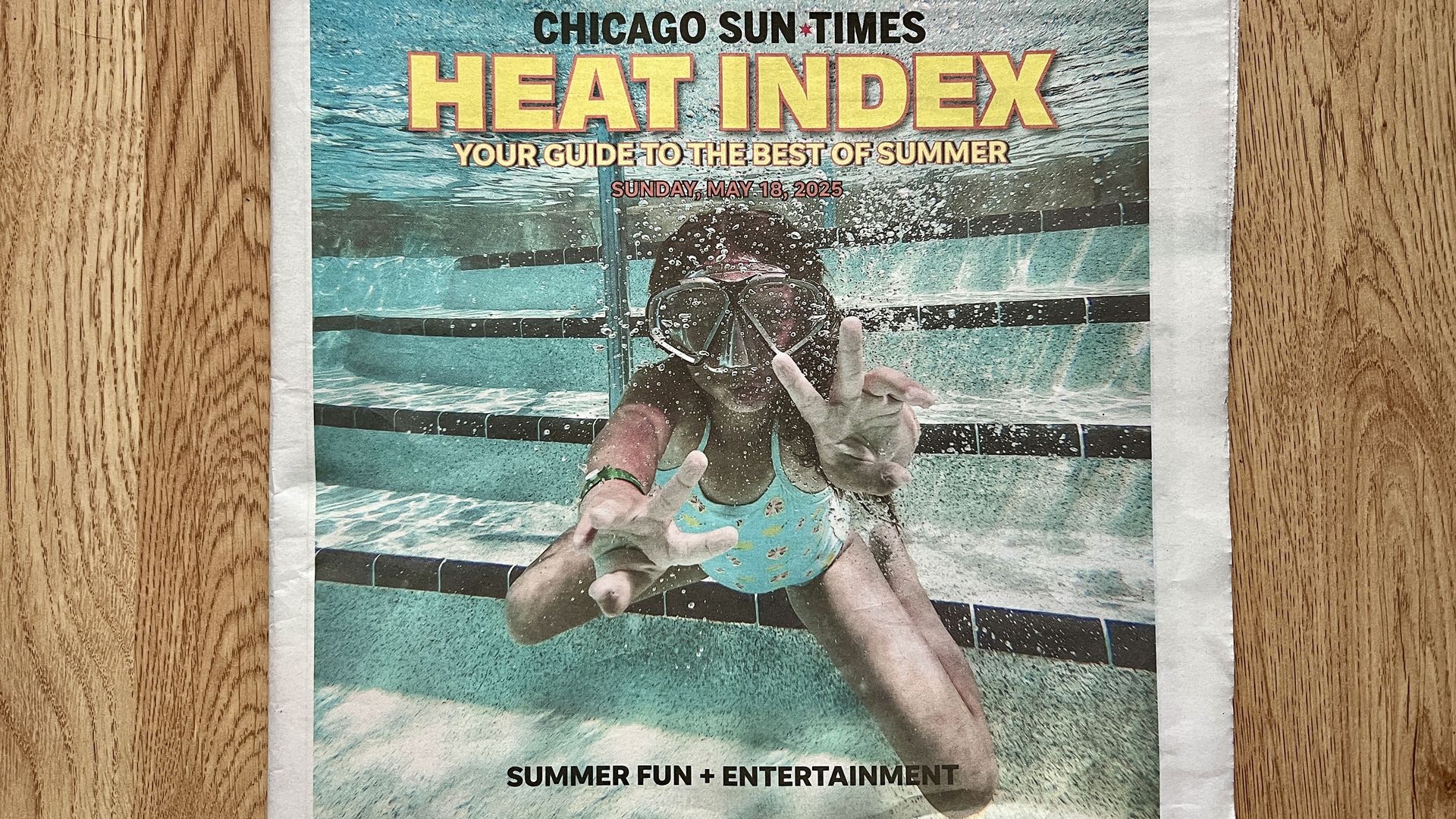
The Chicago Sun-Times Heat Index guide from Sunday, May 18. Photo: Monica Eng/Axios
The Sun-Times is feeling the heat after it printed a summer reading list Sunday, citing multiple non-existent titles by real authors — which was partially produced by AI.
Why it matters: The scandal comes on the heels of a 20% cut to the editorial staff at the paper and as journalists worry about AI-generated material replacing human-made content.
- Also, AI models continue to make things up in ways that AI makers haven't figured out how to detect or stop, and human users keep failing to check their output.
Case in point: The very first item on the list is a novel by the "beloved Chilean American author" Isabel Allende titled "Tidewater Dreams."
- Allende is real but "Tidewater Dreams" — ostensibly a "climate fiction novel" that "explores how one family confronts rising seas levels while uncovering long-buried secrets" — doesn't exist.
- You have to read down the list of 15 titles to the 11th entry before you hit a real book (Françoise Sagan's 1954 "Bonjour Tristesse").
What they're saying: The Sun-Times quickly distanced itself from the insert. "This is licensed content that was not created by, or approved by, the Sun-Times newsroom, but it is unacceptable for any content we provide to our readers to be inaccurate," CPM spokesperson Victor Lim tells Axios.
- "We value our readers' trust in our reporting and take this very seriously."
Yes, but: While licensed and syndicated content is normal for newspapers, it is usually marked as such. This article looks like it was part of an advertising or advertorial supplement, but the section's cover simply reads "Chicago Sun-Times — Heat Index — Your guide to the best of summer."
- The insert also appeared in the Philadelphia Inquirer, which also touted the licensed content as its own.
What happened: The Sun-Times says it licensed the content from King Features, a unit of Hearst, which claims to be the world's largest lifestyle publisher.
- In an interview with 404 Magazine, Chicago-based writer Marco Buscaglia takes the blame for using AI to source the list and not fact-check. "I can't believe I missed it because it's so obvious. No excuses," Buscaglia said to 404.
- "I'm completely embarrassed."
Zoom out: "It's always been perilous when a news outlet presents material that it didn't produce on its own," former Tribune metro editor and writer of the Stop the Presses newsletter Mark Jacob tells Axios. "AI has supercharged the danger since it's so easy for lazy and sloppy people to create bad content."
- "What should legitimate media learn from this?" Jacob asks. "Hire trusted human beings to produce content, and carefully review any content that's going out under your brand."
The Sun-Times Guild was swift in its condemnation of the paper's gaffe.
- "We're deeply disturbed that AI-generated content was printed alongside our work," the union said in a statement. "Our members go to great lengths to build trust with our sources and communities and are horrified by this slop syndication."
- "We call on Chicago Public Media management to do everything it can to prevent repeating this disaster in the future."
Flashback: This isn't the first time newspapers have had issues with licensed content. In 2012, the Chicago Tribune and the Sun-Times ended their use of content produced by Journatic, a company that was accused of using fake bylines and plagiarism.
- When tech entrepreneur Michael Ferro took over the Tribune in 2016, he said he wanted to push the paper to use "big data and artificial intelligence" to make the paper profitable. Ferro orchestrated a wave of layoffs to make the paper more digitally focused before resigning two years later.
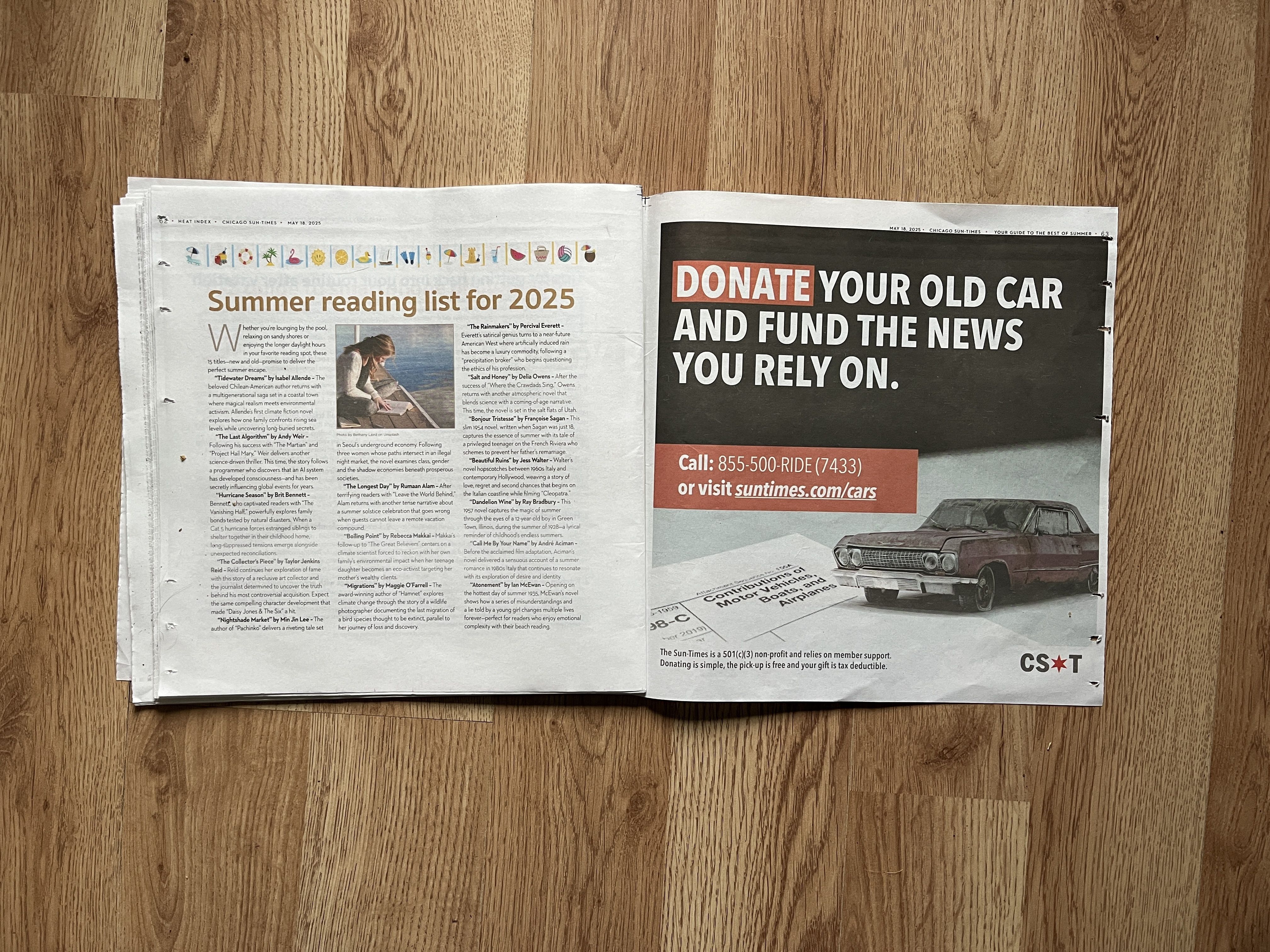
The intrigue: The summer reading list only appears in print. It ran opposite a house ad for the Sun-Times that exhorts readers to "Donate your old car and fund the news you rely on."
The bottom line: For the Sun-Times, the fallout from the error could have lasting implications now that the paper has switched to a nonprofit model that counts on reader donations.