Chicago paper's "reading list" full of fake, likely AI-generated titles


Add Axios as your preferred source to
see more of our stories on Google.
Illustration: Maura Losch/Axios
A print supplement to the Chicago Sun-Times published a "summer reading list for 2025" Sunday citing multiple nonexistent titles by real authors — a goof that readers on social media quickly attributed to AI.
Why it matters: Today's AI models continue to make things up in ways that AI makers still haven't figured out how to detect or stop, and human users keep failing to check their output.
Case in point: The very first item on the list is a novel by the "beloved Chilean American author" Isabel Allende titled "Tidewater Dreams."
- Allende is real but "Tidewater Dreams" — ostensibly a "climate fiction novel" that "explores how one family confronts rising seas levels while uncovering long-buried secrets" — doesn't exist.
- You have to read down the list of 15 titles to the eleventh entry before you hit a real book (Françoise Sagan's 1954 "Bonjour Tristesse").
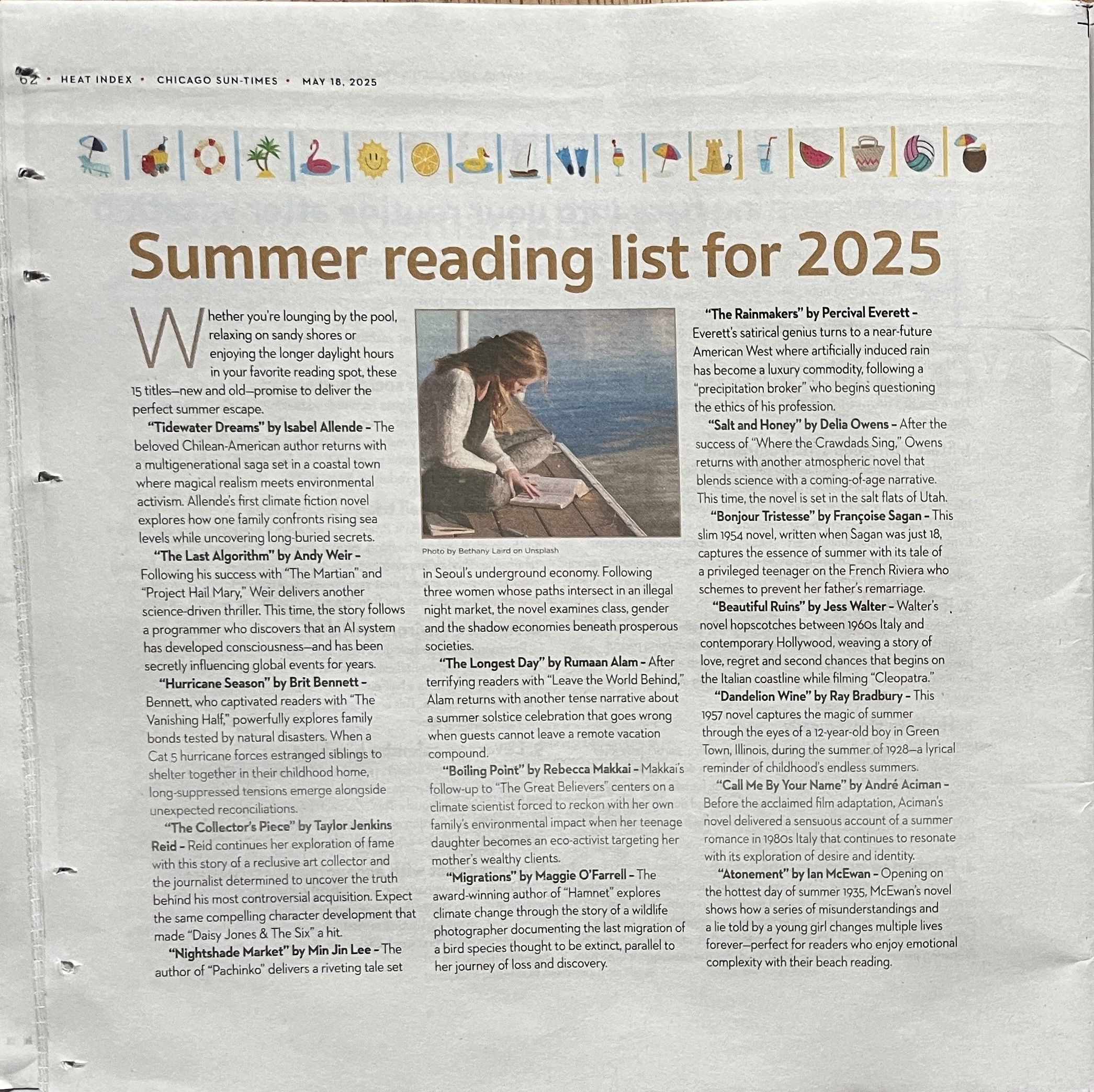
What they're saying: The article looks like it was part of an advertising or advertorial supplement, but the section's cover simply reads "Chicago Sun-Times — Heat Index — Your guide to the best of summer."
- "It is not editorial content and was not created by, or approved by, the Sun-Times newsroom," a Sun-Times account on Bluesky posted Tuesday.
What happened: Chicago-based freelance writer Marco Buscaglia, whose byline appears on most stories in the 64-page section but, oddly, not the book story, told 404 Media that he wrote the piece using AI but failed to fact-check it.
Between the lines: The summer reading list appears in print opposite a house ad for the Sun-Times that exhorts readers to "Donate your old car and fund the news you rely on."
The bottom line: If accuracy and reliability matter, you have to check pretty much everything ChatGPT and similar services say before you can use information they provide.
