Return-to-office mandates spark tensions as workers still want flexibility

Add Axios as your preferred source to
see more of our stories on Google.
Major companies like Chicago-based Bank of America are mandating return-to-office (RTO) policies, but many workers are making it clear they're not ready to be in an office full-time.
Why it matters: Remote and hybrid schedules have made work—life balance easier for many Americans, but company leaders say having workers in the office more makes them more productive, collaborative and improve communication.
- Workers and some management and HR experts push back saying it increases commuting costs and less flexibility damages morale.
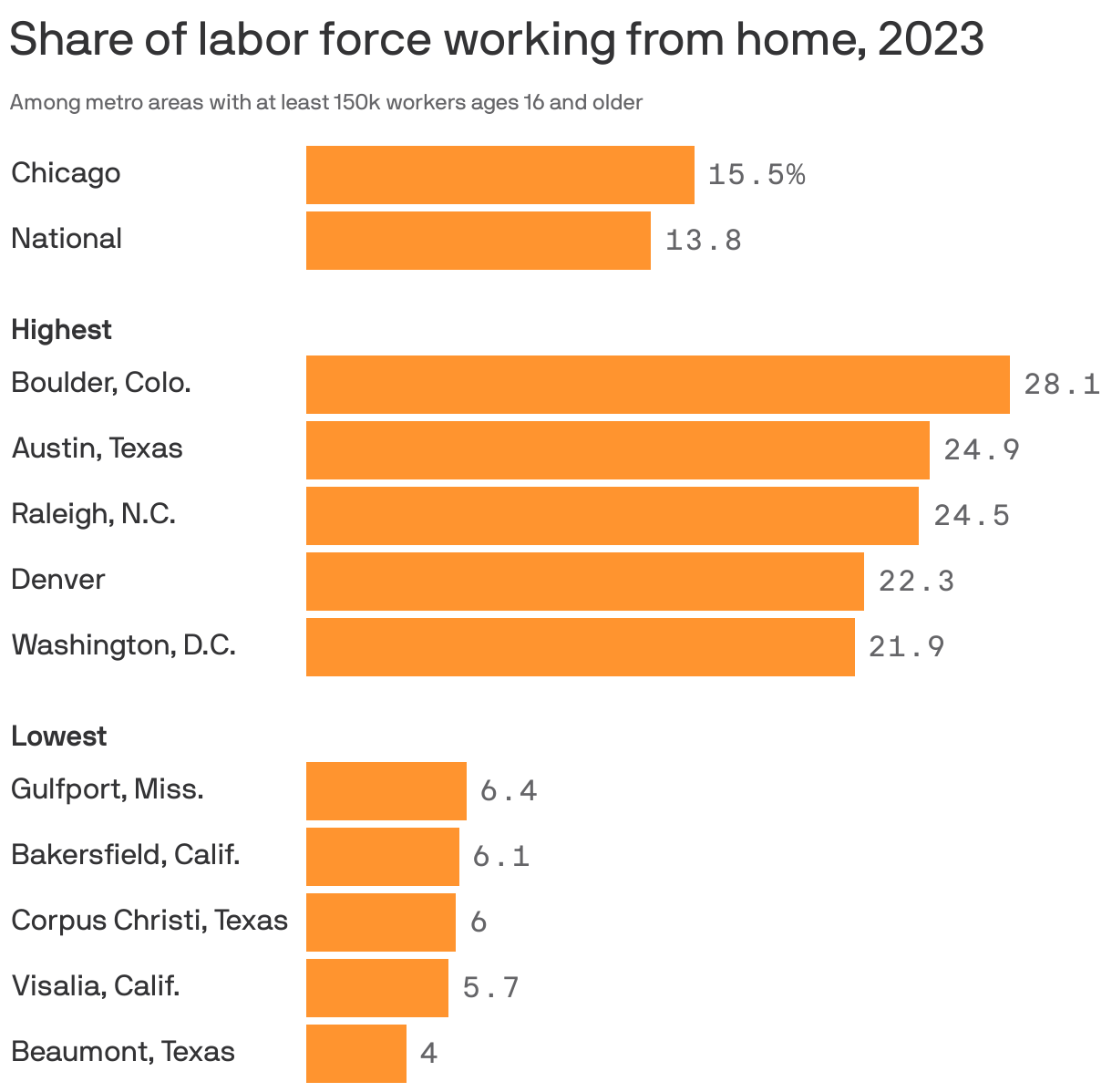
State of play: More than 1 in 5 workers in many large U.S. cities were still clocking in from home as of 2023, per the latest census data.
- In Chicago, 15.5% were remote compared to 13.8% nationwide.
Between the lines: RTO mandates can mean a loss of workers for some companies but a gain for others. Chris Gladwin from the Chicago data analytics firm Ocient told Crain's the RTO mandates have allowed him to recruit big talent because of his company's more flexible policy allowing remote work.
Zoom out: More traditional companies, like financial giants Barclays and Goldman Sachs, are requiring five days a week of in-office work while more modern places born from startup culture, like DoorDash and Slack, have flexible policies, according to HubbleHQ.
Reality check: All of these conversations are moot for the thousands of workers who can't work from home, such as health care workers, transportation professionals and food service professionals.
Plus: Workers with disabilities have long advocated for remote work, saying that some jobs requiring in-office work are not possible for them.
- Earlier this year, a longtime host at WFMT said he was fired after he asked the classical music station if he could work from home to accommodate "sleep issues," the Sun-Times reported.
What we're watching: Whether companies that are demanding workers return to the office stick to those policies or deviate, if they see it affecting their workforce.