San Diegans are slowly returning to the office


Add Axios as your preferred source to
see more of our stories on Google.
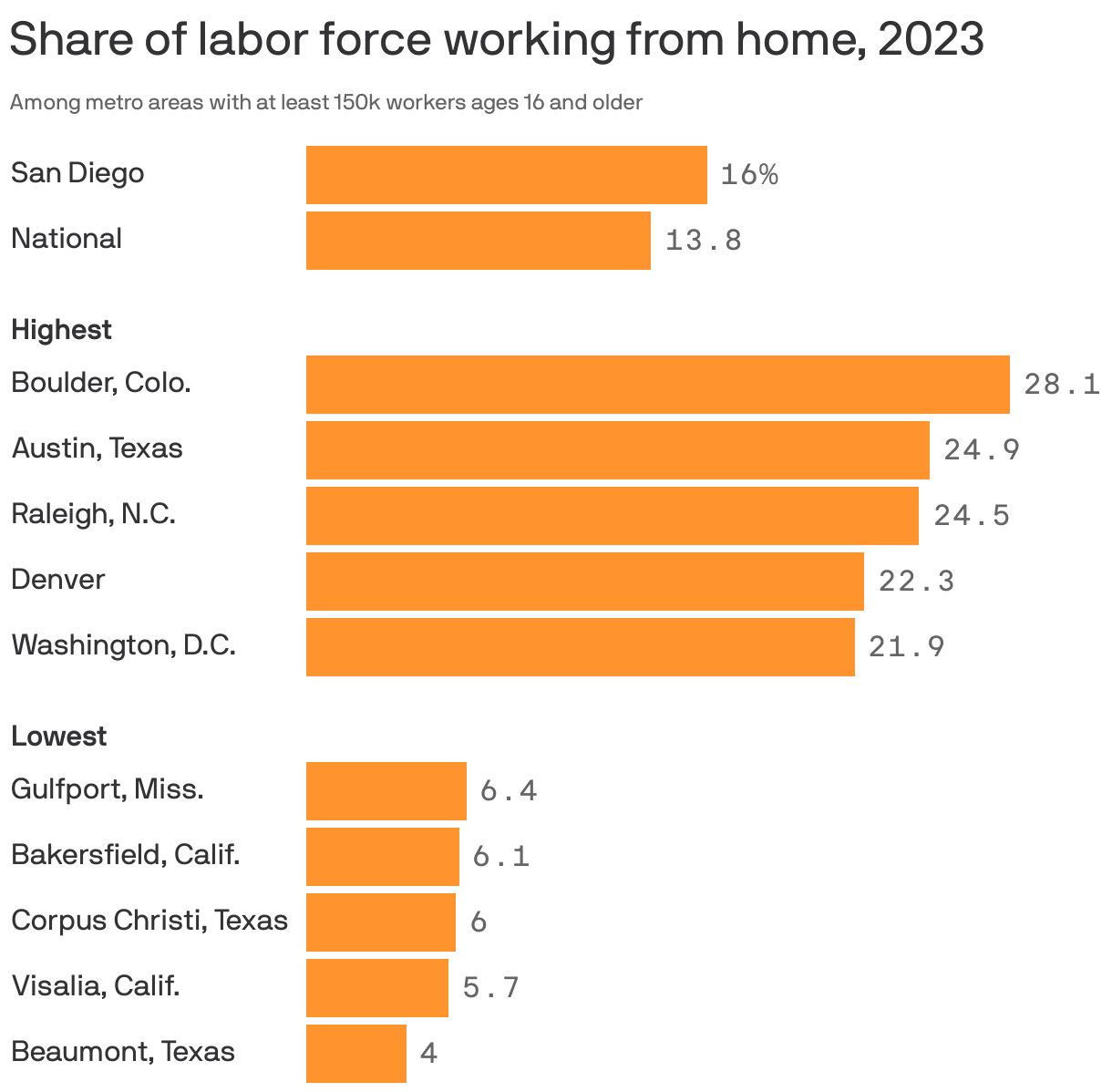
San Diego workers last year were more likely to work remotely than the national average, according to the latest Census data.
Yes, but: The share of the local workforce that's clocking in from home is still sliding as the pandemic falls further into history.
Why it matters: Remote and hybrid schedules balanced the work-life equation for many Americans, but they were never enjoyed equally nationwide.
By the numbers: 16% of workers in the San Diego metro area at least occasional worked from home in 2023, compared to a national average of 13.8%.
- In 2022, 18.6% of the metro area worked from home, which was down from 22.1% in 2021.
- But there's still a long way to go before the workforce looks like it did in the years before the pandemic, when remote work hovered around 7%.
How it works: The Census asks respondents whether they worked from home at least one day in the week prior to taking the survey, so it captures both full-time and occasional remote workers.
The intrigue: The San Diego Association of Governments issued its last major report on remote work in the summer of 2023, determining that eliminating employee commutes did not reduce overall car travel as much as expected.
- That's because 80% of teleworkers reported taking midday car trips, of an average of 9 miles per day, offsetting some of the emissions savings from losing their commute.
- Those trips, though, mostly occurred after morning rush hour and before evening rush hour, so they don't contribute as much congestion as standard commutes.
Zoom out: In cities like Boulder, Colorado; Austin, Texas; and Raleigh North Carolina, roughly a quarter of the workforce was working from home last year.
State of play: The trend over the last few months has been a slow but steady return to the land of cubicles, water cooler chitchat, and harsh fluorescent lighting.
- Many workers are at least enjoying a hybrid schedule, splitting their workdays between home and the office.
Between the lines: Companies' big return-to-office push is a sign that employers are gaining more leverage over workers, Axios' Emily Peck writes.
What's next: The incoming Trump administration is likely to push the country's federal workforce back into the office — largely as a way to trim headcount.