New documentary spotlights efforts to revive Chicago's closed schools

Add Axios as your preferred source to
see more of our stories on Google.
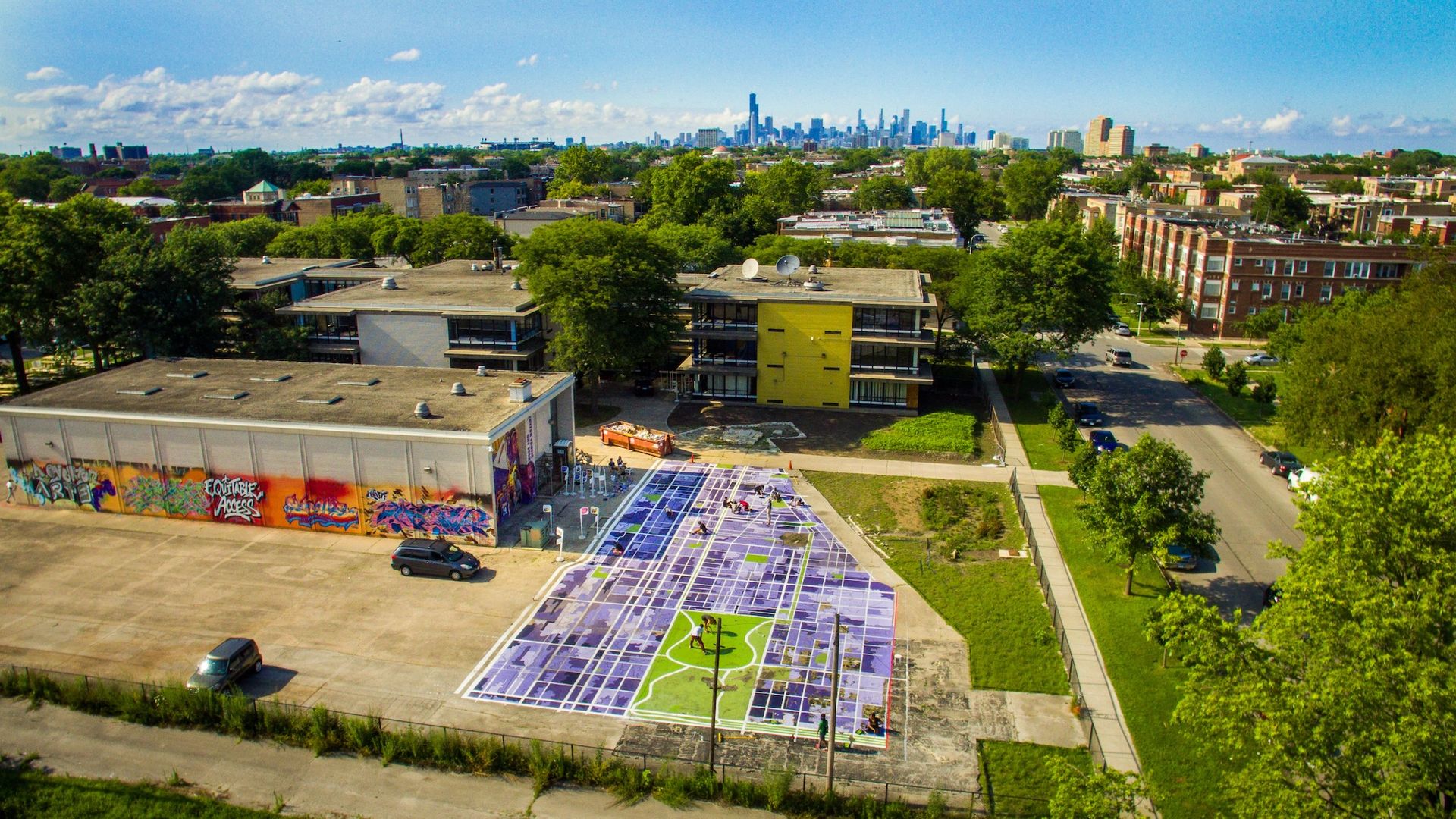
Aerial view of Overton Elementary in Bronzeville. Photo: Courtesy of Brandon Biederman
A new documentary revisits the 2013 Chicago Public Schools closings through stories of people rebuilding in communities in the aftermath.
Driving the news: "Beyond Closure" premieres at 3pm Sunday at the Chicago Cultural Center. It's free.
Why it matters: More than a decade after former Mayor Rahm Emanuel closed 50 schools, mainly in Black and Latino neighborhoods, community leaders on the South and West sides are still working to turn those abandoned school buildings into community anchors.
Flashback: Emanuel and the Board of Education cited low enrollment and poor performance as the motivating factors for closing the schools, but as WBEZ reporter Sarah Karp points out in the documentary, there wasn't a plan about what would happen to the empty buildings.
Zoom in: "Beyond Closure" focuses on the people developing community centers, apartments, health care facilities and arts incubators at three closed schools: Woods in Englewood, Overton in Bronzeville and Emmet in Austin.
- "Focusing on the individuals and organizations working tirelessly to revitalize these abandoned schools not only sheds light on their energy, commitment, and challenges but also serves as a call to action for all Chicagoans," the film's executive producer, Paola Aguirre, tells Axios.
- "The built environment profoundly affects the quality of life in our communities, and no single community should be left to tackle such an unprecedented challenge without adequate resources and support."
Between the lines: The developers, architects, nonprofit leaders and others involved say in the film that the pandemic, rising building costs and the constant need for funding has made the work challenging — and still unfinished.
Yes, but: "Beyond Closure" is a reminder of the people who grew up in these neighborhoods and continue to work each day to make things better, despite disinvestment.
What they're saying: "I love my community and I really want to see it even better than it ever was, even beyond how I experienced it as a youth. And that's what this project represents for me, making the impossible possible," Darnell Shields, who's part of the team launching the Aspire Workforce Innovation Center in Austin, said in the film.
What's next: Screenings are also scheduled for Jan. 15 at Illinois Humanities and April 27 at the Chicago Humanities Spring Festival at the Athenaeum Center.