Sun exposure is driving rise in most melanoma cases


Add Axios as your preferred source to
see more of our stories on Google.
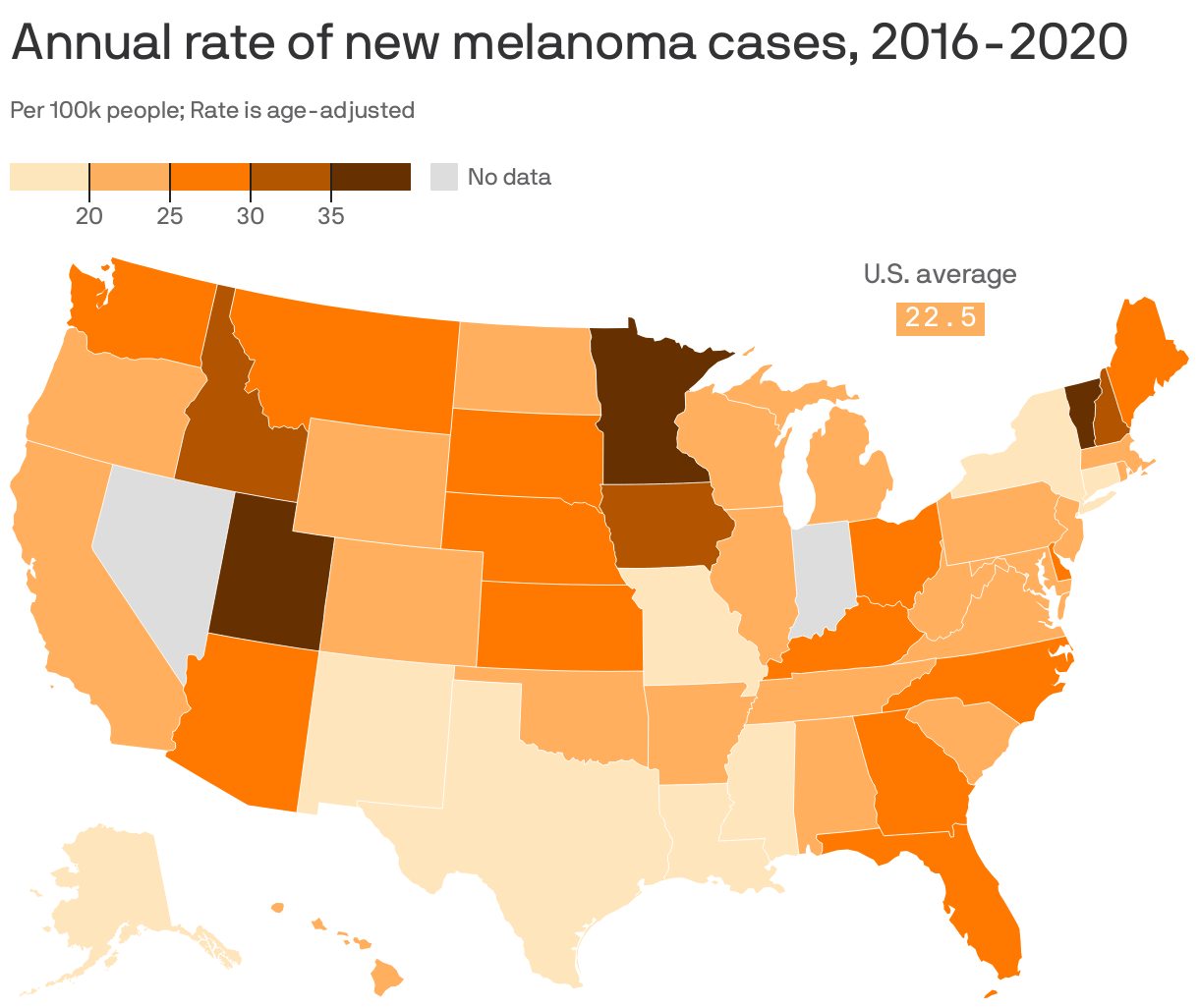
Doctors are diagnosing more people with melanoma.
Why it matters: Although melanoma accounts for only about 1% of skin cancers, it's responsible for a large majority of skin cancer deaths, according to the American Cancer Society (ACS), which pinpoints UV exposure as a major risk factor.
Driving the news: This weekend the city is expected to attract more than 100,000 visitors to Lollapalooza in Grant Park, where they'll stand outdoors, potentially in the sun, for hours.
By the numbers: Skin cancer is the most commonly diagnosed cancer in the U.S., with new cases rising 2% to 3% annually from 2015 to 2019, Axios' Tina Reed reports.
- ACS estimates that 100,640 new cases of melanoma will be diagnosed in 2024.
- In Cook County, average annual new cases from 2017 to 2021 were 2,566 for males and 2,035 for females.
- Melanoma is the 19th-leading cause of cancer deaths in the state, per the Illinois Department of Public Health.
Between the lines: More sun exposure might not be the only reason for the uptick in melanoma diagnoses.
- "There is definitely more screening because of more awareness, and so we're finding more," Jennifer Choi, a melanoma expert at Northwestern, tells Axios.
The intrigue: Although doctors most commonly diagnose melanoma in white men over 60, Choi says she's recently seen patients as young as 16 with basal cell skin cancer, driven by sun exposure.
- "So conceivably, if they're getting sunburns as a baby, you could see it by [their late teens]," she said.
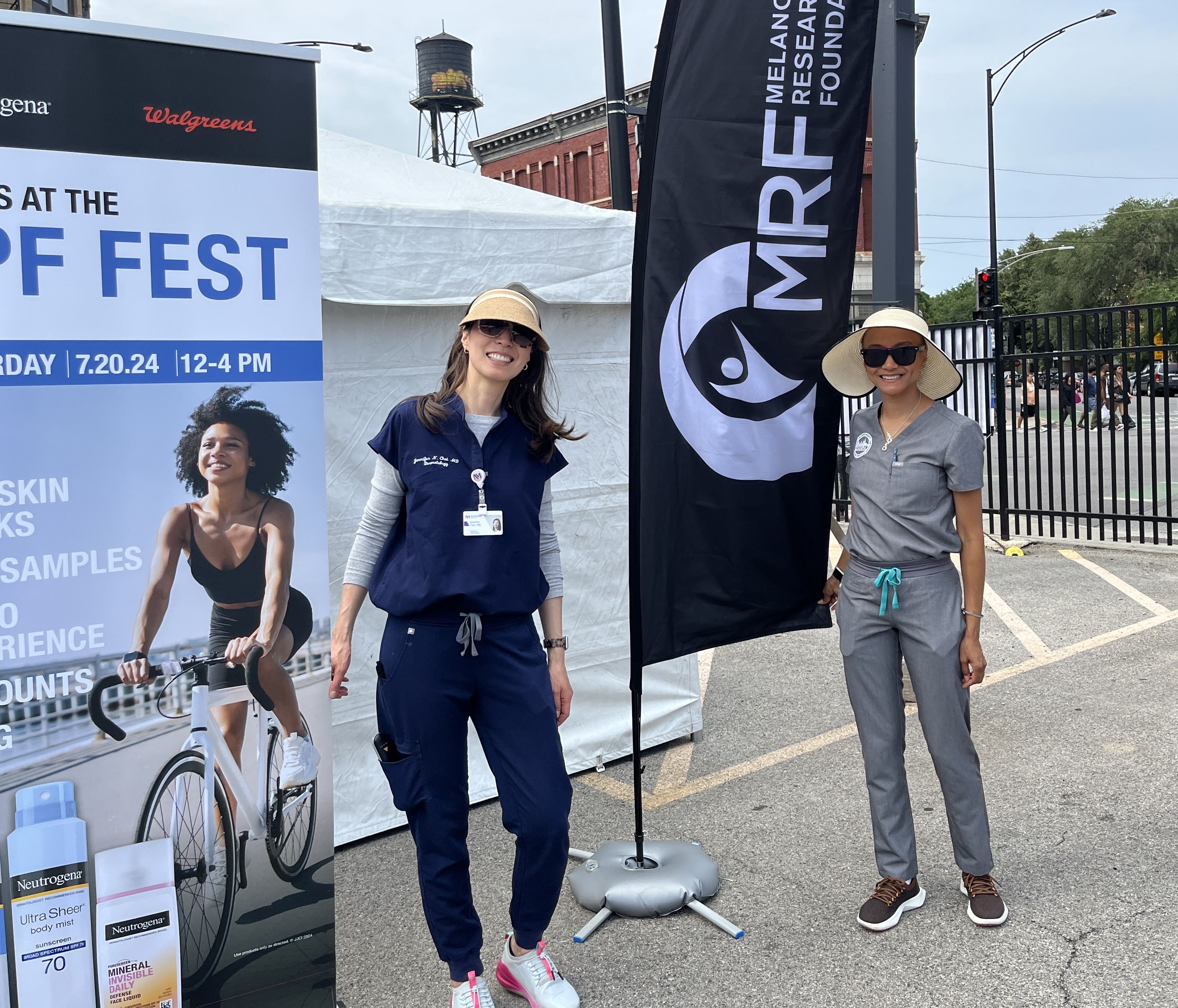
Be smart: Choi and Illinois Society of Dermatology president Jang Mi Johnson recently shared tips at a Wicker Park SPF awareness event.
- Apply at least a shot glass full of sunscreen every few hours, and don't forget the ears and head.
- Use large wide-brimmed hats, sun protective clothing and sunglasses.
- Talk to your primary care physician (PCP) about any new skin development "that is different, growing, bleeding or changing colors, or a wound that doesn't heal," Johnson says.
- Your PCP can then refer you to a dermatologist for further consultation.
Go deeper: How to pick a "safe" sunscreen