Tornadoes and extreme weather are the new norm


Add Axios as your preferred source to
see more of our stories on Google.
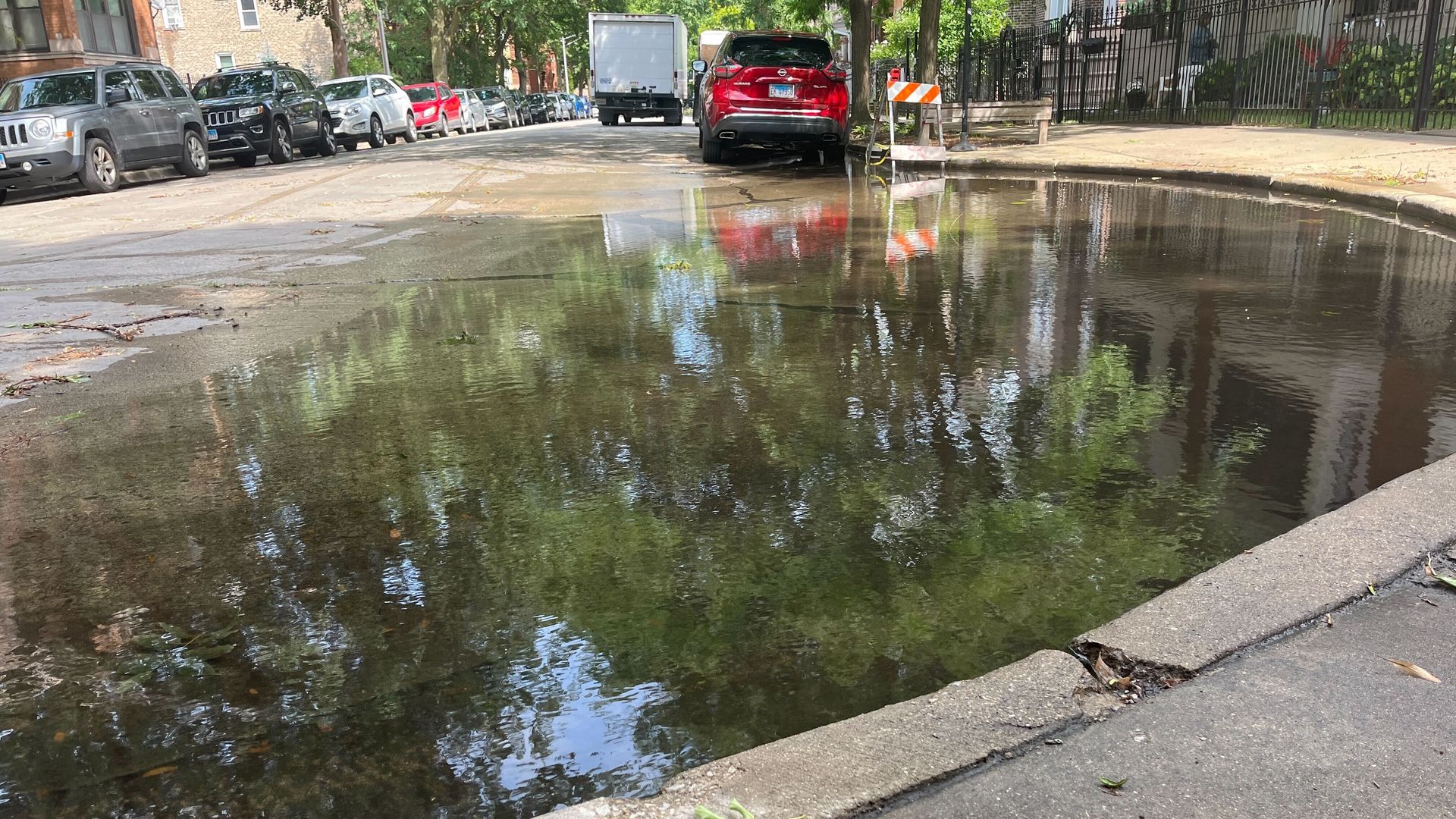
Photo: Carrie Shepherd/Axios
Multiple tornadoes, heavy rains and high winds in the last few days have wreaked havoc on Chicago.
The big picture: This has been the second-busiest year for tornadoes, behind 2011, as climate change is increasing the likelihood of severe weather outbreaks.
Driving the news: The National Weather Service on Tuesday was surveying several areas for damage, including in Joliet and Kankakee, and one woman in Northwest Indiana died after a tree fell on her house Monday night, the Sun-Times reported.
- Trees were down citywide Tuesday and ComEd was working to restore power for thousands of customers, as about 200,000 had been affected at one point.
State of play: Tornadoes reportedly touched down at both O'Hare and Midway Airports on Monday night, with travelers sharing images of sheltering in place and views from the runway.
- The NWS reported Tuesday that a tornado from Midway to Bronzeville was EF-0 and its path was 9.6 miles and another EF-0 from Englewood to Jackson Park was 3.6 miles. Both recorded 80 mph winds.
- The agency is investigating over 25 different pathways that could have been tornadoes.
- Broadcast meteorologists marveled at the derecho weather system, with multiple forecasters saying they'd never seen a storm like it before.
Between the lines: The new reality is forcing local governments to allocate more resources to weather-related cleanup and aftermath.
- Last year, July's thunderstorms caused several West Side homes to flood, leading President Biden to approve a disaster declaration.
The latest: Mayor Brandon Johnson and the Chicago Department of Housing yesterday announced more funds for the Flood Assistance Repair Program (FARP), which was created to help 2023 flood victims.
- $5 million will be added to the $172 million already allocated by FEMA, and it will be prioritized to help seniors residing in single-family homes.
- Recipients are eligible for up to $25,000.
Yes, but: That investment is retroactive and isn't designed to assist current flood victims — or future victims.
- This summer is shaping up to be just as bad. Last week, before the back-to-back storms, rains flooded basements on the South Side.
What's next: The city says crews are working "around the clock" to repair damage from this week's storms.