SCOTUS corruption case could have big implications for Illinois

Add Axios as your preferred source to
see more of our stories on Google.
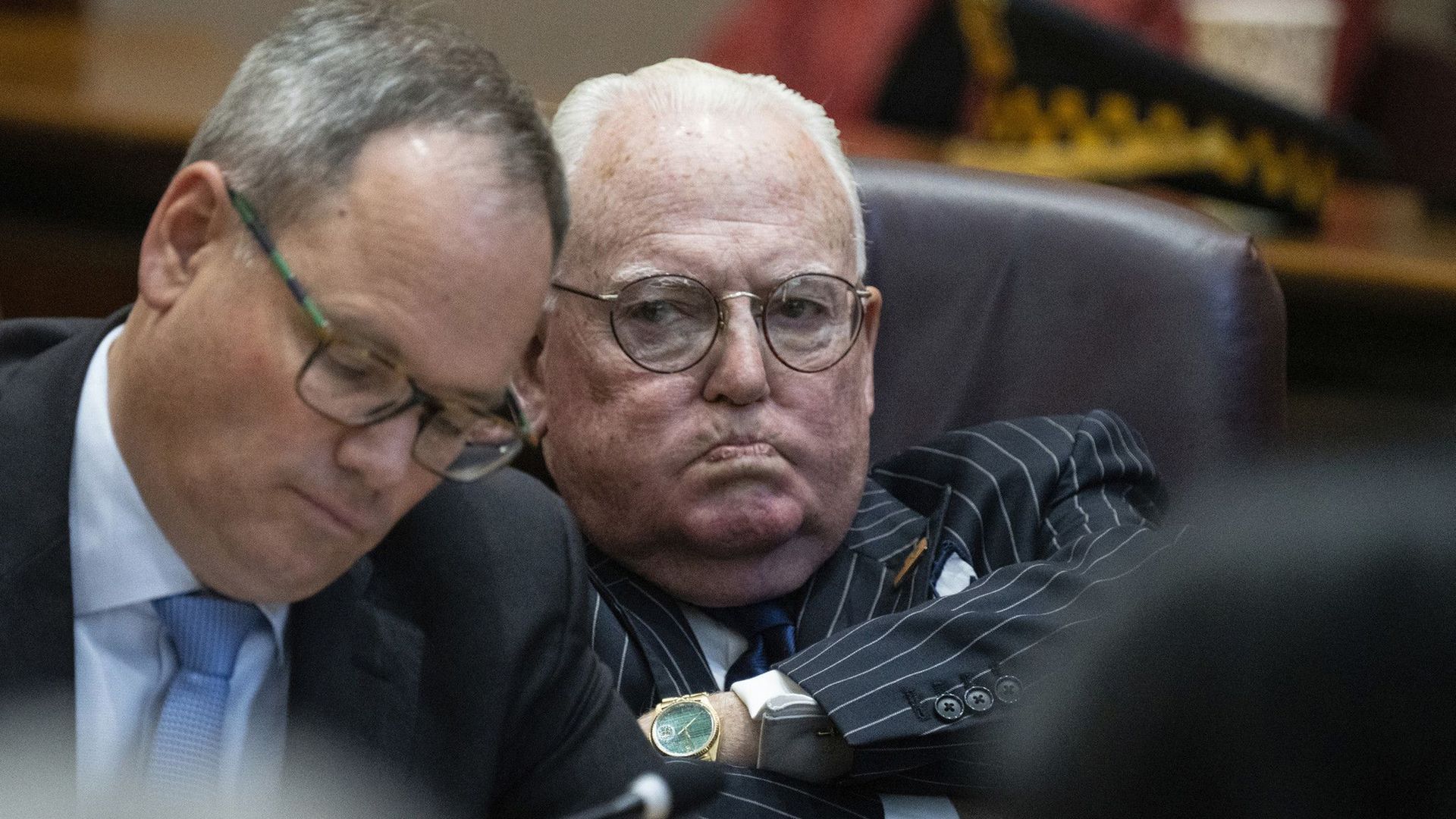
Former Ald. Ed Burke on Nov. 7, 2022. Photo: E. Jason Wambsgans/Chicago Tribune/Tribune News Service via Getty Images
Former Ald. Ed Burke was sentenced to two years in federal prison on Monday, presumably closing the book on one of the most notorious political careers in Chicago history.
Why it matters: Burke becomes the 10th alder since 2006 sentenced to prison for corruption, but a pending U.S. Supreme Court decision could significantly change what's considered corruption under the law and create a pathway for Burke to appeal.
Catch up quick: James Snyder, a former mayor of Portage, Indiana, was convicted of corruption for a quid pro quo on a consulting contract. His lawyers have argued that his actions were not a crime and appealed to the Supreme Court, which heard the case in April.
- Justices have signaled they want to clarify the bribery law in question.
- The court is expected to hand down a ruling soon.
State of play: Federal prosecutors have recently gone after politicians like Burke and former Illinois House Speaker Michael Madigan for using their power for personal gain through pay-to-play tactics.
- If the Supreme Court restricts or strikes down the law, the definition of corruption would shrink in scope, affecting the case against Madigan and the recent conviction of the "ComEd 4."
- The "ComEd 4," four former ComEd executives who were convicted of bribery in 2023, have had their sentencing delayed in anticipation of the decision.
- Madigan, too. Seven of the 23 counts against the disgraced speaker are based on this law. His trial was pushed back to October because of the Supreme Court case.
The intrigue: Burke wanted his sentencing delayed as well, but the judge denied the motion, saying his conviction didn't have anything to do with the law in question.
- That's not stopping Burke's lawyers from preparing appeals.
The bottom line: If the court narrowly defines corruption, we could see a monumental shift in what is not only considered political corruption, but who can be indicted, tried and convicted for it.
What's next: The Supreme Court usually wraps up its term by the end of June, but due to the significant caseload, it may extend the term into July.