Saying no to #NoMowMay in Illinois


Add Axios as your preferred source to
see more of our stories on Google.
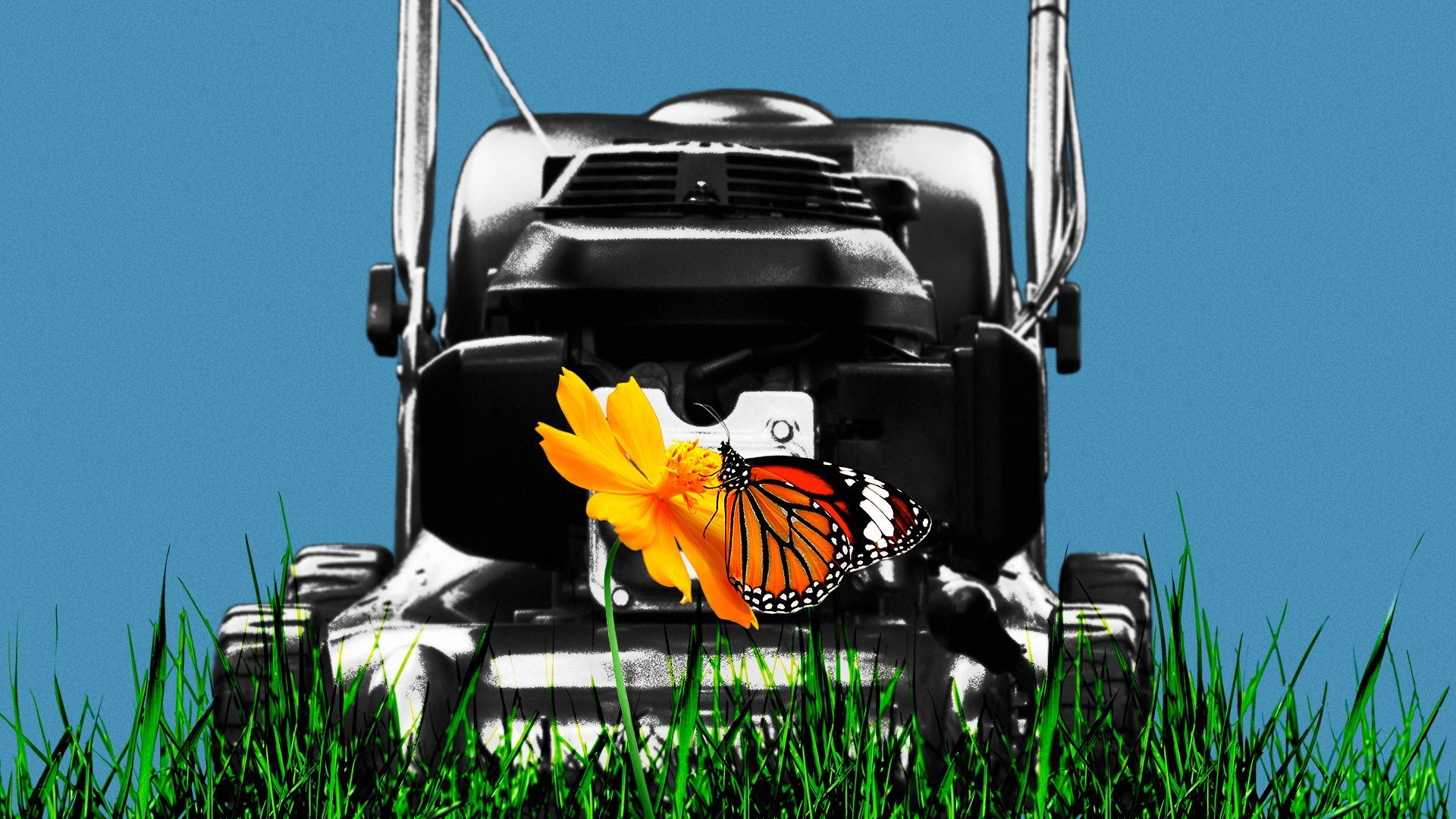
Illustration: Lindsey Bailey/Axios
#NoMowMay started as a way to help the environment, but movement may be having an opposite effect.
The big picture: The campaign has spread widely on social media in recent years, urging people to stop cutting their grass for the month in an effort to boost habitat and food for bees and other pollinators.
Reality check: Experts say the mowing hiatus doesn't actually help bees, and it could ruin your lawn.
Zoom in: Master Gardeners at the University of Illinois have pointed out that bees lay their eggs in leaf debris and plant stalks in the fall, so there are very few pollinators left by May.
- Instead, weeds like dandelions contribute to pollen counts, which can lead to allergies and breathing issues.
- They suggest the real culprit are leaf blowers, which kill eggs.
Catch up fast: The idea originated in England before spreading to the Midwest, where it was embraced by environmental groups and some local and state governments.
State of play: An academic study supporting the theory that a month off from mowing helps bees was retracted in 2022.
- Cities are backing away from the trend, too. Des Moines dropped the program after one year and hundreds of tall grass complaints.
The other side: Supporters of the no-mow campaign say it's raised awareness of the negative environmental impacts of grass lawns.
- And there are studies that show limiting mowing to once every two to three weeks throughout the growing season increases the number and types of bees drawn to suburban yards.
The bottom line: You can support bees on your property in many ways.
- Options include installing pollinator gardens of local perennials that provide season-long nourishment to bees and encouraging clover and violas to mix with existing turf.