Bicyclist fatalities increase in Atlanta


Add Axios as your preferred source to
see more of our stories on Google.
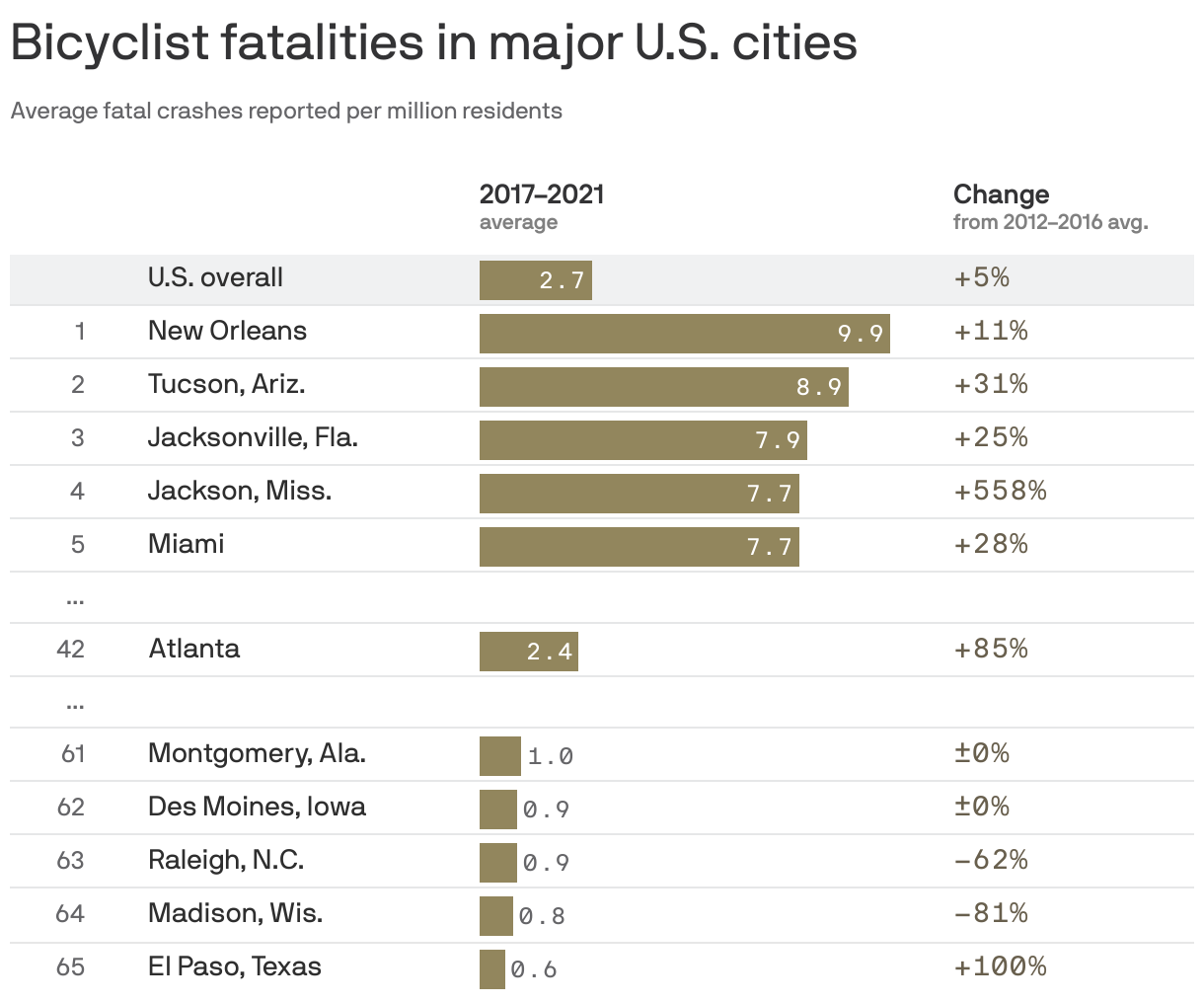
There were 2.4 fatal bicycle crashes on average for every million Atlanta residents between 2017-2021, per data from the League of American Bicyclists via the National Highway Traffic Safety Administration — up 85% from 2012-2016.
- That stat's based on Atlanta's roughly 500,000 residents.
Why it matters: More and more Atlantans are opting for two wheels instead of four, fueling demand for new bike lanes and other measures to safely move around a city that's long catered to automobiles.
Zoom out: There were 2.7 fatal bicycle crashes on average for every million U.S. residents between 2017-2021 — up 5% from 2012-2016, writes Axios' Alex Fitzpatrick.
- Atlanta ranked no. 42 among large U.S. cities and metropolitan areas.
Between the lines: The relatively low number of bicyclist fatalities in the city each year — Atlanta saw six total from 2017 to 2021, according to federal data — can make percentages appear misleading, Rebecca Serna of Propel ATL, a bicyclist and pedestrian advocacy organization, told Axios.
- The five-county metro Atlanta region reported 27 bicyclist fatalities from 2017-2021, according to federal data.
Zoom in: Crews are currently building buffered lanes in Downtown near city, county and state government buildings and (after much waiting) along Juniper Street in Midtown.
- The city recently received a $30 million grant to build much-needed north-south bicycle routes linking Downtown to the Beltline's Southside Trail.
The intrigue: Cities are grappling not just with an upswing in traditional bicycle use, but also a boom in e-bikes used by residents, tourists and delivery workers.
Reality check: Protected bike lanes and other measures designed to keep cyclists safe are often met with fierce pushback from urban drivers who lament the loss of lanes or parking spots.
What's next: Cities nationwide are applying for state and federal money — including some set aside as part of the 2021 infrastructure law — to further develop their bike trail networks and other cycling infrastructure.