Thursday's health stories


Trump administration announces new tariffs on drugmakers
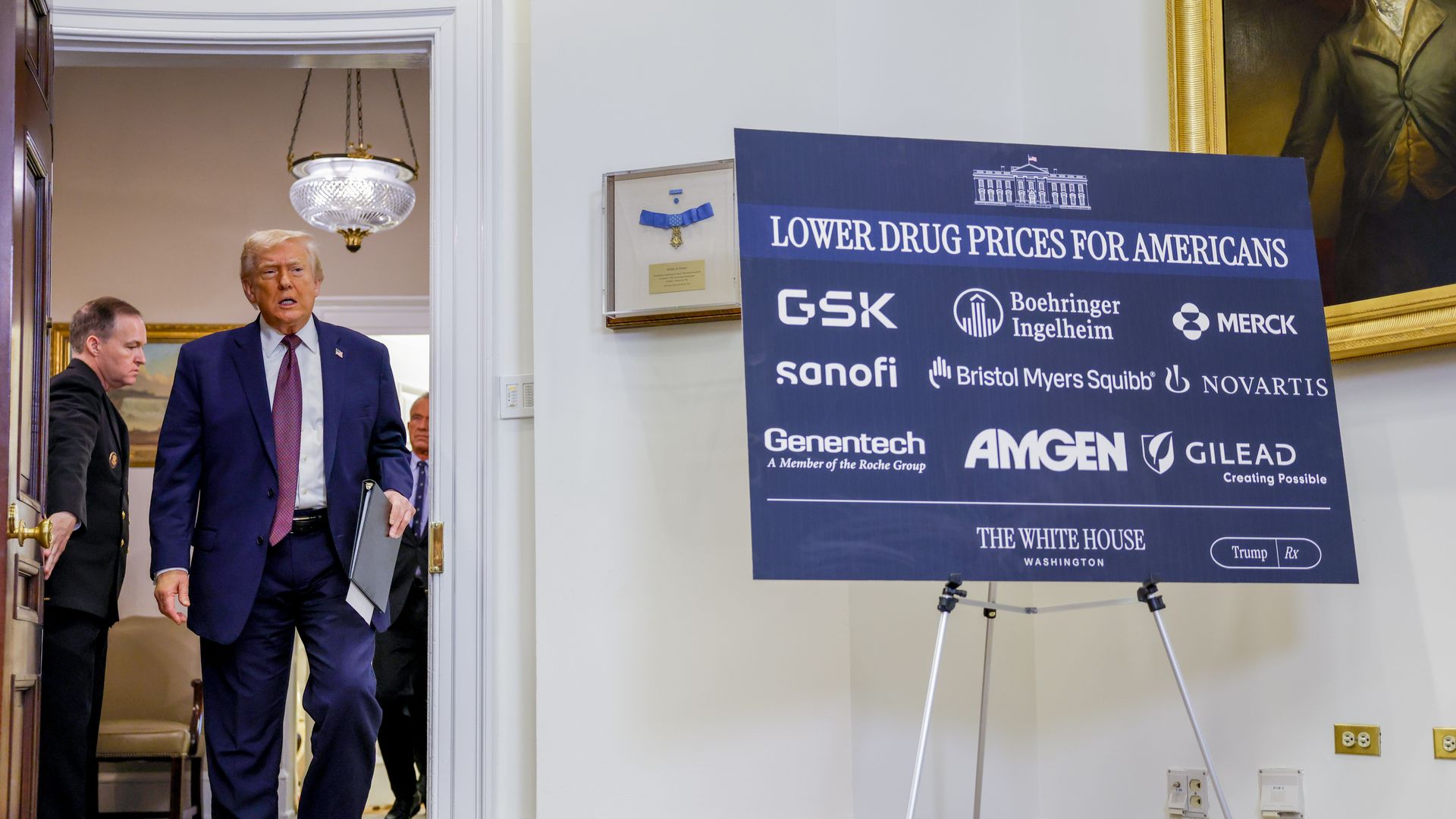
The Trump administration said on Thursday that it would impose 100% tariffs on patented pharmaceuticals to force deals for lower drug prices and move manufacturing to America.
Why it matters: It is the latest example of President Trump using tariffs as leverage over corporate America.

AI meets egg freezing

Sunfish — an AI-powered fertility platform — is introducing an egg-freezing program that uses predictive models to estimate the cost of reaching a target number of eggs.
Why it matters: Fertility treatments are a significant contributor to debt for many families in the U.S., but unlike mortgages, student debt or car payments, the treatments usually give people little transparency into what the final bill will be.

Office vacancies hit record high


Companies simply don't need as much office space these days.
Why it matters: The pandemic triggered a permanent, fundamental shift in how people work.
The latest: Vacancy rates hit a record high in the first three months of the year, per data Moody's shared exclusively with Axios.
By the numbers: 21% of the office space across 79 markets in the U.S., mostly cities, was vacant in the first quarter — up from 17% in 2020.
Zoom in: Although the return-to-office trend was certainly real, plenty of people still work remotely or on hybrid schedules.
- That means office spaces have shrunk — continuing a pre-pandemic shift in which employers leaned toward more collaborative workspaces, with fewer cubicles and personal offices, Moody's says.
- There's also been a surge of interest in pricier premium spaces known as Class A. Some companies are choosing to downsize into these kinds of offices — trading off extra space for prem-o property.
- "Companies are adjusting to decreased office space requirements as flexibility and collaborative environments for in-office days have become the norm," writes Moody's associate economist Nick Luettke.
Follow the money: The slowing labor market and questions over how the AI transition will shake out are also holding back demand for offices.
The big picture: Even after an aggressive return-to-office push by employers, workers spend about a quarter of their working days away from its confines — compared with 7% in January 2020.
Friction point: The still surging vacancy rate is a sign of just how slow the commercial real estate market moves.
- There are long leases in the office sector, five or even 10-year terms, and companies change their arrangements slowly.
What to watch: With the whole sector changing, the "office" is getting a rebrand, write the authors of another soon-to-be-published report from Moody's commercial real estate team.
- Out: offices in isolated central business districts.
- In: workspaces that are more integrated into their surroundings, close to residential areas and featuring hybrid-friendly spaces. Food options don't hurt either.
- "More than ever, the office is no longer viewed solely as a place to work, but as a tool to attract and retain young talent, reinforce company branding, and elevate the in‐person experience," write the authors of the report.
Between the lines: The office transformation is similar to what's happened to the retail sector. Brick-and-mortar stores had to adapt to online shopping and become more enticing to shoppers by being more experiential.
The bottom line: The office as we knew it is changing for good.
Research advocates prepare for next NIH budget fight

Medical research advocates are bracing for a grinding election-year fight over the future of the National Institutes of Health with the expected release of the Trump administration's FY 2027 budget Friday.
Why it matters: Congress rejected the steep 40% cut the administration proposed for NIH last year, but the biomedical research institution continues to feel fallout from canceled grants, layoffs and a slower pace of getting money out the door to academic researchers.

States begin living with Medicaid austerity
Republicans' massive Medicaid overhaul and rising health costs are forcing state legislatures to begin cutting medical spending for the poor, raise taxes and take other steps to deal with a first-of-its-kind budget squeeze.
Why it matters: State budgets are due to shrink by $664 billion over the next decade because of the cuts in last year's GOP budget law, while medical costs are rising and state tax collections are lagging.