Trump administration announces new tariffs on drugmakers


Add Axios as your preferred source to
see more of our stories on Google.
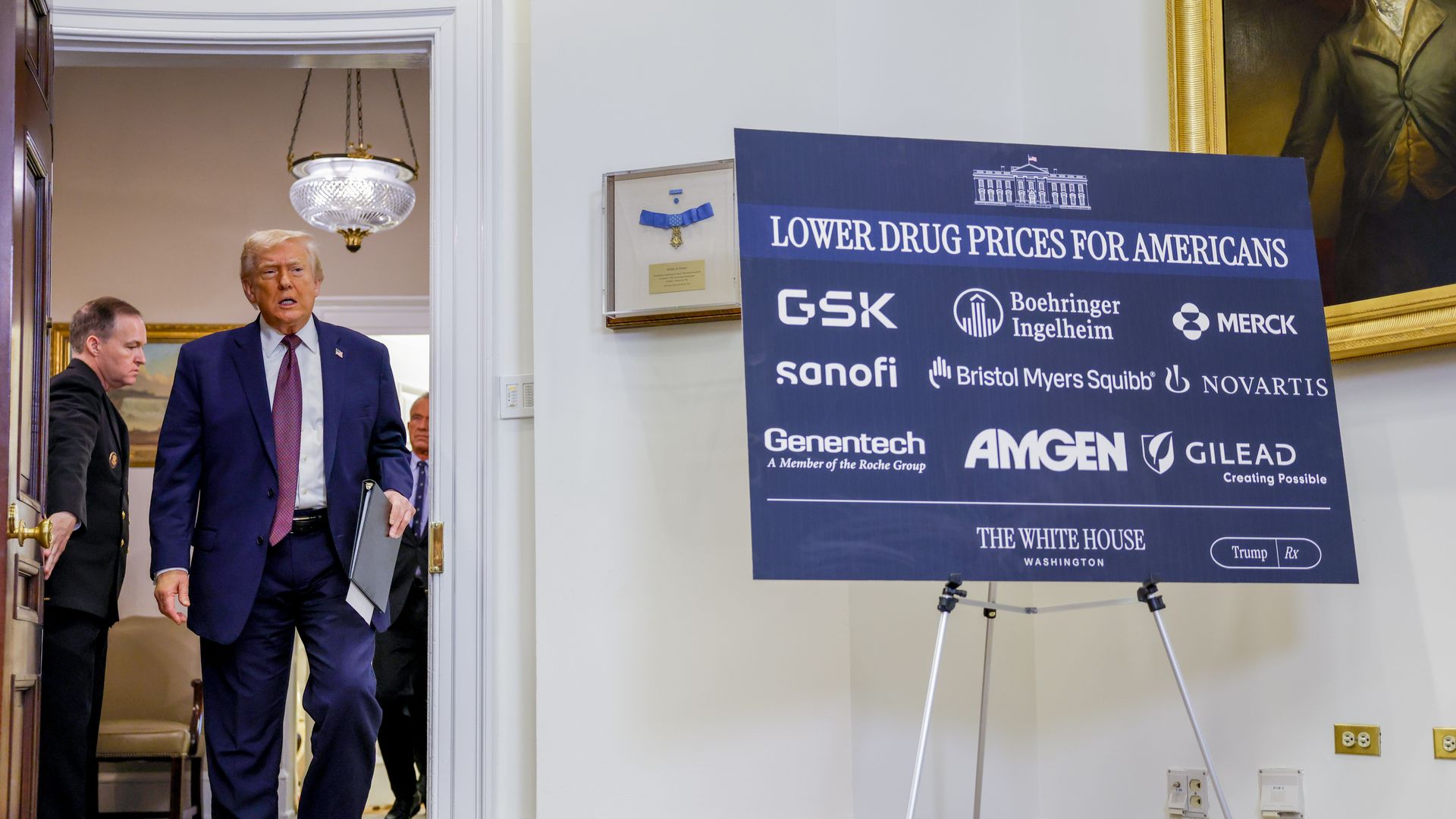
President Trump arrives for a drug pricing announcement in the Roosevelt Room at the White House in December. Photo: Will Oliver/EPA/Bloomberg via Getty Images
The Trump administration said on Thursday that it would impose 100% tariffs on patented pharmaceuticals to force deals for lower drug prices and move manufacturing to America.
Why it matters: It is the latest example of President Trump using tariffs as leverage over corporate America.
The big picture: The threat of tariffs, which has hung over the pharmaceutical industry for months, helped drive 13 drug companies to make "most-favored nation" pricing deals with the White House late last year.
- It is possible that more companies will strike these voluntary pricing deals with the administration, and the new tariff announcement could be further motivation to do so to be exempted.
- The new tariffs could also spark a wave of industry announcements about domestic manufacturing investments.
Zoom in: A senior administration official told reporters on Thursday that companies that commit to build drugs in America will be subject to a lower tariff rate of 20%.
- Companies will be exempt from the tariff altogether if they commit to onshore manufacturing and enter into a "most-favored nation" agreement.
- Pharmaceutical companies in Japan, South Korea, Switzerland and the European Union that do not do such deals would be subject to lower tariff rates consistent with previous trade deals.
- The tariffs take effect in 120 days for certain large companies and 180 days for smaller companies.
Between the lines: The tariffs appear to apply to major pharma manufacturing hubs like China, Singapore and India, but they could also encourage more manufacturers with operations there to cut deals with the administration.
- The tariffs apply only to branded drugs and their active ingredients. The White House said tariffs on lower-cost generic drugs and biosimilars would be reassessed in a year.
- The senior administration official said they expect all the big, patented pharmaceutical companies to build in the U.S.
Of note: The administration also announced tweaks to aluminum, steel and copper tariffs.
- The metals are still subject to a 50% tariff rate, though it will now be applied based on the price American buyers pay for the import — not the production cost declared by foreign exporters.
- The senior administration official told reporters that foreign exporters had been gaming the system, artificially deflating their declared production costs to shrink their tariff bills.
- Separately, goods containing these metals face a flat 25% tariff on the full product value — unless metal accounts for less than 15% of the product's weight, in which case no separate metals tariff applies.
Both actions stem from investigations initiated by Commerce Secretary Howard Lutnick under Section 232 of the Trade Expansion Act.
- The pharma industry was unaffected by the International Emergency Economic Powers Act tariffs, which the Supreme Court overturned earlier this year.
Adriel Bettelheim contributed reporting.
