Saturday's health stories


Trump admin payment tests aim to lower Medicare drug prices
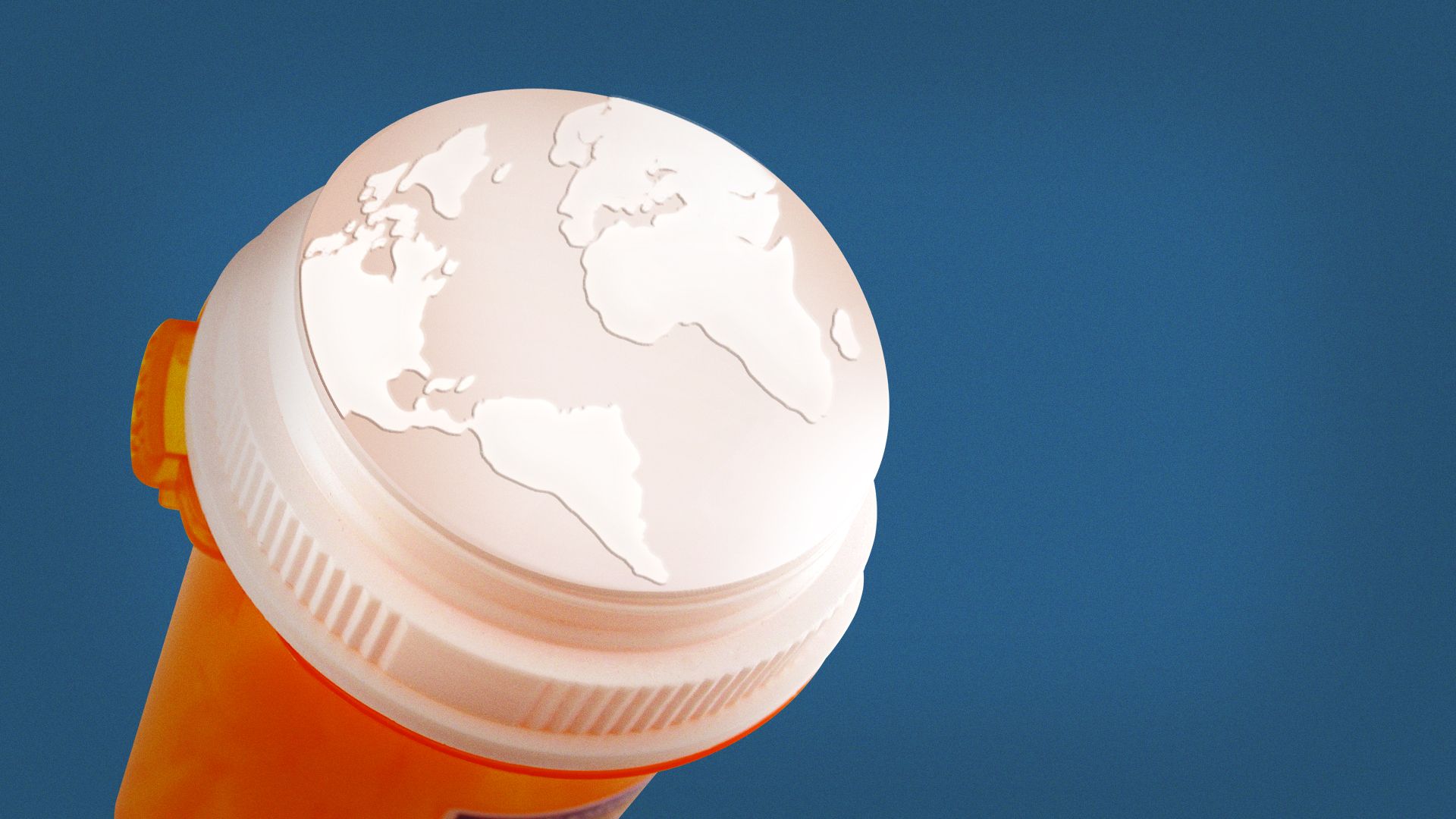
The Trump administration on Friday proposed two new programs aimed at saving Medicare billions of dollars on seniors' drugs by pegging what the government pays to prices in other developed countries.
Why it matters: While President Trump's deals with drugmakers have focused primarily on getting Medicaid and direct-to-consumer drug prices in line with peer countries, the new efforts focus on Medicare.
- But the programs still could wind up increasing seniors' prescription drug costs.
The big picture: One program aimed at prescription drugs could save $14.1 billion while a second for outpatient drugs could save Medicare $11.9 billion.
- Medicare enrollees should save $6.2 billion in out-of-pocket spending for outpatient drugs from 2026 to 2031, Medicare administrators predicted.
- But seniors still could see an estimated $3.6 billion increase in prescription drug costs between 2028 and 2033.
- That's because officials anticipate the new effort will incentivize pharmaceutical companies with drugs chosen for the separate Medicare price negotiations to broker higher prices, presumably to offset losses from the pilots.
How it works: Drugmakers in both of the new programs would pay rebates to the federal government if they charge more than an international benchmark based on what other comparable countries pay.
- Enrollee out-of-pocket costs for outpatient drugs in the program would also be tied to the international benchmark.
- The benchmarks would be calculated based on either international pricing information submitted by drugmakers or available information on drug prices in other developed countries.
The Global Benchmark for Efficient Drug Pricing Model would apply to drugs paid for by Medicare Part B and delivered primarily in a doctor's office or outpatient department.
- It would include antigout drugs, medications for metabolic bone disease and for central nervous system conditions, immunological drugs, ophthalmic drugs and blood products.
- The model would start Oct. 1, 2026, and run through 2031.
The Guarding U.S. Medicare Against Rising Drug Costs Model will apply to prescription drugs paid for by Medicare Part D, including analgesics, antidepressants, blood glucose regulators, migraine medications and drugs for gastrointestinal issues.
- GUARD excludes generic drugs and biosimilars.
- It would run Jan. 1, 2027, through Dec. 31, 2031.
Both programs would exclude drugs that already have been selected for Medicare price negotiations.
What they're saying: The pharmaceutical industry bashed the proposed programs.
- "Government policies that mandate broad-based foreign price controls are bad for American patients and undermine U.S. leadership," Robby Zirkelbach, PhRMA's chief public affairs officer, said in a statement.
- "By CMS' own admission, the proposed policies are projected to increase costs for America's seniors, and they will siphon billions from U.S. medicine R&D at a time when China is on the verge of surpassing us," he added.
The proposals are open for public comment until Feb. 23.
Editor's note: This story has been corrected to reflect that the estimated savings of $14.1 billion pertain to prescription (not outpatient) drugs, the $11.9 million savings pertain to outpatient (not inpatient) drugs, and the $6.2 million savings in out-of-pockets expenses pertain to outpatient (not inpatient) drugs.

Bitter fight over health care hits Democratic Senate primaries
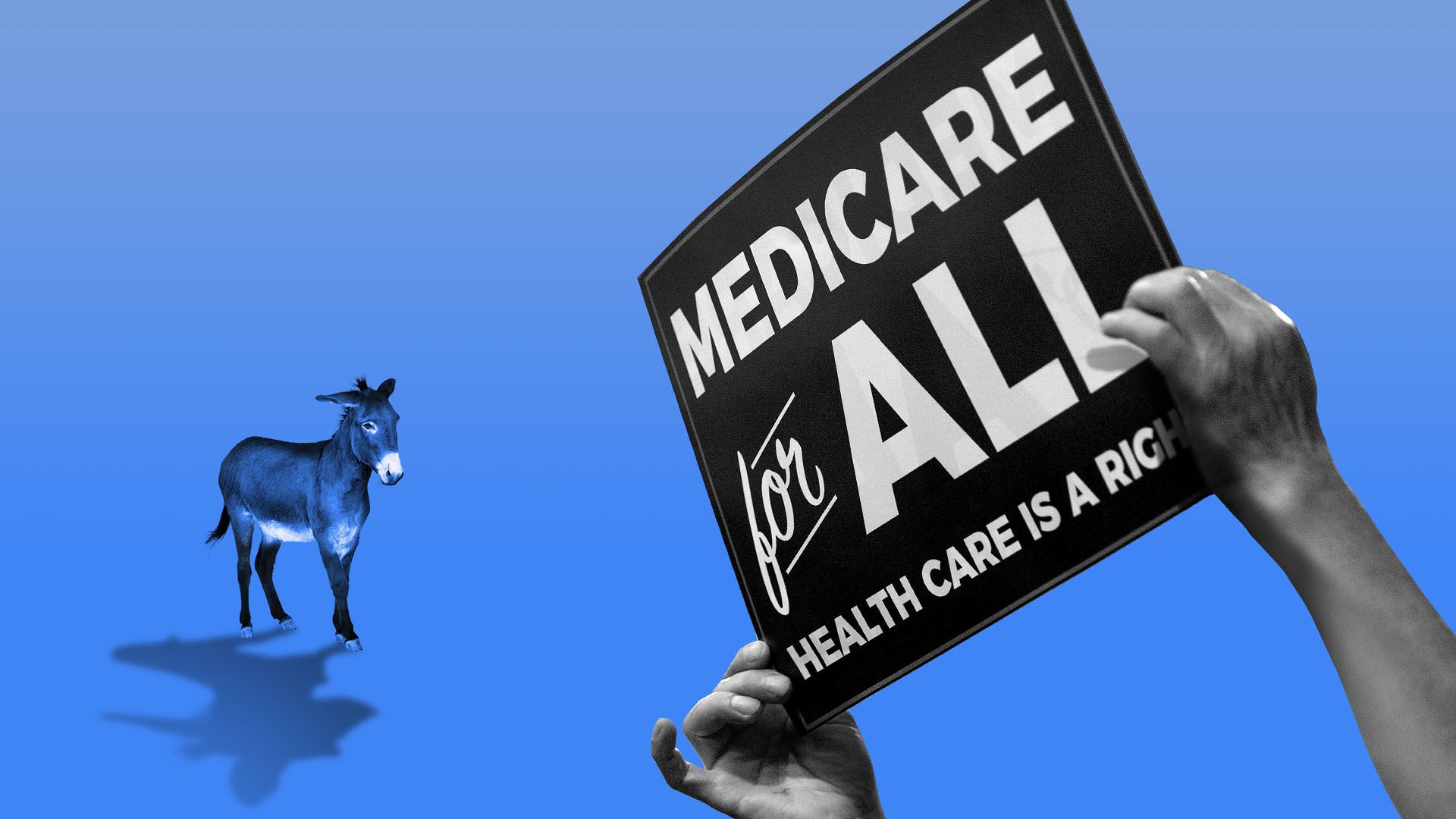
Democratic candidates across the country are reigniting an old, bitter debate over "Medicare for All."
Why it matters: Medicare for All fractured Democrats in the 2016 and 2020 presidential primaries. Now it's starting to do the same in Senate races.
Nine more drugmakers meet Trump on pricing plans
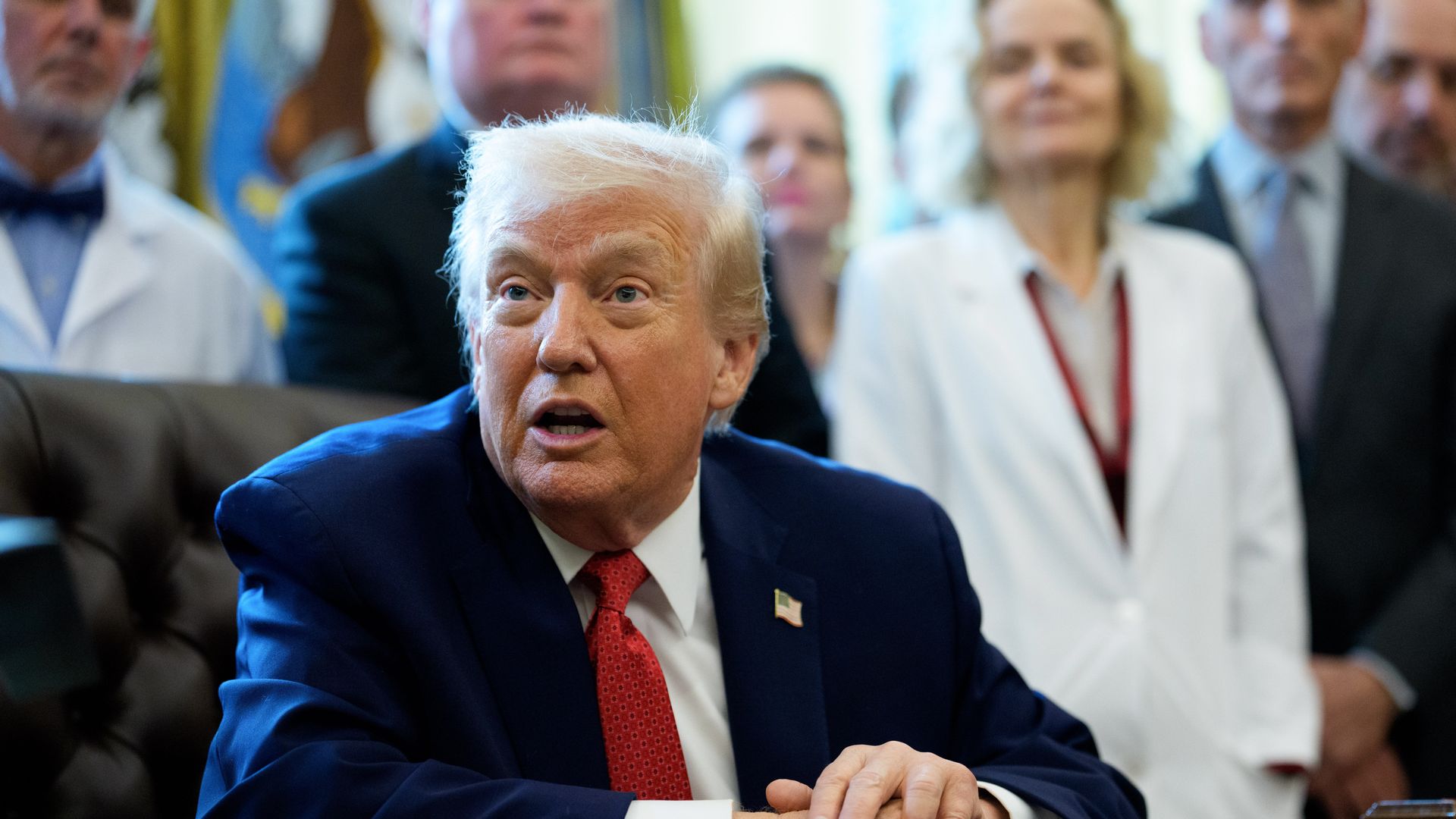
Nine more pharmaceutical companies on Friday committed to President Trump's "most favored nation" drug pricing policy and agreed to lower U.S. prices for some of their products.
Why it matters: The deals with Merck, GlaxoSmithKline, Sanofi, Genentech, Bristol Myers Squibb, Amgen, Novartis, Gilead and Boehringer Ingelheim continue the administration's push to put U.S. drug prices in line with the lowest price paid in selected other developed countries.
- Trump also said Friday he plans to call a meeting soon with health insurance companies to "see if they get their prices down."
The big picture: The drugmakers that committed on Friday were among the the 17 Trump sent letters to last summer, demanding they commit to his pricing regime and lower their prices in the U.S.
- Trump has also demanded that other countries pay more for pharmaceuticals or face steep tariffs.
- "If we didn't have the use of tariffs, we would never be able to do this," Trump said Friday.
State of play: The companies have agreed to offer all drugs to Medicaid at most favored nation pricing. They'll also list their most popular drugs at a discount on the government's soon-to-be-launched TrumpRx for direct-to-consumer purchasing, Trump said.
- The companies will collectively invest more than $150 billion in domestic drug manufacturing. They've also committed to donating some pharmaceutical ingredients to the U.S.'s national stockpile of medications.
- Bristol Myers Squibb said that it will offer its blood thinner Eliquis to Medicaid for free.
Reality check: Patents have already expired for some of the drugs that will be offered at a lower price on TrumpRx, including Sanofi's blood thinner Plavix and GSK's inhaler Advair — meaning lower-cost generic versions are already available to patients.
Flash back: The administration this fall announced separate pricing deals with Pfizer, AstraZeneca, EMD Serono, Eli Lilly and Novo Nordisk.
- Those deals included Medicaid price concessions and agreements to launch future drugs in the U.S. at prices pegged to what's paid abroad.
- The companies have also committed to participating in TrumpRx, which is due to launch in January. Few details on actual terms have been released.
Trump said three additional pharmaceutical companies, including Johnson & Johnson, have also struck deals with the administration that will be announced next week, rounding out the list of companies that received letters from the president earlier this year.
What they're saying: Pharmaceutical company executives praised Trump and the administration during remarks at the White House.
- "For too long, global pricing imbalances have shifted the financial burden of groundbreaking research and development onto the U.S. health care system and ultimately, American patients," Merck CEO Robert Davis said in a statement.
Democrats in Congress this week questioned companies on details of the deals and whether they would lower prices for consumers.
- Among the details they sought were how prices for newly launched drugs be set, the length of the agreements and the specific drugs covered.
This story has been updated with additional reporting.
Go deeper: The pharmaceutical industry isn't yet in the clear

Exploring the evolution of metastatic breast cancer care

Every minute, about four people around the world will be diagnosed with breast cancer, and it's estimated that 1 in 4 of them will develop metastatic disease, which remains incurable.

JFK's family erupts over "Trump-Kennedy Center" renaming plan
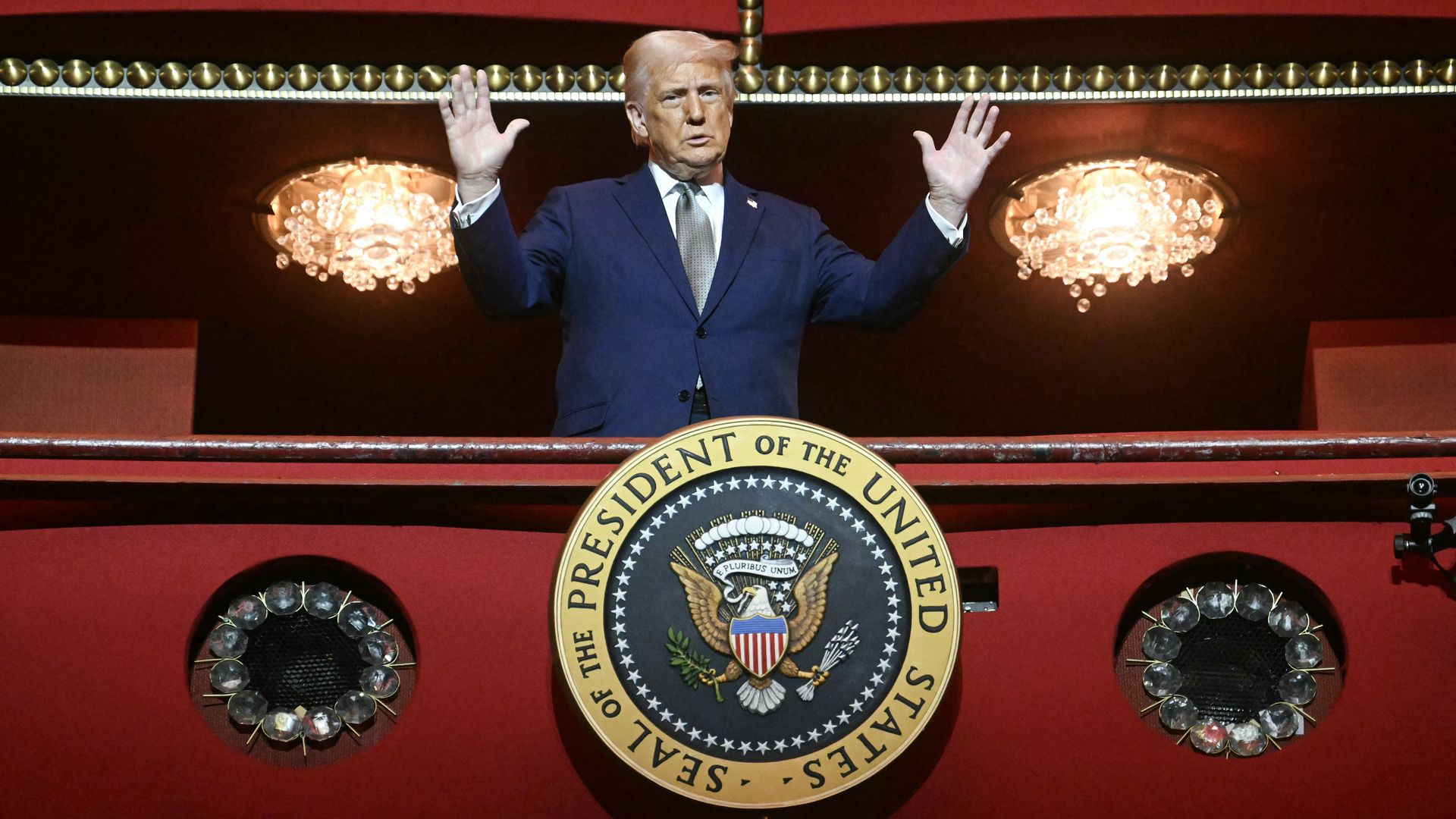
Kennedy family members on Thursday denounced a plan to rename the Kennedy Center so it includes President Trump's surname.
The big picture: White House press secretary Karoline Leavitt announced the "Trump-Kennedy Center" name change earlier Thursday after a board that the president handpicked earlier this year voted unanimously to rename the performing arts venue.