Bitter fight over health care hits Democratic Senate primaries

Add Axios as your preferred source to
see more of our stories on Google.
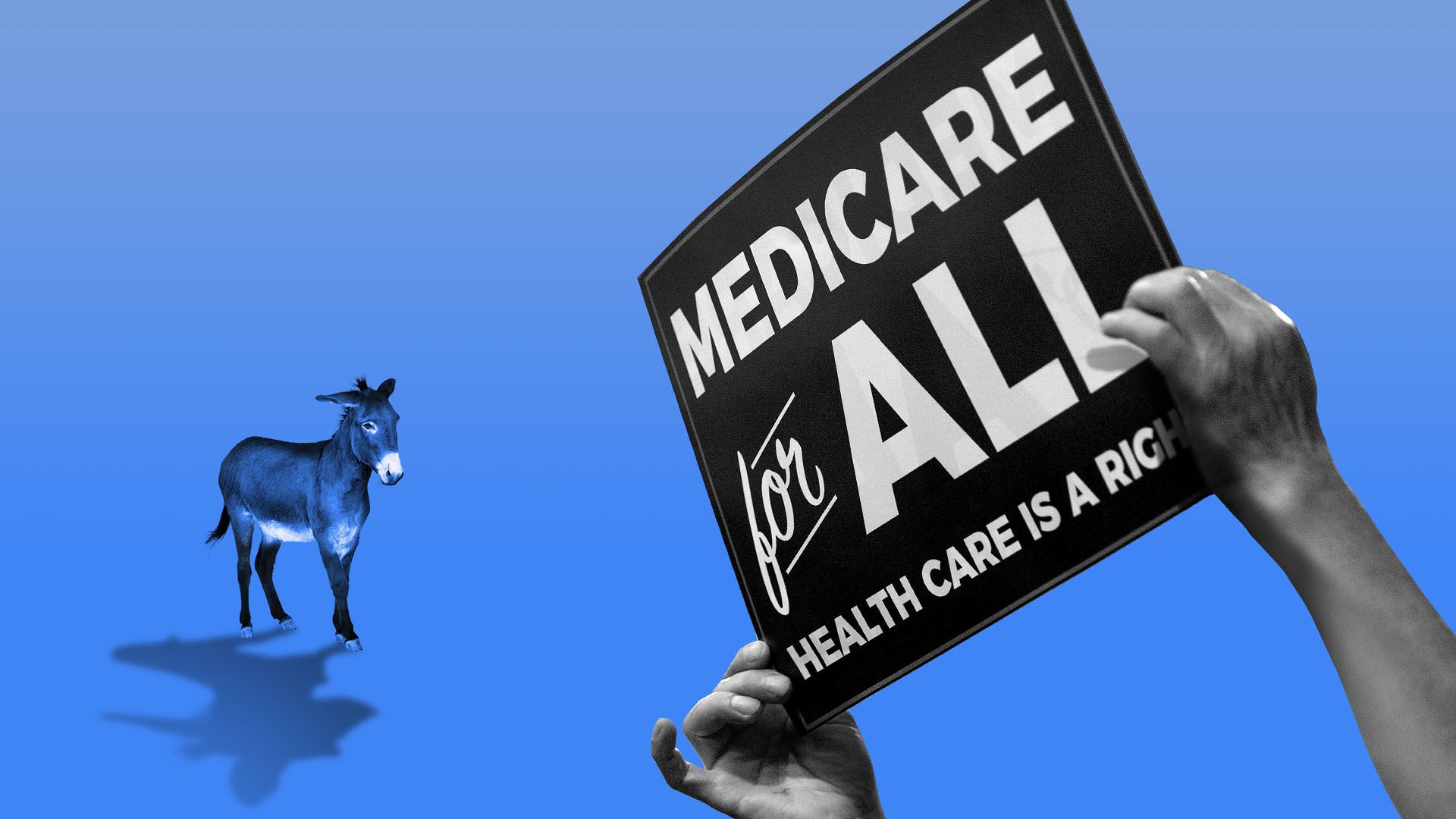
Illustration: Sarah Grillo/Axios
Democratic candidates across the country are reigniting an old, bitter debate over "Medicare for All."
Why it matters: Medicare for All fractured Democrats in the 2016 and 2020 presidential primaries. Now it's starting to do the same in Senate races.
- Party leaders like Senate Minority Leader Chuck Schumer (D-N.Y.) want to make the midterms a referendum on affordability and health care.
- But top progressives view the 2026 primaries as a critical opportunity to remake their case for Medicare for All ahead of 2028.
Zoom in: In Maine, progressive Graham Platner supports Medicare for All. Maine Gov. Janet Mills, the pick of party leaders, has called on Congress to extend expiring Affordable Care Act tax credits.
- Mills has also said she supports a universal health care care plan, "whether you call it Medicare for All or something else."
- Progressive Abdul El-Sayed in Michigan has backed Medicare for All for years. In that primary, Mallory McMorrow has bashed Medicare for All but supports a public option. Rep. Haley Stevens (D-Mich.) also does not support Medicare for All, instead calling for strengthening the ACA.
- In Minnesota, Lt. Gov. Peggy Flanagan, who has the support of national progressives, is backing Medicare for All. Rep. Angie Craig supports a public option but not Medicare for All.
Between the lines: For progressives, the Senate primaries are ground zero for the latest chapter of their fight for a single-payer health care system.
- Sen. Bernie Sanders (I-Vt.) told Axios this week that "the opportunity now is to prove aggressively that Medicare for All is right."
- Sen. Chris Van Hollen (D-Md.), who has caught the eye of progressive groups and grassroots, told Axios this week that Democrats' "next step is to stop tinkering with a broken system." He recently cosponsored a Medicare for All bill in the Senate.
Editor's note: This article has been updated to add Mills' comments on universal health care.
