Friday's health stories

Blue states change course on mental health policies
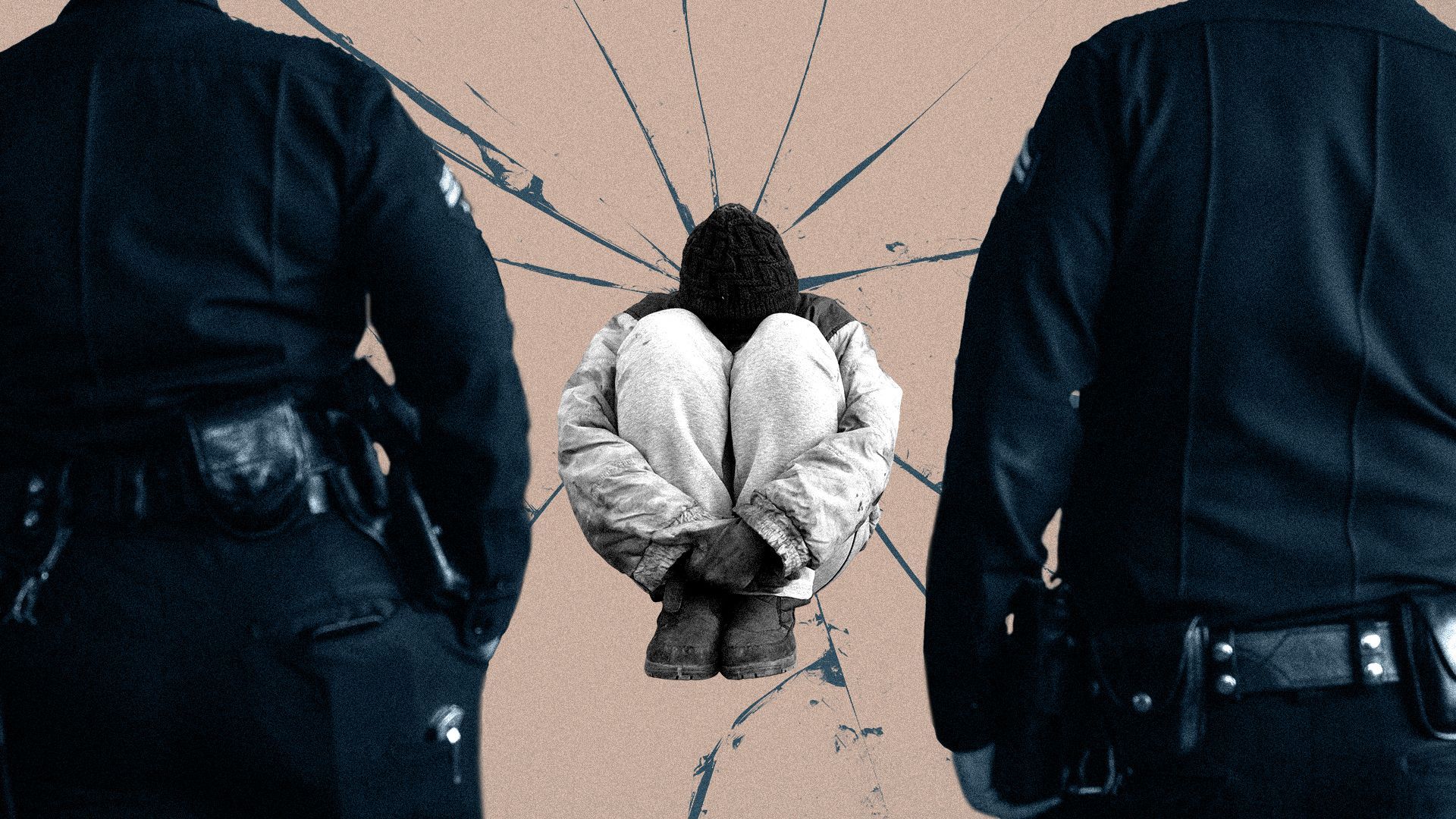
Cities and states that once championed progressive approaches to mental health and drug use are continuing their yearslong course reversal, and are increasingly open to involuntary commitment.
Why it matters: The push to get people with severe mental illness help — especially those who are homeless — is a response to public backlash, but may be outpacing the availability of high-quality treatment for them.
The big picture: Writing the "blue states abandon progressive drug/mental health policies" story has begun to feel repetitive to me — this has been ongoing for years. But it continues to take different iterations, and it's worth continuing to write about until someone figures out how to solve the problem.
- And defining the problem can depend on who you ask. For many voters, they're looking for public places they feel are safer. But for patients with mental illness, treatment and support can be incredibly hard to access.
- It's even more complicated when the mental illness is combined with substance abuse — a situation that lands many in hospital emergency rooms, cut off from needed supports and services.
Reality check: Out-of-sight, out-of-mind isn't a solution, at least not from a health care perspective (this isn't a public safety newsletter).
- And the current trends of government-mandated treatment or simply the criminalization of homelessness and mental illness are occurring at a time when the federal government is considering vastly decreasing funding streams vital to mental health treatment, especially Medicaid.
State of play: Some cities are responding to 2024 election results, in which voters elected candidates to office based on who spoke to their desire for addressing "this nexus of addiction, mental illness and homelessness," said Keith Humphreys, a professor of psychiatry at Stanford University.
- Humphreys authored a recent Brookings Institution report that found policy frameworks in the Pacific Northwest region that had decreased law enforcement's role in drug policy have since seen public and policymaker support plummet, and have been rolled "back as fast as [they] had been implemented."
- San Francisco voters elected Mayor Daniel Lurie, who told the New York Times that his success depends on "if we grow our economy, if we get people off the streets and into mental health beds, if people feel safe walking down our streets again." Lurie last month unveiled his vision for addressing the city's homelessness and behavioral health crisis.
- And some changes are stemming from last year's Supreme Court decision allowing state and local governments to prohibit sleeping outdoors.
- In Silicon Valley, San Jose's Democratic mayor recently called for arresting homeless people after they resist shelter three times, the NYT recently reported. The goal is to move them into mental health treatment, but they could end up serving jail time.
Between the lines: One clear trend is the growing support for the involuntary commitment of mentally ill patients.
- Oregon state lawmakers are considering changing the civil commitment standard, making it easier for judges to order people in crisis into hospital care. Gov. Tina Kotek has called for lowering that legal threshold, as well as creating hundreds of more treatment beds and better linking people in homeless shelters to mental health services.
- New York Gov. Kathy Hochul earlier this year proposed making it easier to take people having a psychiatric crisis to a hospital involuntarily and requiring better coordination after patients leave the hospital.
- Homelessness and mental illness are also becoming big issues in New York City's mayoral race.
And, of course, California has been implementing its "Care Courts," which allow civil court judges to order adults into monitored plans that can include treatment for severe mental illness, while New York City has been rolling out Mayor Eric Adams' controversial involuntary removal directive.
Yes, but: The programs aren't free from criticism, despite other blue states' willingness to take similar actions.
- Early data has shown that the California initiative — signed into law by Gov. Gavin Newsom in 2022 — has fallen short of its early goals, per KFF Health News.
- Adams' plan has been criticized as ineffective by a City Council report, which also raised questions about racial disparities within the program, per CBS News.

Prosecutors to seek death penalty for Luigi Mangione

Federal prosecutors told a court Thursday they intend to seek the death penalty for Luigi Mangione, the man charged with murder in connection to the killing of UnitedHealthcare CEO Brian Thompson last year.
The big picture: The move formalizes Attorney General Pam Bondi's direction to prosecutors earlier this month.

The viral Ice Bucket Challenge resurfaces to raise awareness for mental health

It's been over a decade since celebrities, brands and everday people were posting videos of themselves on the internet being doused with buckets of ice to raise awareness about ALS.
Driving the news: Students from the University of South Carolina revived the trend last month in support of mental health.

Gen Z increasingly listens to peers over doctors for health advice
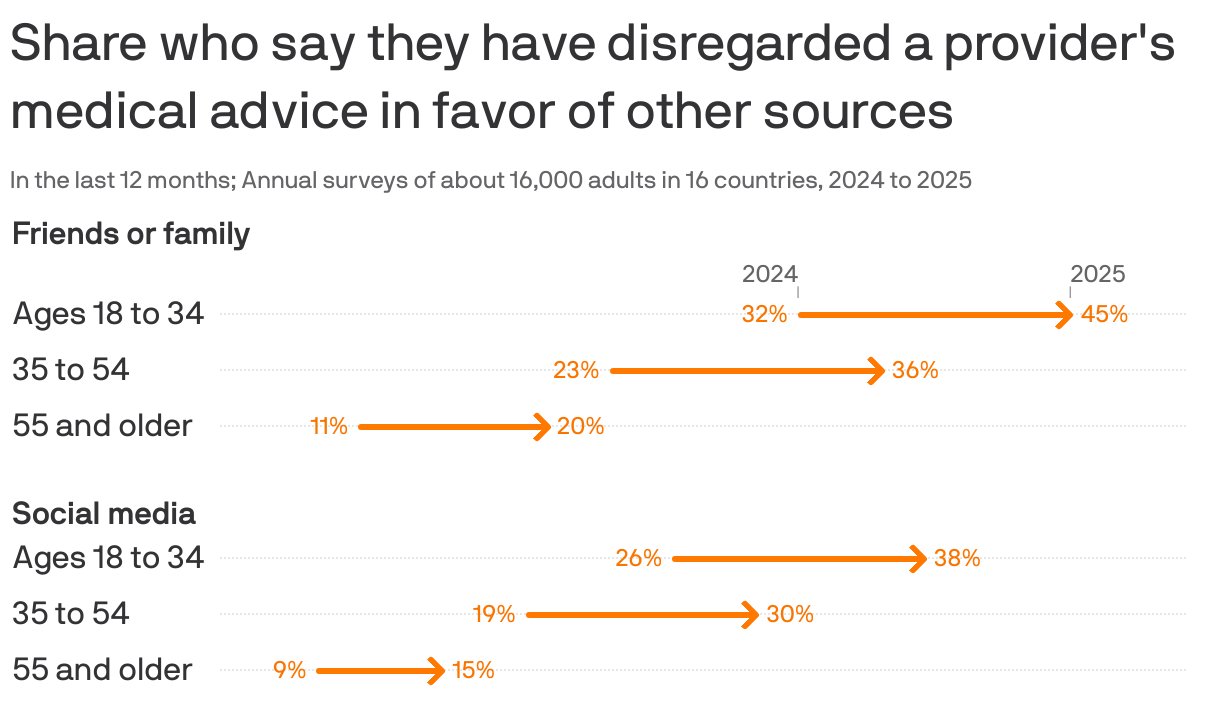
Young adults around the world are increasingly taking health decisions into their own hands, according to new global survey results from communications firm Edelman.
Why it matters: Adults under age 35, many who've come of age since the beginning of the COVID-19 pandemic, still rely on their individual providers to help with medical choices. But they're also seeking information on their own more than ever.

Driving with COVID linked to higher crash risk

Driving with a case of COVID raised the odds of having a car crash about as much as being at the legal threshold of DUI or running a red light, according to an analysis of pandemic-era public health and transportation records from seven states.
Why it matters: Even mild COVID infections can cause "brain fog" and other impairment, affecting a person's ability to concentrate, reason and solve problems.

Key FDA drug data goes missing amid DOGE cuts
/2025/04/09/1744221752741.gif?w=3840)
Food and Drug Administration databases that physicians and public health experts rely on for key drug safety and manufacturing information have been neglected due to DOGE-directed layoffs, leaving health professionals flying blind on basic questions about certain drugs they're prescribing, current and former FDA officials tell Axios.
Why it matters: Information gaps that have become a hallmark of the workforce reductions and the sweeping reorganization of federal health agencies under Health Secretary Robert F. Kennedy Jr. are putting patient safety at risk, according to agency employees.

30-somethings nudge U.S. birth rate off record low
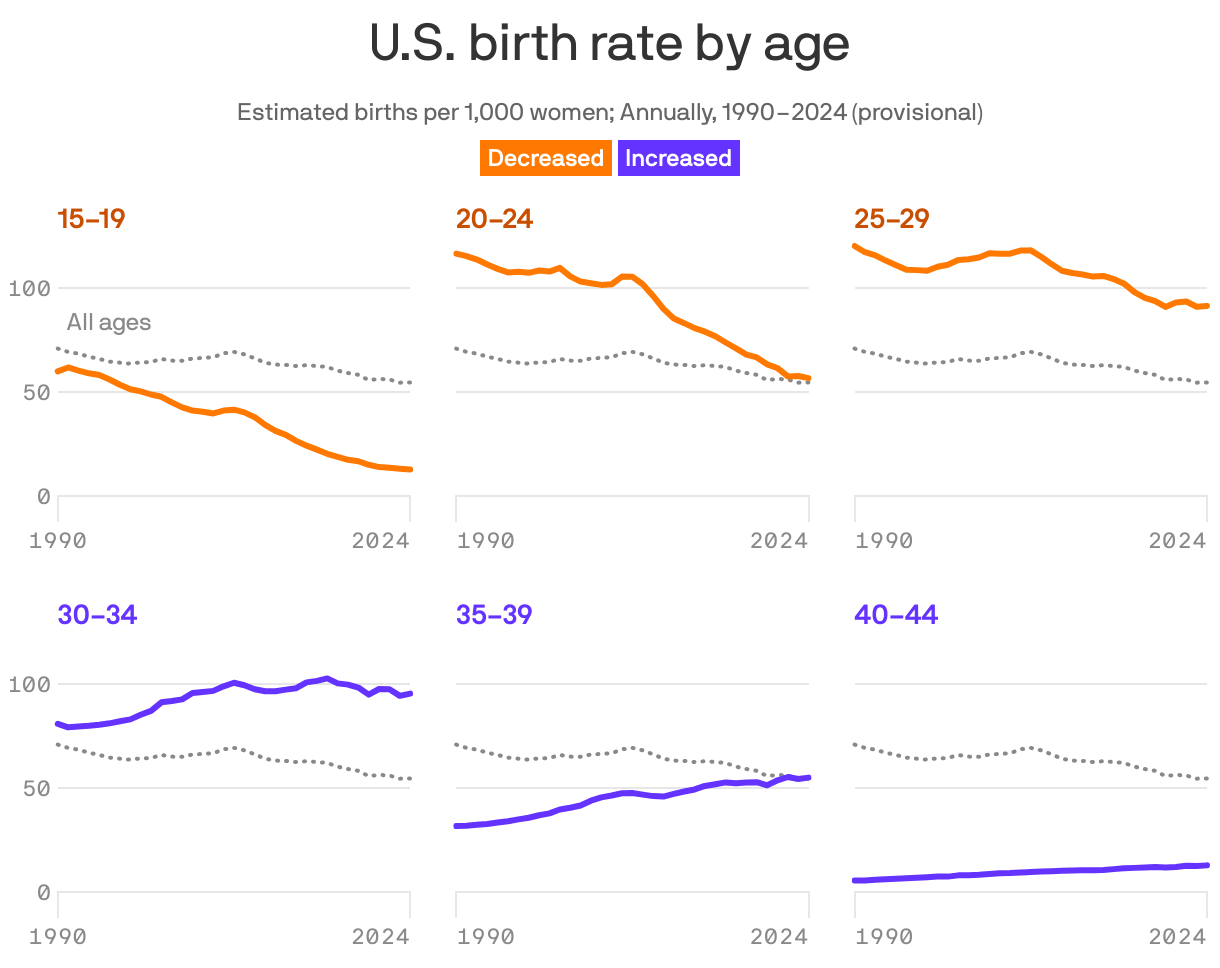
With more people delaying parenthood thanks to increased access to reliable birth control and fertility treatments, older moms are having more babies.
Why it matters: Although it's become more common, getting pregnant at "advanced maternal age" isn't always easy.