U.S. Surgeon General Vivek Murthycalled for the U.S. to adopt warning labels on alcoholic beverages similar to the ones mandatory for cigarettes.
Why it matters: Numerous studies have linked alcohol consumption with cancer, prompting health experts to rethink a years-old view that low to moderate drinking could even bring health benefits.
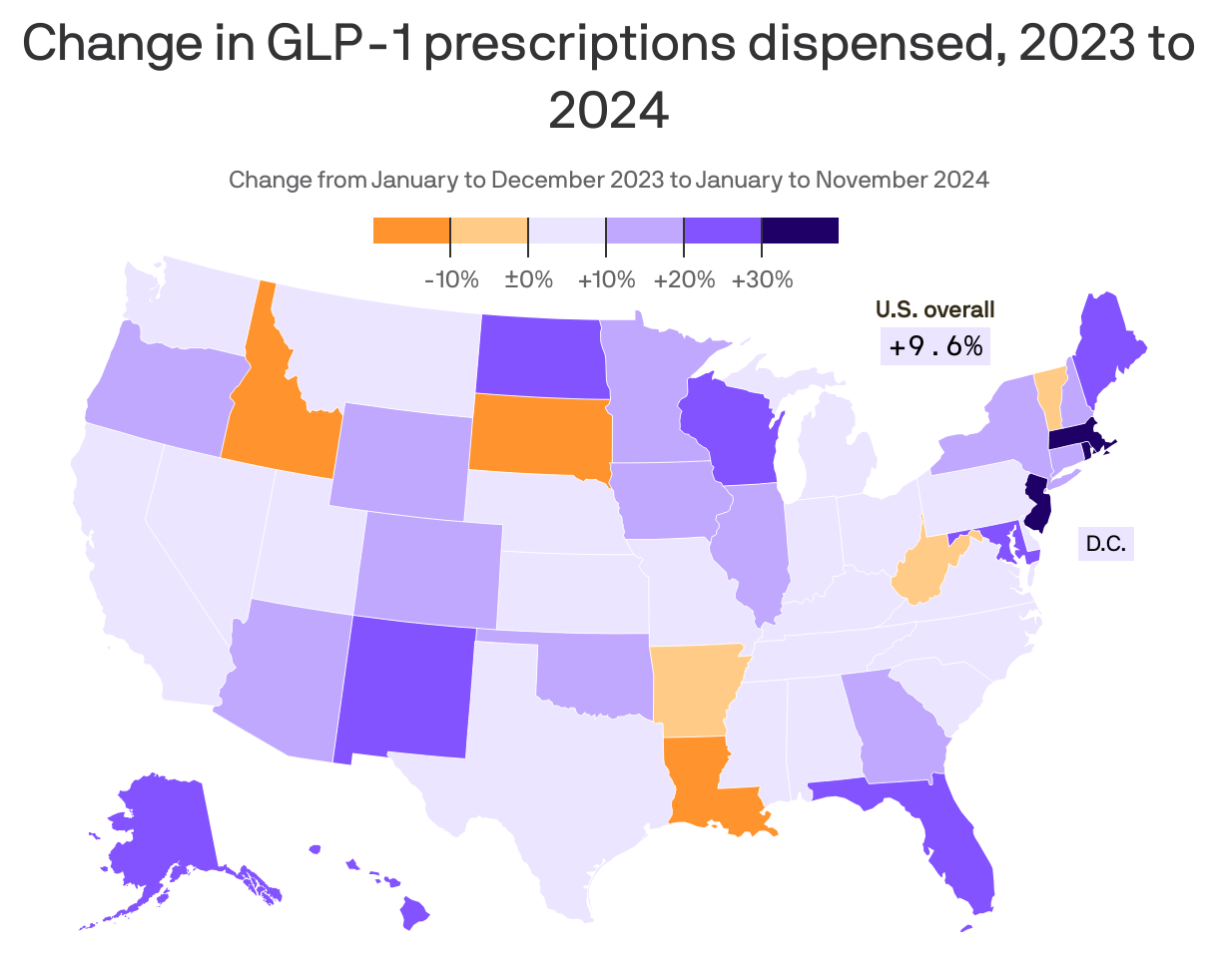
The number of prescriptions for GLP-1 drugs jumped roughly 10% in 2024, according to insurance claims data provided to Axios by health analytics company PurpleLab.
Why it matters: The data, which shows double-digit growth in 23 states, offers a snapshot of the sustained growth in demand across the U.S. for the drugs hailed as game-changers in the fight against obesity.
America's largest pharmacy chains are having a tough time competing with Amazon, and it isn't primarily because of medicine sales.
The big picture: CVS and Walgreens have long boosted their margins by selling products that customers find on their way to pharmacies at the back of their stores, but that model is no longer working.
The surging popularity of GLP-1 drugs is beginning to obscure the health consequences if people stop taking them, physicians warn.
Why it matters: While many patients can shed up to 20% of their body weight using the injectables, the cost of the drugs and side effects like nausea and vomiting lead many to quit. In most of those cases, their weight returns.
Quantum computing and biotech companies are testing whether next-generation computing technology could help them develop better drugs and cut the time and cost of finding new ones.
Why it matters: Quantum computing is advancing, but it still hasn't been harnessed to solve real-world problems that classical computers can't. Biotech could be a proving ground for the practicality of quantum computing, which some skeptics say has been hyped, like AI.