Google's new quantum chip cuts key error rate

Add Axios as your preferred source to
see more of our stories on Google.
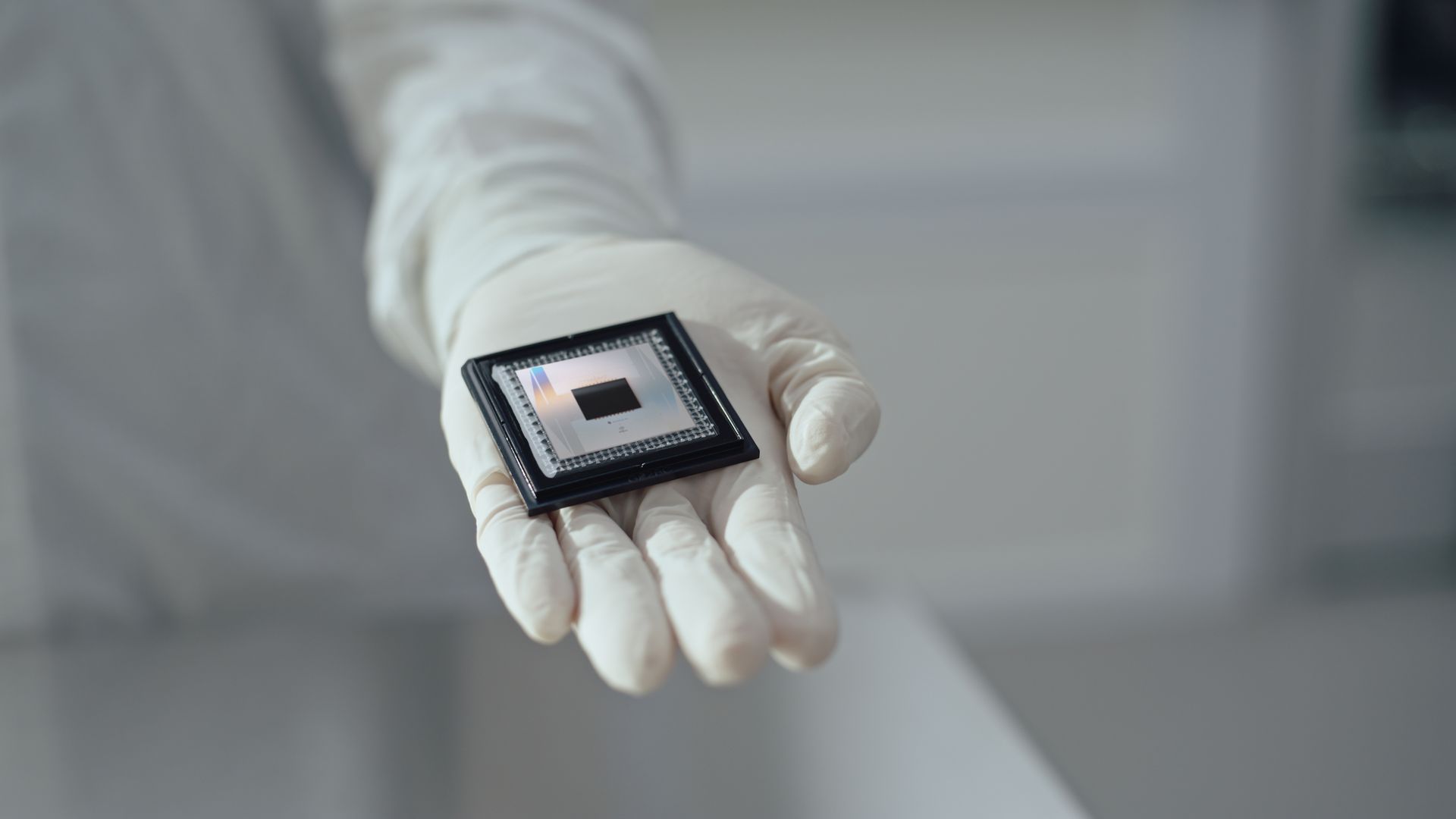
Google's quantum computer chip, Willow. Photo: Google Quantum AI
Google on Monday revealed a new quantum chip that it says solves one of quantum computing's thorniest problems: correcting the errors that plague efforts to make the new technology more useful.
Why it matters: Dealing with errors is a core challenge for quantum computers that many experts say stands in the way of building a practical quantum machine that can solve a range of problems beyond the reach of classical computers.
- Google, IBM, Microsoft and a slew of other companies are trying to build quantum computers, while China and other countries are pouring billions of dollars into the technology.
Where it stands: Today's quantum computers are largely used for research problems — modeling materials or chemical reactions — that could one day support business goals. But they can't break encryption or crack other problems researchers think (or debate) they might one day solve.
- That is generally expected to require millions of quantum bits, or qubits. The bits in a classical computer have only two states, but qubits can have many by harnessing the properties of subatomic particles.
- A quantum computer's power grows exponentially as the number of qubits increases and they become entangled.
- But many qubits are also needed to correct the errors that come from the noise of combining many qubits — a key hurdle for quantum computers.
How it works: Google researchers report today in the journal Nature that they've found a way to reduce errors in their quantum system while increasing the number of qubits — a key milestone known as "below threshold."
- Their 105-qubit quantum processor, Willow, performed in less than five minutes a computation that would take one of today's fastest supercomputers 10 septillion years — about a quadrillion times longer than the universe has been around.
Yes, but: That task, what's known as a random circuit sampling, is used as a benchmark for comparing quantum and classical computers. Researchers now want to turn to solving practical problems.
- "The next immediate challenge for us and the field is to demonstrate a first 'useful, beyond-classical' computation on today's quantum chips that is relevant to a real-world application," Hartmut Neven, Google Quantum AI's founder and lead, said in a press release.
The bottom line: "This is a really big deal for quantum error correction, and it's somewhere that we've been wanting to be for 20 years or so," Michael Newman, a member of the Google Research team, told Axios.
Go deeper:
