The courtship between insurance giants Cigna and Humana is just not meant to be, Cigna officials said Monday.
Why it matters: The statementmarks the likely end to on-and-off discussions about combining the companies into what would have been the nation's second-largest insurer — and potentially drawing antitrust scrutiny.
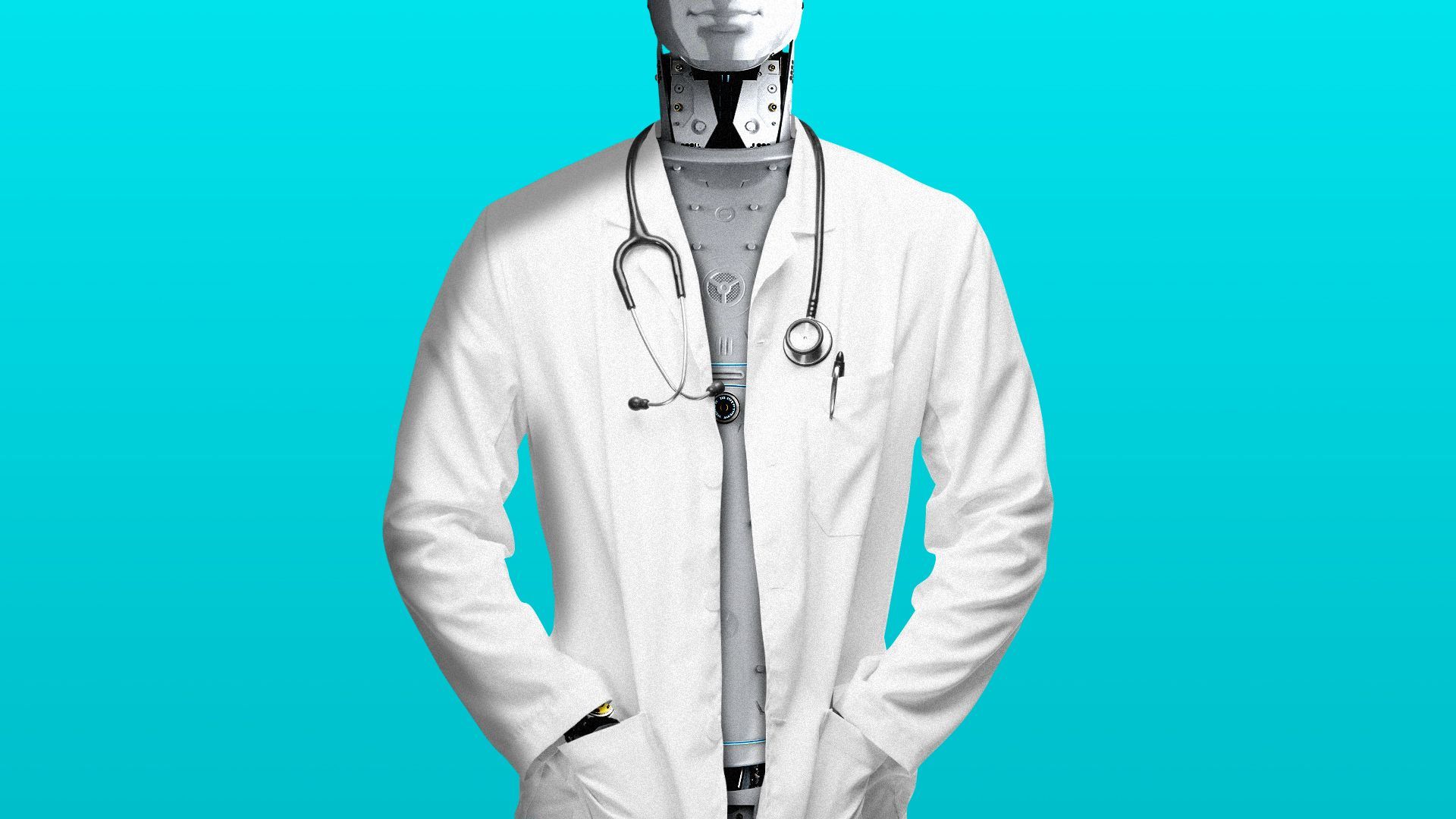
A research team usedvideos of surgeries and the machine learning architecture behind ChatGPT to successfully train a robot to do basic tasks like manipulate a needle, lift body tissue and suture.
Why it matters: Showing a robot can perform with the skill of a doctor opens up new possibilities for devices like the widely used da Vinci surgical system and reduce the risk of medical errors, the Johns Hopkins-led scientists said.
A second Trump administration presents a dilemma for scientists and career staff at top federal health agencies: stay and fight any efforts that undermine science for political purposes or leave.
Why it matters: Public health efforts were weakened by misinformation and distrust during the COVID pandemic, but a brain drain of the nation's top scientific minds could hobble research and dissolve institutional knowledge at agencies such as the Food and Drug Administration, National Institutes of Health and the Centers for Disease Control and Prevention.
Women across the U.S. say they're putting their family planning decisions on pause following Donald Trump's decisive presidential win, citing concerns about reproductive care and gender equality.
The big picture: The 2024 election saw intensely personal decisions about family and children become politicized and illuminated vast differences between how men and women planned to vote. Now, Americans are processing the outcome as they look to make choices about their futures.
A federal program serving 2.8 million veterans isn't delivering on key promises.
The big picture: The Veterans Community Care Program was set up to help veterans secure appointments with providers near their homes when they can't receive care from a Department of Veterans Affairs facility.
Veterans are campaigning to take psychedelic therapy for post-traumatic stress disorder mainstream, despite the Food and Drug Administration's rejection of an ecstasy-based therapy in August.
Why it matters: About 29% of veterans who fought in Afghanistan and Iraq will have PTSD at some point in their lives, according to the Department of Veterans Affairs. Veteran suicide rates are also higher than in the general population.