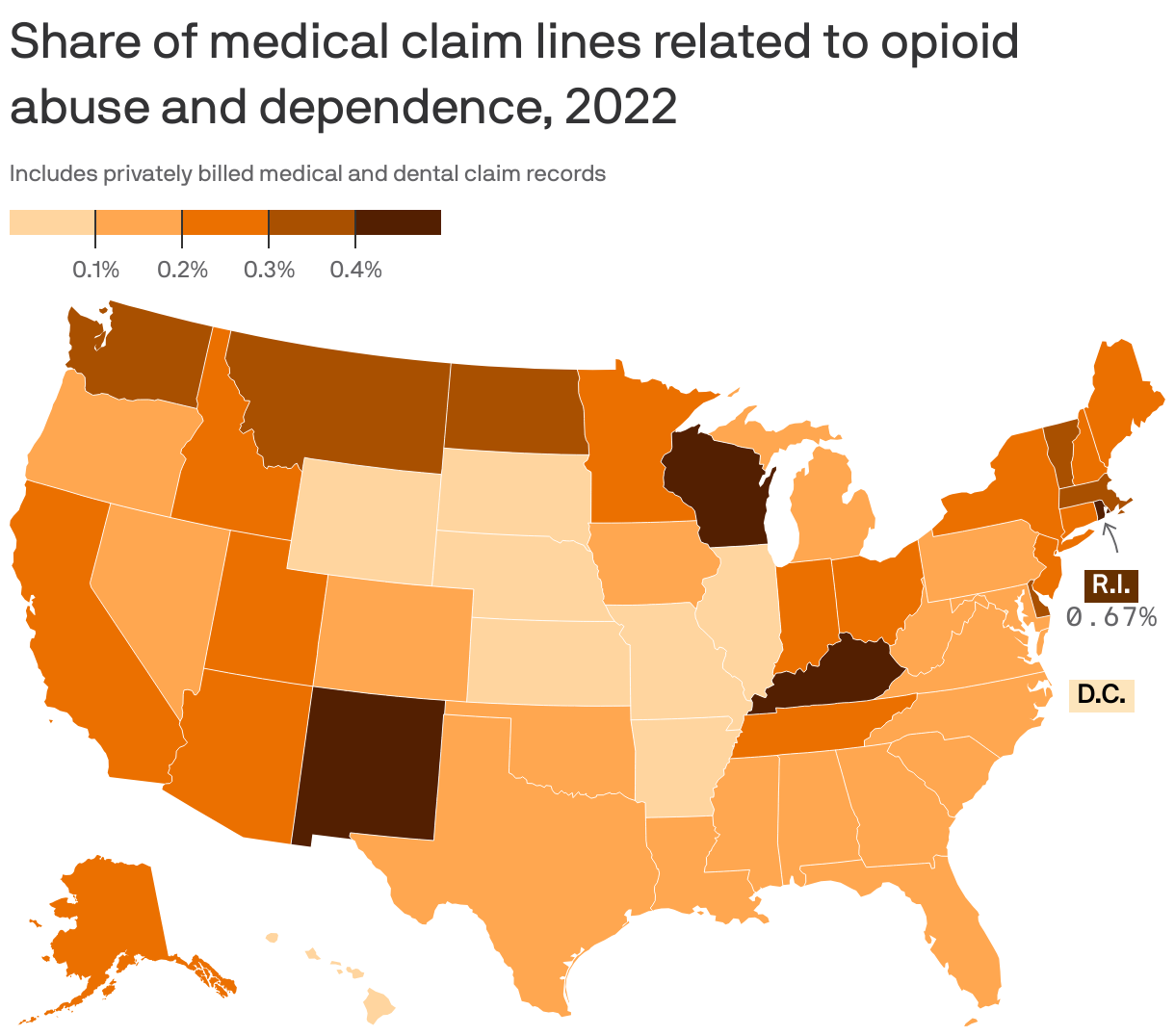
Private insurers saw the percentage of medical claims stemming from opioid dependence fallslightly from 2018 to 2022 in the United States, according to data released by FAIR Health.
The big picture: Opioid use and dependence accounted for about two-tenths of 1% of total claims in 2022, compared to one-quarter of 1% in 2018.
Republican candidates during the second GOP presidential debate Wednesday night offered some unconventionally tough talk about the health care industry, even if they failed to offer substantive policy answers.
Between the lines: No one on the debate stage offered major new ideas about how they would tackle health care costs, lower the uninsured rate or address Obamacare — and many of the candidates have typically hewed to conservative orthodoxy on health care.
Community pharmacies in a new lawsuit claim CVS Health and its Caremark pharmacy benefit manager violated antitrust laws and illegally collected fees from pharmacies that fill Medicare prescriptions.
Why it matters: If the Iowa pharmacy leading the lawsuit prevails, CVS will have to return hundreds of millions — if not billions — of dollars its PBM recouped from independent pharmacies over the past four years, according to a lawyer for the National Community Pharmacists Association.
When Washington and Oregon lowered criminal penalties for drug crimes two years ago, it didn't lead to a sudden rise in overdose deaths in either state, a new study finds.
Why it matters: Critics have tied the states' more lenient approaches to drug crimes to recent rises in overdose deaths. But the researchers found no apparent connection.
Safety-net providers bought a record $53.7 billion worth of medicines under the federal drug discount program last year — a 22% jump over 2021 that came while drug price growth lagged behind overall inflation, according to a published report.
Why it matters: The report in the trade publication Drug Channels draws into question claims from some program advocates that drugmakers' business practices are eroding the health care safety net.
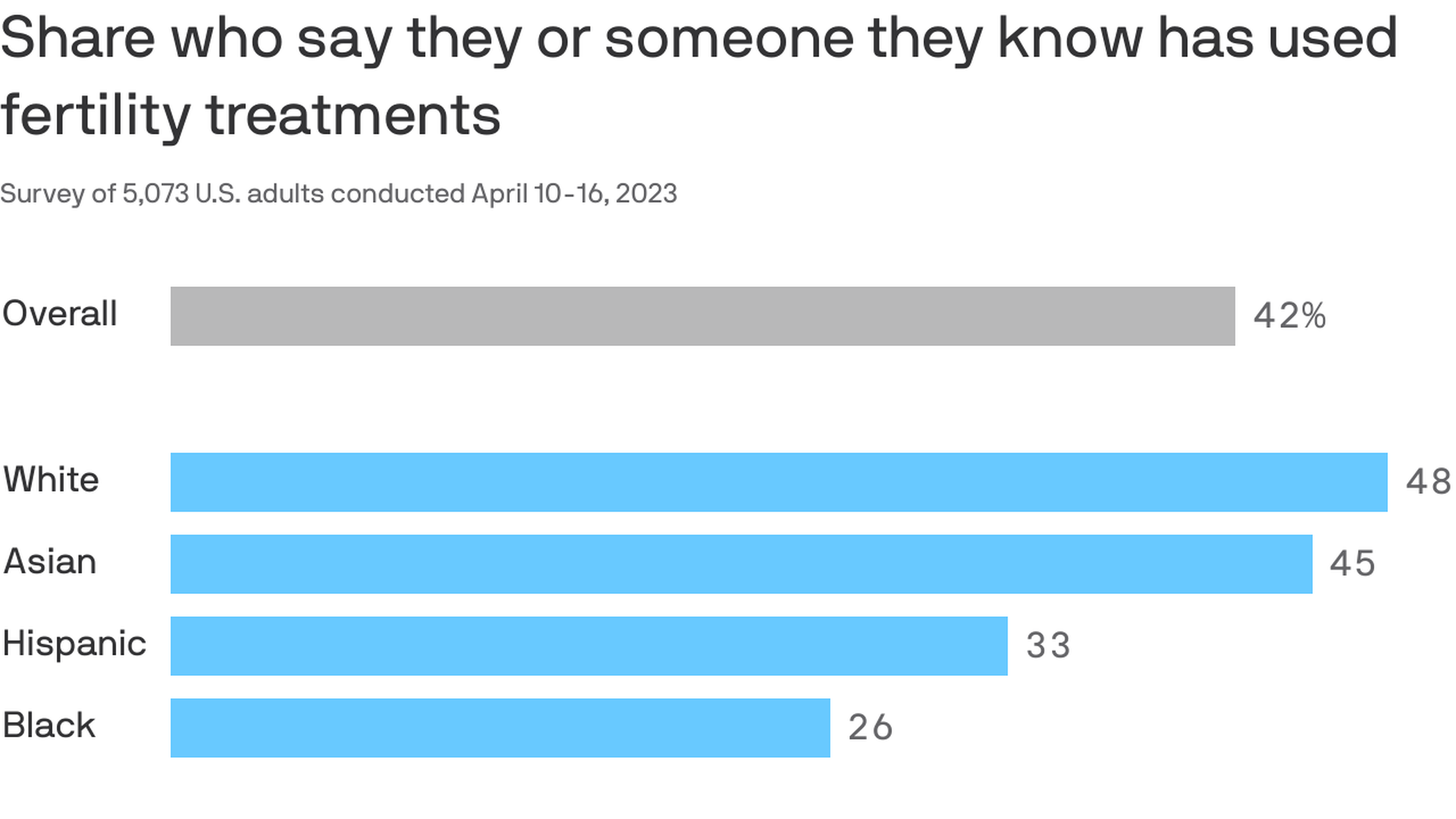
From better medical training to more inclusive health benefits, a host of new efforts are aimed at reversing long-standing disparities and stigma that have prevented Black women from seeking out fertility treatments.
Why it matters: Black womenmaybe twice as likely to have fertility challenges than white women, but cultural factors — underscored by new research — contribute to Black adults seeking treatment less and silently suffering more.
Millions of more students will gain access to free breakfast and lunch at school, the U.S. Department of Agriculture's announced Tuesday.
Driving the news: The expansion of the Community Eligibility Provision (CEP) will make some 3,000 additional school districts serving more than 5 million students eligible for meals at no cost.