Before tossing out any old at-home COVID tests, you might want to check if the expiration date has been extended.
Why it matters: People may be rummaging through closets and cupboards for old COVID tests as the U.S. heads into the fall and winter virus season. In many cases, the expiration dates on the box have now been extended.
A tight labor market, comparatively poor pay, COVID-19 requirements and a lengthy hiring process contributed to staffing shortages and decreased access to care at federal health care facilities during the pandemic, a new report found.
Why it matters: Officials must do more to ensure facilities are properly staffed during normal operations and strategically plan for future pandemics and other health emergencies, according to federal agency watchdogs on the Pandemic Response Accountability Committee.
Costco is joining big retailers' push into primary care by offering members $29 telehealth visits, as well as lab testing and virtual mental health services.
The big picture: It's part of a broad effort to use digital tools to create more customizable patient experiences that's also drawn the likes of Amazon, Walmart, CVS and Dollar General.
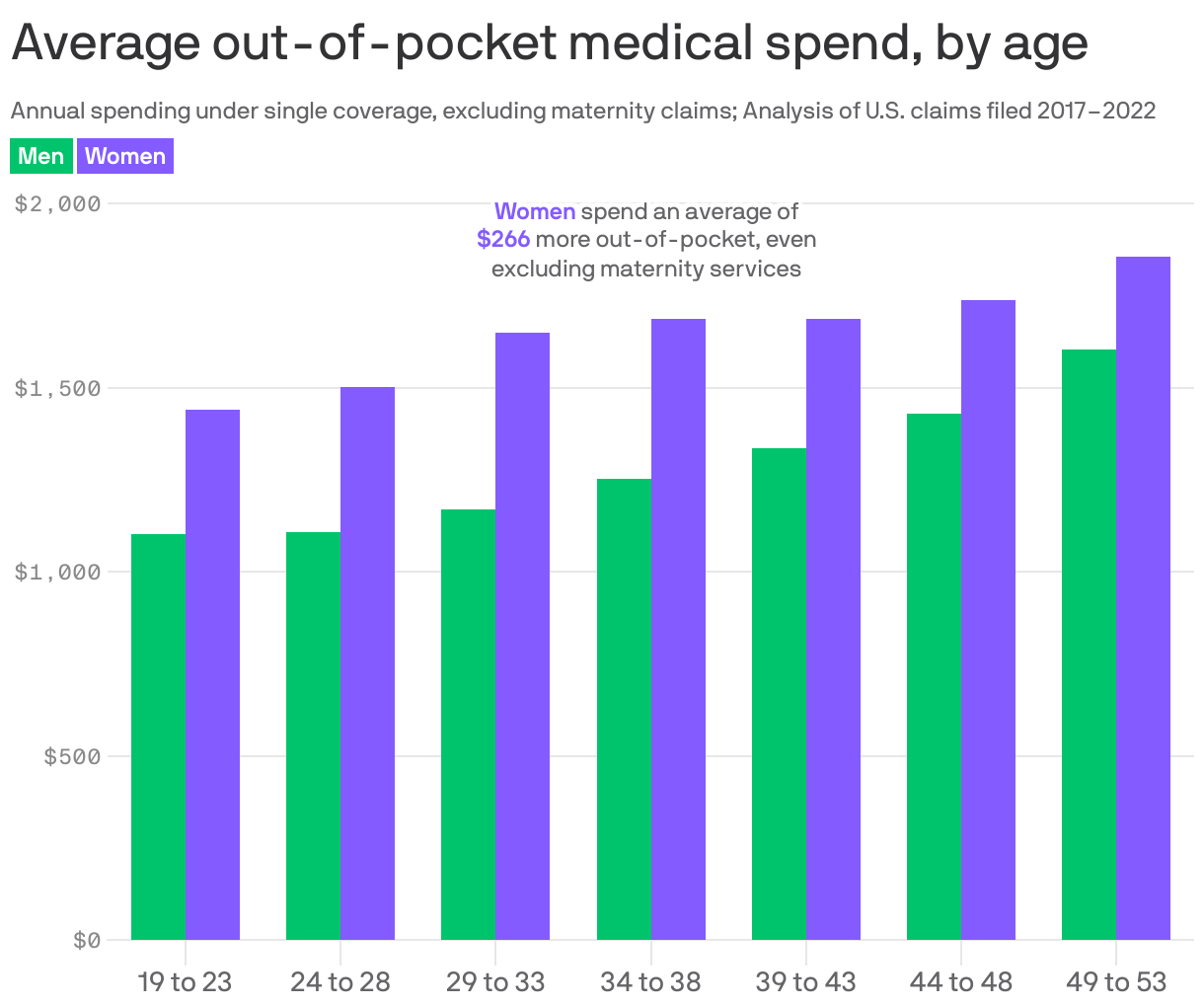
At every age, women have higher out-of-pocket expenses for their health care than men despite having similar health insurance, according to a new Deloitte report.
Why it matters: Much has been made about a so-called "pink tax" when it comes to higher costs for women's consumer products. The new analysis argues there's a similar burden when it comes to women's health coverage.
Employers bracing for a major hike in health care costs are retooling their benefits, aiming to provide perks better targeted to workers' needs as they closely mind the bottom line.
Why it matters: Employerhealth costs are expected to see their largest jump in a decade, but many companies facing an ongoing workforce crunch are hesitant to pass along those costs or cut back benefits.
Patients suffering from long COVID have distinct immune and hormone imbalances compared to those without, according to a new study published in the scientific journal Nature.
Why it matters: More than three years since the COVID-19 pandemic began, the breakthrough offers concrete scientific evidence of a complex condition that scientists have struggled to understand.
America's troubled organ transplant system is officially set for its first makeover in decades, but unresolved questions about funding could affect how swiftly reforms take hold, America's top health official said.
Why it matters: Reforms to the U.S. organ donation system — which for years has been plagued by problems like long wait times and wasted donations —will save lives, advocates say.
Driving the news: President Biden on Friday signed a bill into law that allows the administration to increase competition for contracts to run the Organ Procurement and Transplantation Network across the country.
The new lawalso removes the cap on appropriated funding that can be awarded to contractors for the network.
Biden's signing "opens a new chapter in our nation's organ donation system by addressing the many failures that have plagued the organ procurement network, with disastrous consequences," Sen. Chuck Grassley (R-Iowa) said in a statement.
Context: The United Network for Organ Sharing since the 1980s has been the sole organization contracted to handle distribution of donated organs, working with dozens of local procurement groups.
A Senate investigation last year found 249 transplant recipients developed diseases from donated organs between 2008 and 2015. More than 25% of those patients later died.
System failures also resulted in many organs getting lost or destroyed before they could be transplanted, the probe found.
More than 100,000 people in the U.S. are on the transplant list, and over 6,000 die waiting for an organ each year.
The Biden administration in March announced it would issue multiple awards to manage different parts of the transplant network, hoping to foster competition and increase transparency. The bipartisan legislation to support that overhaul quickly followed.
What we're watching: The Health Resources and Services Administration plans to solicit contract bids for the network later this fall. UNOSexpressed support for a competitive bidding process and says it will seek to remain part of the system.
Jennifer Erickson, a senior fellow at the Federation of American Scientists who worked on organ donation policy in the Obama White House,said she expects"a lot of innovators" to bid for the contracts, including organizations specializing in health IT.
The Biden administration requested $67 million for the organ transplant program in fiscal year 2024, more than double the current funding level.
Between the lines: Congress still hasn't funded the government with just a week before the fiscal year ends, and conservative hardliners in the House are demanding major spending cuts.
The government and contractors won't be able to fully modernize the system without more funding, HHS Secretary Xavier Becerra said.
Becerra didn't specify which functions of the system require extra funding. But the Biden administration's funding request says the money is needed to make the system "more agile, user friendly, accountable, and equitable."
"I hope everything starts to fall into place quickly,"Becerratold Axios on Friday. "Some of [the policy changes] will take some money, too. Probably the best thing to say is: stay tuned."
What's happening: Should the justices decide to take up the cases this term, rulings on either issue would likely come before summer 2024, as the presidential race enters the home stretch.