Americans most often blame Mexican drug cartels for the country's opioid crisis — followed by drug users themselves, according to Morning Consult polling data provided exclusively to Axios.
Why it matters: Voters see the crisis as more of a security issue than a health issue, an accompanying analysis argues, giving Republicans an edge on the issue heading into the 2024 elections.
The threat of a government shutdown is hanging over Capitol Hill. But so is the realization that gridlock could claim an array of health programs that are due to sunset at the end of the month without congressional action.
Who's affected: Key health interests potentially have billions of dollars of funding on the line, from community health centers that serve 31 million people to hospitals that provide charity care. Opioid abuse programs and federal preparedness for another pandemic could also be affected.
A Medicare effort to boost payments to primary care doctors and better coordinate care for patients with complex medical needs has set off a lobbying frenzy to forestall steep cuts specialists would face as a result.
Why it matters: The fight over physician payments underscores how Medicare's strict budgeting rulescan create unintended consequences, like pitting medical specialties against each other.
Only 34% of registered U.S. voters think President Biden would complete a second term if re-elected, 44% believe he'd leave before it ended and 22% are unsure, according to a new CBS News/YouGov poll.
By the numbers: That compares with 55% who think the 80-year-old's closest presidential election rival, 77-year-old former President Trump, would finish a full term if elected in 2024.
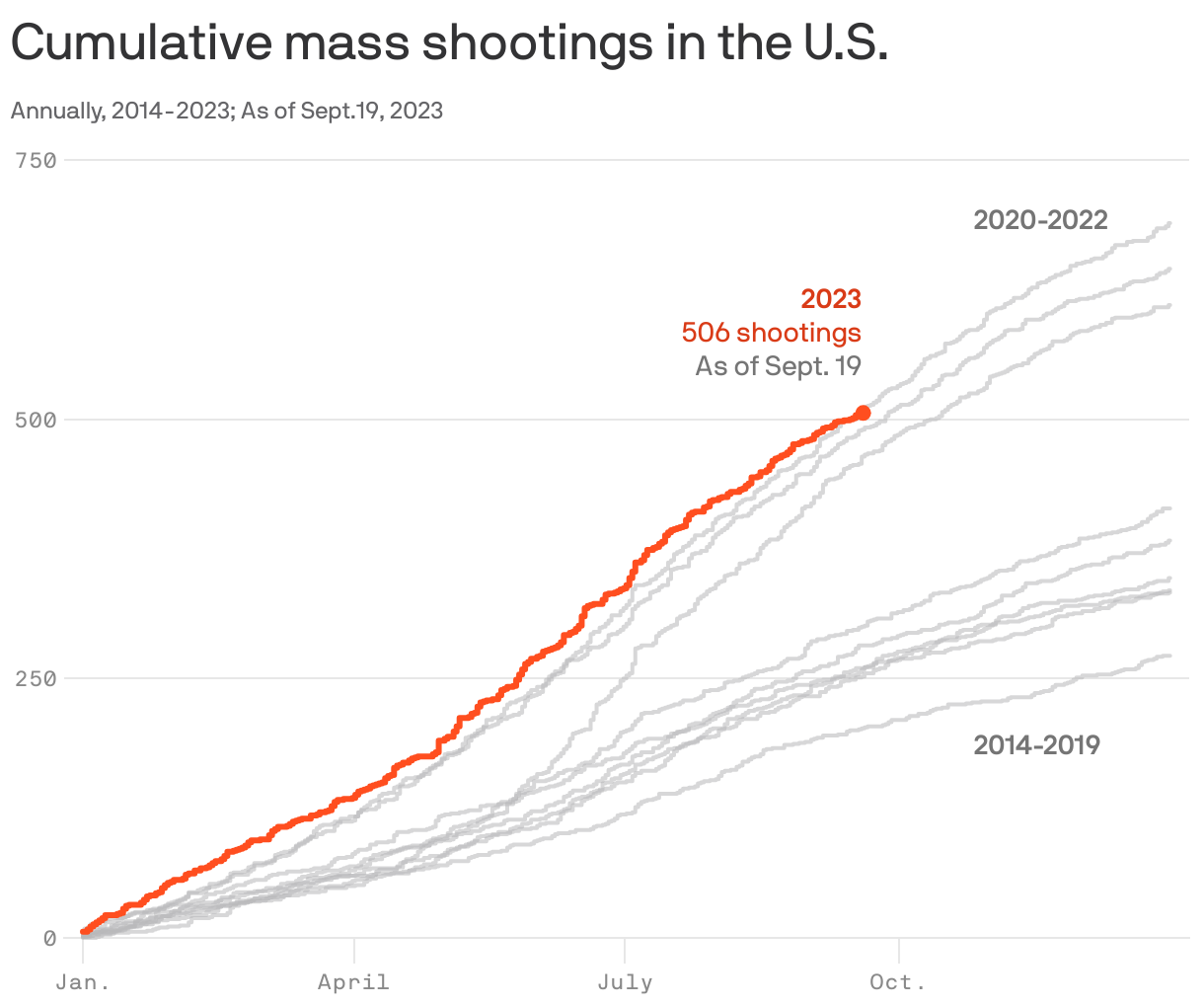
Data: Gun Violence Archive; Note: Includes incidents where at least four people were shot or killed, excluding the shooter; Chart: Simran Parwani/Axios
There have now been 501 mass shootings in the U.S. this year.
Driving the news: A shooting that wounded four people in Denver, Colorado, on Saturday night marked the country's 500th mass shooting in 2023, according to the Gun Violence Archive.