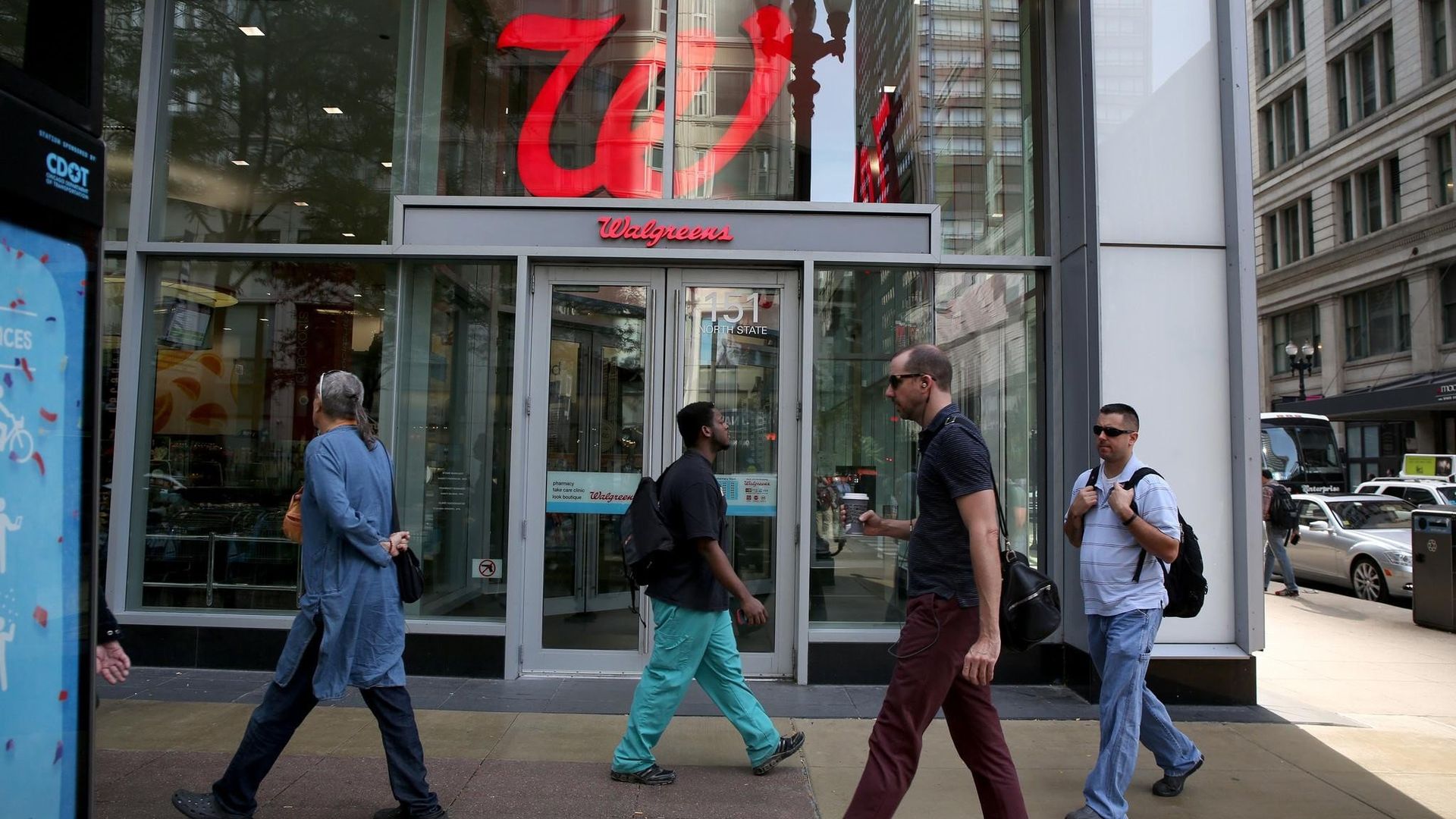
The $9 billion acquisition of Summit Health by Walgreens-owned primary care company VillageMD heats up competition among national retailers in the care delivery race.
Context: In 2022 alone, Amazon, CVS, and now Walgreens have made major investments in health care delivery models.
CVS moved fast to land an $8 billion deal for Signify Health. CVS was also eyeing Cano Health, which operates primary-care centers, although those talks have reportedly been tabled.
Zoom in: With this deal, VillageMD is placing its bet on the importance of specialty care, Axios' Sarah Pringle writes.
With the Summit Health acquisition, VillageMD will expand its footprint in the Northeast and in Oregon. The two groups will have 680 provider locations in 26 markets.
Zoom out: For Walgreens Boots Alliance, which posted its fourth-quarter results last month, VillageMD was the largest driver of the company's sales growth in the past year in the United States, executives told investors.
“If you want to continue to be successful in delivering care in a value-based care model, you have to be successful managing the specialty spend and the other ancillary spend, like lab and imaging," VillageMD CEO Tim Barry told Axios' Sarah Pringle and Claire Rychlewski.
While inflation and the economy have been foremost on voters' minds across the nation this election cycle, some of the most high-profile health care battles are being decided at the state level on Tuesday.
Driving the news: Voters in Michigan, Kentucky, Vermont, California and Montana are weighing abortion ballot questions that drive home how key reproductive rights battles post-Roe are being waged outside the federal realm.
The Biden administration is getting serious about transforming Medicare payments for specialty care.
Some doctors will be required to participate in programs that pay fixed amounts for care connected to certain surgeries and procedures.
Why it matters: The Centers for Medicare and Medicaid Services says it has struggled to control health spending and boost the quality of care through steps like coordinating primary and specialty care.
Pfizer's antiviral pill Paxlovid can reduce the risk of long COVID symptoms like organ damage, according to a pre-print study the Department of Veterans Affairs released on Sunday.
Driving the news: The study of 56,000 veterans who tested positive for the virus found those given the medication in the first five days of infection had a 25% decreased risk of developing 10 of 12 symptoms, such as heart, kidney or liver disease.
Burnout and health industry consolidation are driving more doctors and doctors-in-training to unionize to demand better pay, benefits and working conditions.
Driving the news: More than 1,200 resident physicians and interns at Montefiore Medical Center last week asked the Bronx, N.Y. hospital to recognize their bargaining unit after an organizing vote.
President Biden declared in September that the COVID-19 pandemic was "over." If Republicans win control of Congress, they'll demand U.S. policy reflects that conclusion.
Why it matters: The pandemic ushered in revolutionary changes to U.S. health and economic policy. While many pandemic-era restrictions have already been rolled back, a full reversion to pre-COVID governance would have profound consequences for American life.