Flights arriving from Uganda will be redirected to five U.S. airports for "enhanced screening" of the Ebola virus, the U.S. Embassy in Uganda said Thursday.
Driving the news: No cases of Ebola have been discovered outside of Uganda, "and the risk of Ebola domestically is currently low," the embassy said in the Thursday health alert.
More than 2.5 million middle and high school students in the U.S. currently use e-cigarettes, according to a new study published Thursday by the Food and Drug Administration and the Centers for Disease Control and Prevention.
Why it matters: "Adolescent e-cigarette use in the United States remains at concerning levels, and poses a serious public health risk to our nation's youth," Brian King, director of the FDA's Center for Tobacco Products, said in the press release.
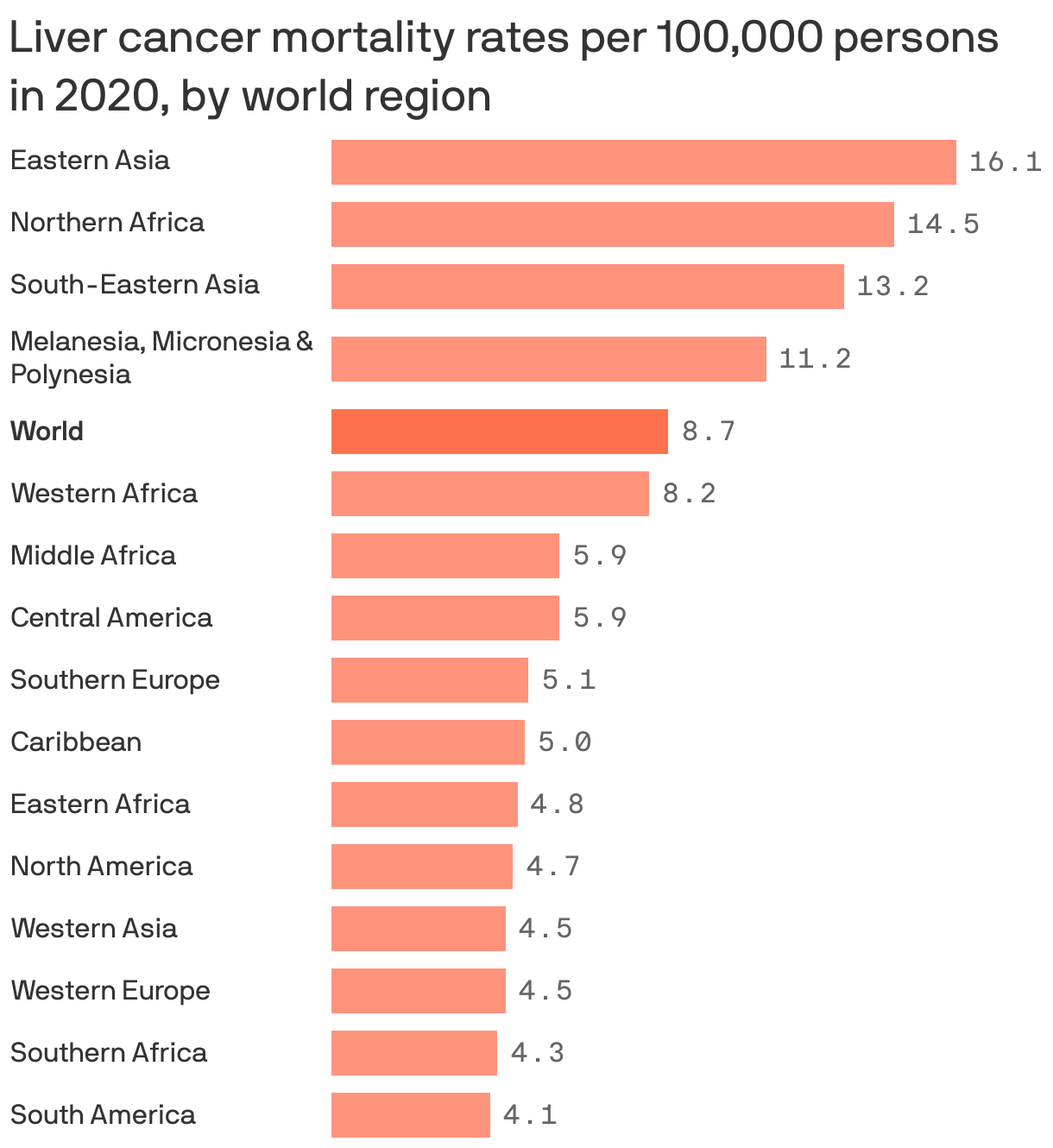
Cases of Hepatitis B and C, upticks in alcohol consumption and excess body weight and diabetes are expected to drive the number of liver cancer deaths around the world 55% higher by 2040, according to an analysis published in the Journal of Hepatology.
By the numbers: The research, led by the International Agency for Research on Cancer, found about 906,000 people were diagnosed with liver cancer and about 830,000 died from liver cancer globally in 2020.
More than 80% of abortion clinics in 15 states with strict abortion bans have stopped offering the procedure in the 100 days since the Supreme Court overturned Roe v. Wade, according to a new report from the Guttmacher Institute, a research organization that support abortion rights.
Why it matters: The findings bear out predictions that access to the procedure would rapidly decline in conservative-led states after justices effectively ended all federal protections on abortion. Some clinics have moved operations to states where abortion access is protected.
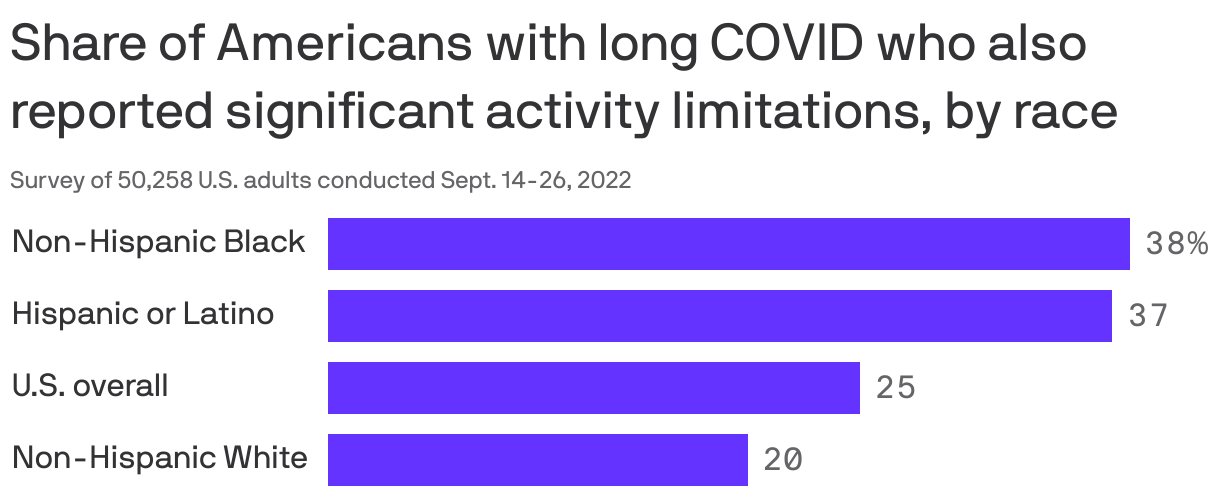
Data: U.S. Census Bureau, Household Pulse Survey 2022; Chart: Madison Dong/Axios Visuals
Of the nearly 24 million adults in the U.S. who currently have long COVID, more than 80% are having some trouble carrying out daily activities, according to CDC data released Wednesday.
Why it matters: Nearly three years into a pandemic that has left millions newly disabled, medical researchers continue to search for an effective treatment.
Almost two years after a Trump-era cost transparency rule took effect, many hospitals are flouting a requirement that they post the pricesfor common goods and services online — with little risk of facing penalties.
Driving the news: A new report from a patient advocacy group first shared with Axios shows continued industry resistance to a rule some believed could lead to more price competition or further regulation.
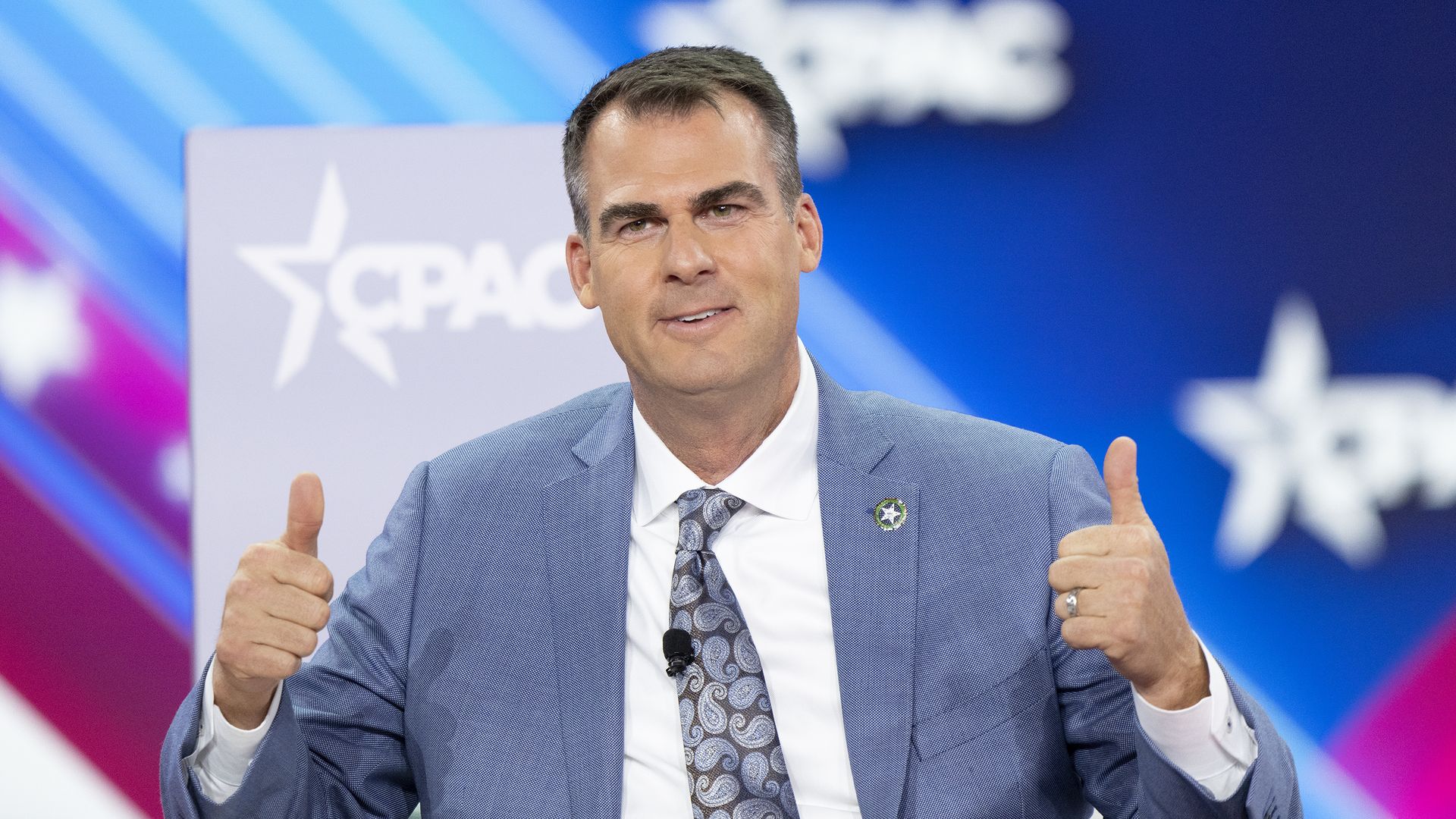
The University of Oklahoma Medical Center stopped some health services for trans youth under 18 after the governor signed a bill that would withhold federal funds if the state's flagship academic health system did not comply.
The big picture: Republican-led stateshave increasingly introduced and enacted legislation targeting transgender youth — even as medical associations have widely supported gender-affirming care.
About 90,000 lives would be saved and more than 936,000 hospitalizations could be prevented if 80% of Americans eligible for the latest COVID-19 boosters get vaccinated by year's end, according to a new paper from The Commonwealth Fund and Yale School of Public Health.
The big picture: Even matching 2020–2021 flu vaccine levels of closer to 50%–55% could save about 75,000 lives and prevent about 745,000 hospitalizations.
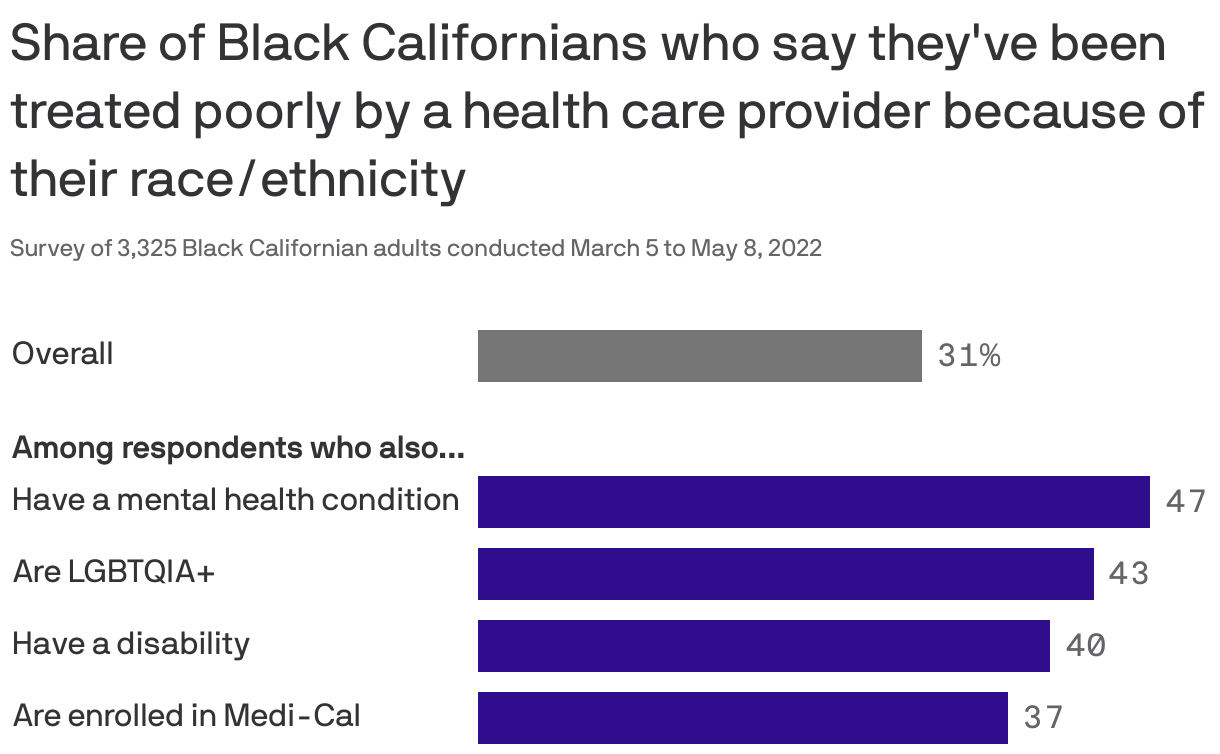
Data: California Health Care Foundation; Chart: Simran Parwani/Axios
Nearly a third of Black Californians reported being treated unfairly in the health care system because of their race, according to a report from the California Health Care Foundation.
The big picture: The research — which also found more than 1 in 4 Black Californians avoided getting medical care due to worries about unfair or disrespectful treatment — shows the impact of racial disparities in the most highly populated state in the country.
Pharmaceutical companies are trying to defang the new drug pricing law without declaring open war on the same congressional Democrats who crafted it and will continue to have powerful sway over the industry's fortunes.
Why it matters: Most of pharma's options call for for strategic maneuvering rather than scorched-earth politicking — especially since the industry's wish list extends far beyond the recently enacted Medicare drug price negotiations.
Driving the news: The announcement, which comes a week after Sandberg left the company, will allow the ACLU to expand its reproductive rights operations, including efforts to educate voters on judicial candidates' abortion records, support ballot measures to safeguard access and oppose restrictions in Congress and state legislatures.