CDC director Dr. Rochelle Walensky on Sunday said that the number of Omicron coronavirus cases in the United States is "likely to rise."
Why it matters: The newly discovered variant has already been detected in at least 15 states, fueling concerns about the strain's ability to drive up a new wave of infections.
Vaccination rates are going up, people are going out to restaurants again — although the new COVID variant may get in the way — but they still aren't rushing back to the movies.
By the numbers: Some 49% of pre-pandemic moviegoers are no longer hitting theaters, according to a study from the film research company The Quorum, as reported by the New York Times.
European countries are doubling down on pressure campaigns to get people vaccinated just as Republicans continue to wage war — often successfully — against vaccine mandates in the U.S.
Why it matters: The starkly different approaches create a sharp contrast between the regions' approaches to vaccination, even as the Omicron variant rapidly spreads around the world.
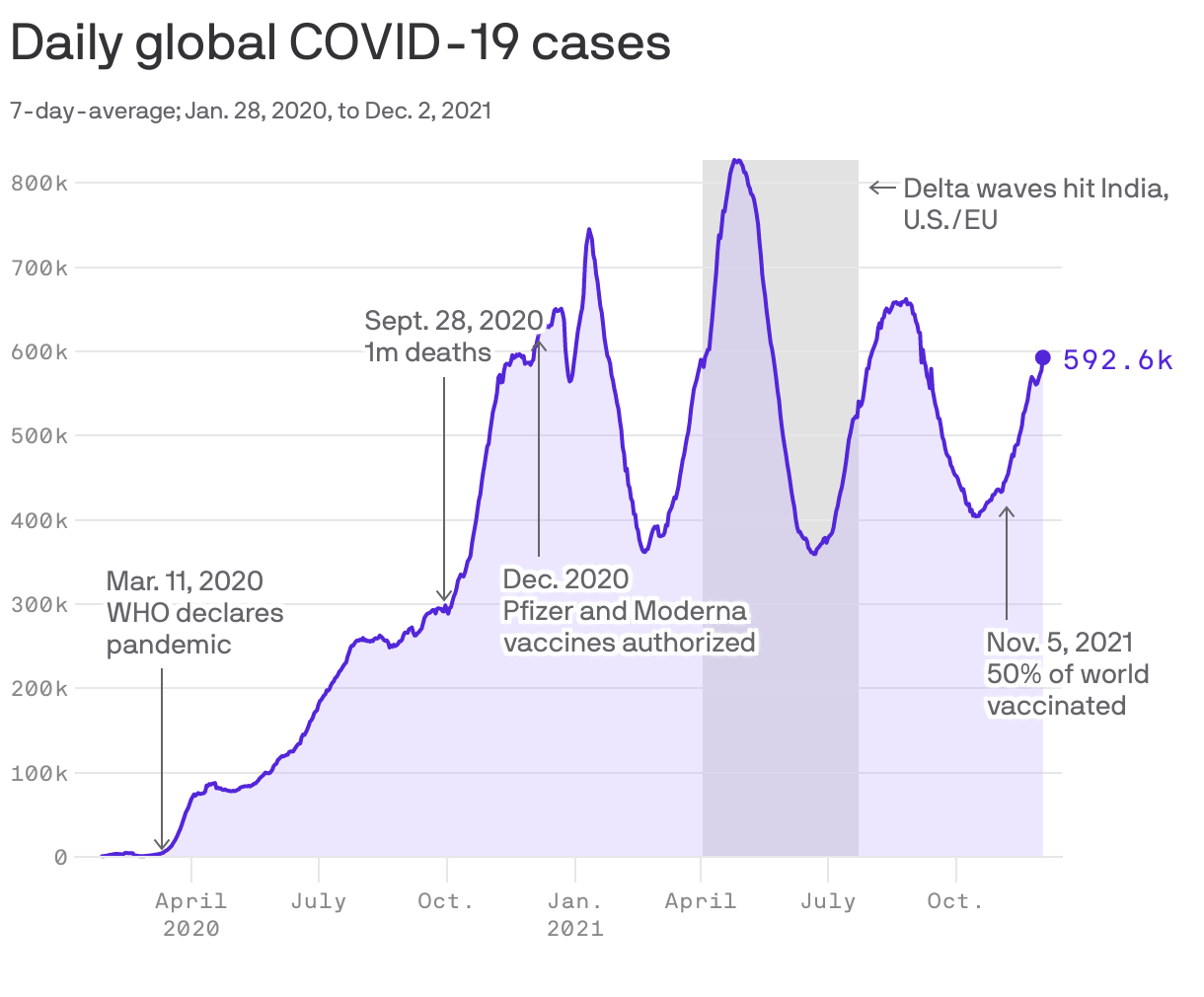
Two years ago Wednesday, the first case of a mysterious new respiratory disease was discovered in Wuhan, China. Now, the Omicron variant has deepened concerns about just how much longer the coronavirus pandemic will last.
The big picture: More than 5 million people have died since that first case. Most people on earth have lived through some form of lockdown. 54% of the global population has had at least one vaccination, though the shots have been distributed unevenly.
The biggest counties across America, especially those with tightly packed populations, are reporting far fewer COVID-19 cases and deaths due to widespread vaccination rates, according to data analyzed from the The Washington Post.
Why it matters: Vaccination data shows that even at the county and city level in the most densely populated areas, the most-vaccinated counties are less vulnerable to outbreaks.
IV drips — the kind you might get if you're rushed to the hospital — are trending as a spa treatment, thanks in part to endorsements by celebrities like Kim Kardashian and Madonna.
Why it matters: Like other "wellness" trends with a whiff of medical imprimatur, IV nutrient drips can be harmless or mildly restorative — or go awry, particularly in the wrong hands.
New data from South Africa suggests the Omicron variant spreads more than twice as quickly as the Delta variant, and that immunity from prior infection doesn't appear to protect a person very well against Omicron variant.
Why it matters: The findings are extremely preliminary, and there are still many open questions about how well vaccines work against the variant. But these initial breadcrumbs of data are helping the world begin to understand what it's up against.
Pfizer could have data on COVID-19 vaccine efficacy for children under five by the end of the year, CEO Albert Bourla said on Friday in an interview with NBC News.
Why it matters: Omicron has raised concerns that young children are becoming more vulnerable to the virus. Tshwane, the epicenter of South Africa's Omicron outbreak, has seen a high number of hospital admissions for children under two in the last few weeks, though scientists have not confirmed a link to the variant, Reuters reports.