The Biden administration on Monday revoked a Trump-era rule that bars clinics that receive federal family planning funding from referring patients for abortions.
Why it matters: The new rule, which will go into effect on Nov. 8, comes as the fight for abortion access ramps up in states and nationally.
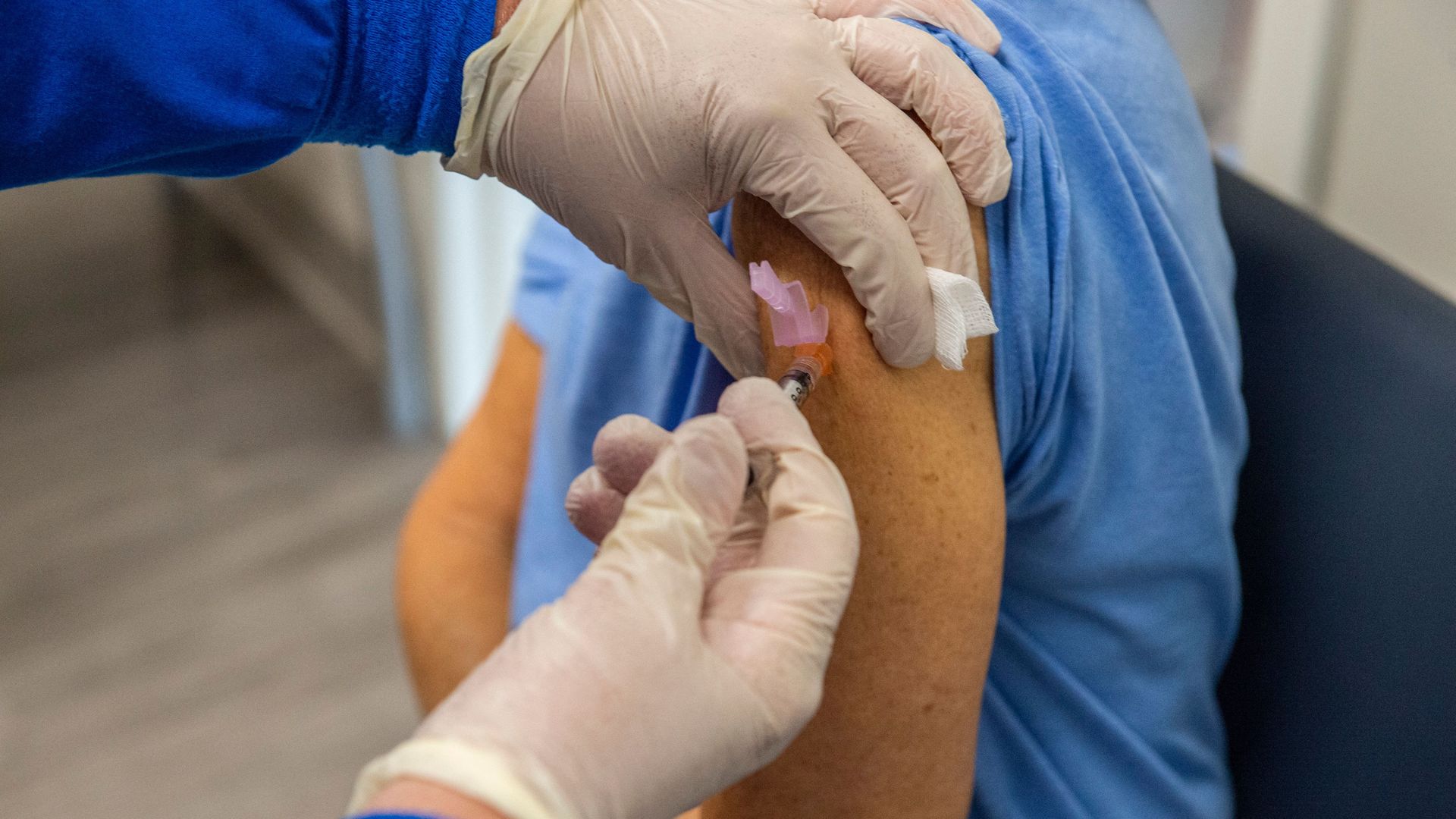
The European Union's drug watchdog on Monday endorsed a booster shot of the Pfizer-BioNTech COVID-19 vaccine for people 18 and older.
Driving the news: The European Medicines Agency said booster doses of the Pfizer-BioNTech vaccine "may be considered at least 6 months after the second dose for people aged 18 years and older," per a press release from the agency.
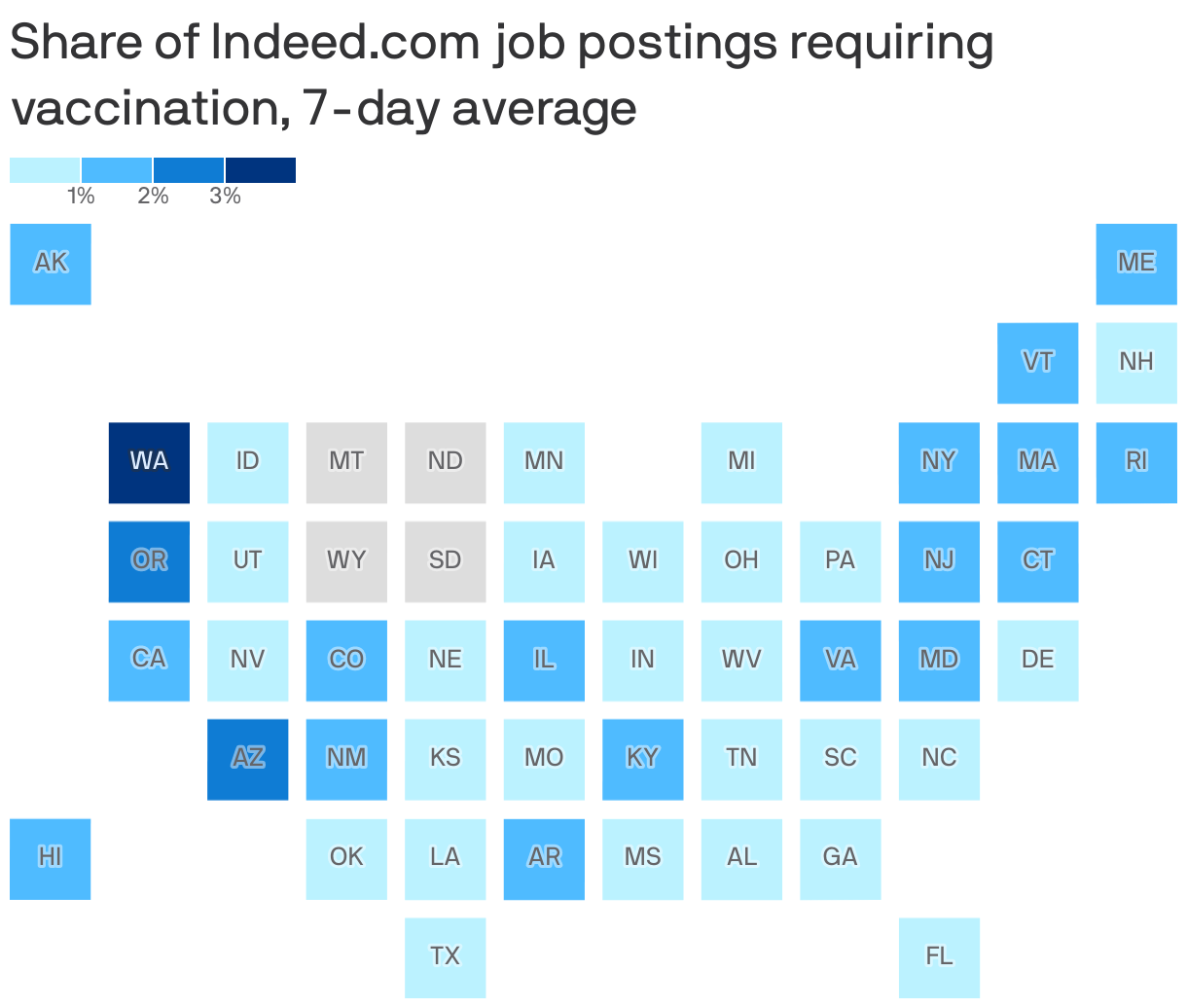
Even as more employers across the nation are listing COVID-19 vaccinations as an application requirement, Texas job postings are relatively mum, an Axios analysis of Indeed data has found.
Zoom in: The latest Indeed data shows that, on average, less than 1% — 0.7% to be precise — of Texas job postings sought only vaccinated employees over the week ending on Sept. 24.
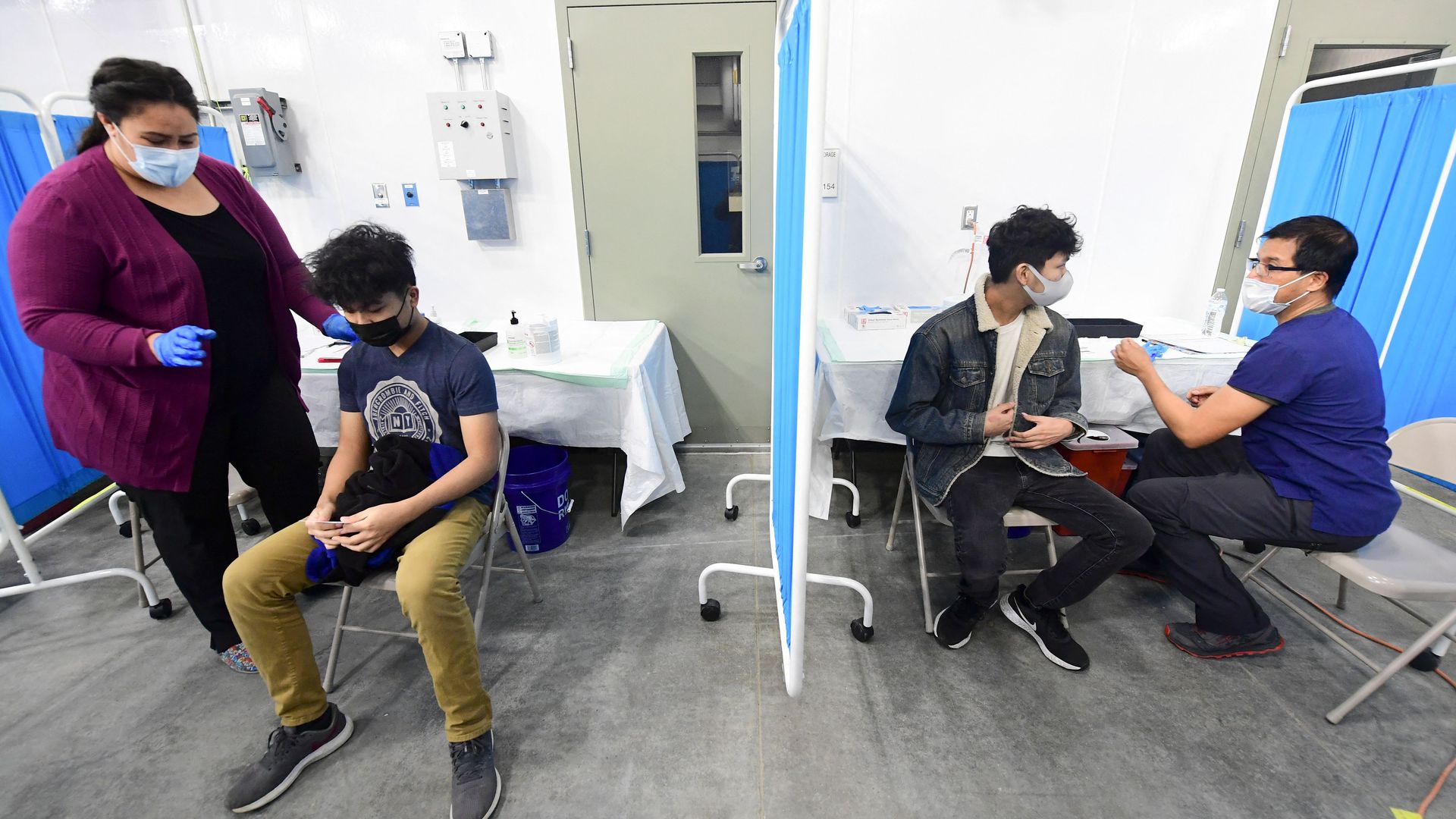
Coronavirus vaccine mandates imposed by employers seem to be working so far, suggesting that most vaccine holdouts would rather get the shot than lose their job.
Why it matters: Every vaccine helps in our fight against the coronavirus, although the U.S. still has a long way to go. And high vaccine uptake is by far the preferred outcome for employers, as many — particularly in the health care sector — don't have the staffing to sustain mass layoffs.
Japan's Parliament elected Fumio Kishida as the country's new prime minister on Monday.
Why it matters: The former foreign minister faces immediate challenges, including reviving the world's third-largest economy and working with the U.S. and other key allies to address security threats, per the Wall Street Journal.
The Centers for Disease Control and Prevention issued new guidelines Friday for how individuals can decrease their risk of catching or spreading COVID-19 during the upcoming holiday season.
Driving the news: Among the measures suggested are hosting outdoors or virtual celebrations, wearing a mask if not fully vaccinated, and using fans by open windows and doors to keep the air at indoor gatherings fresh.
The CDC advises against traveling unless fully vaccinated and wearing masks on public transportation.
"The safest way to celebrate is virtually, with people who live with you, or outside and at least 6 feet apart from others," the guidance adds.
Alaska activated crisis standards of care for 20 of the state's health care facilities Saturday, as it continues to deal with a surge in COVID-19 cases, the state's Department of Health and Social Services announced Saturday.
Why it matters: The move will allow the facilities to begin rationing medical care as needed. Alaska has seen the worst coronavirus diagnosis rates in the country recently, per AP.
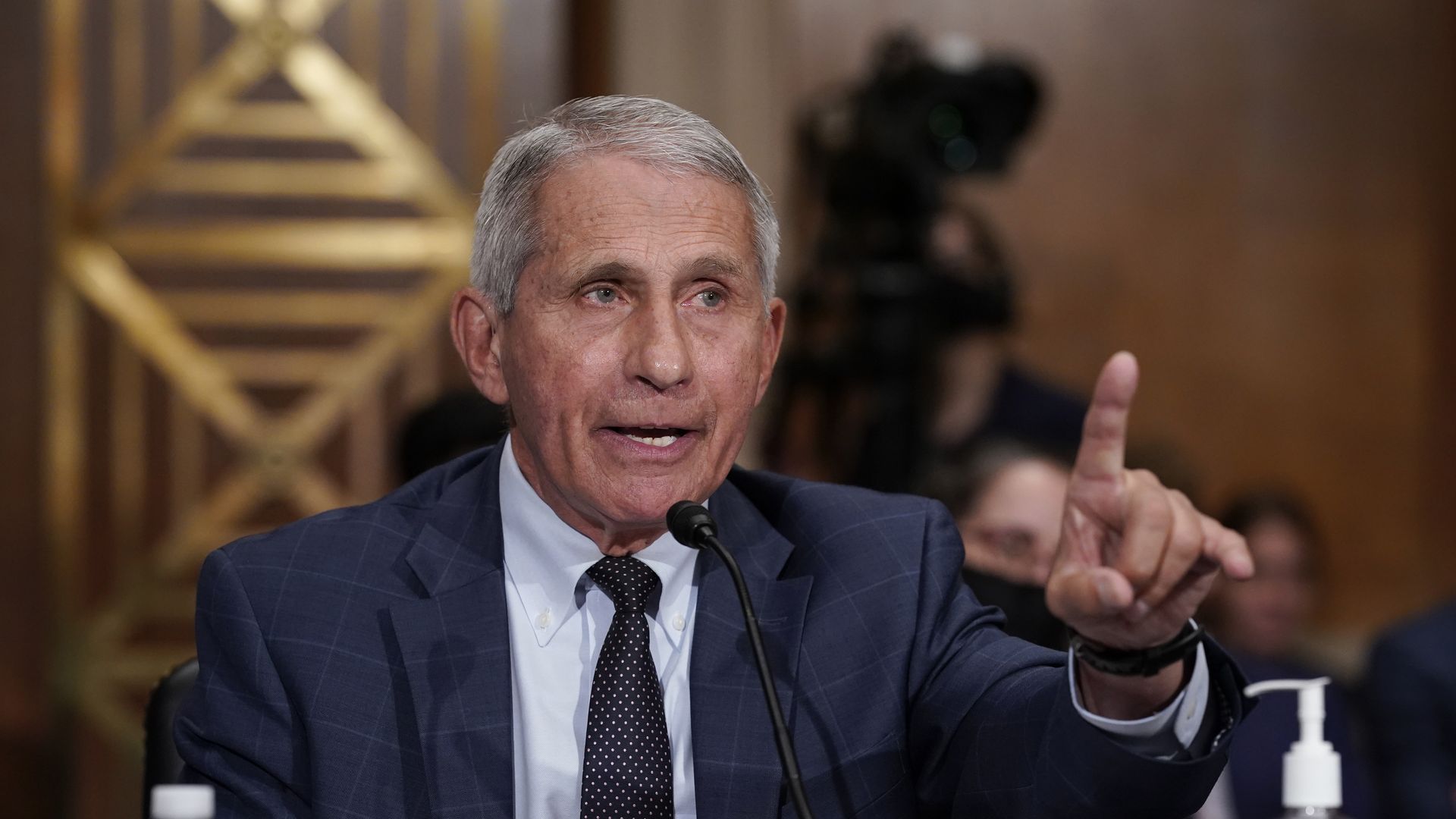
NIAID director Anthony Fauci said Sunday it is a "false narrative" to think that the coronavirus vaccines would become unnecessary if an antiviral drug announced by Merck receives federal approval.
Why it matters: Fauci's remarks on ABC's "This Week," come on the heels of the pharmaceutical company's announcement on Friday that an oral antiviral treatment it is developing might reduce the risk of hospitalization or death from COVID.
Hospitals across most New England states are seeing full intensive care units and staff shortages as growing coronavirus cases continue to shake the region, AP reports.
Why it matters: The New England region has the highest vaccination rate in the country, per AP. However, the states are still reporting record case counts, hospitalizations and deaths, comparable to pre-vaccine peaks.
Tens of thousands of protesters marched in cities across Brazil on Saturday, calling for President Jair Bolsonaro's impeachment over his government's handling of the COVID-19 pandemic, per Reuters.
Why it matters: Brazil's Senate is holding hearings that could lead to Bolsonaro's impeachment as the country's Supreme Court investigates his government’s handling of coronavirus vaccine contracts. Bolsonaro has threatened to reject the results of Brazil's October 2022 presidential election amid poor approval ratings.
As the world nears two years after the first reported cases of COVID-19 in Wuhan, China, there's still a lot more we don't know about SARS-CoV-2's origins than we do know.
Why it matters: Accurately determining the causes of COVID-19 will go a long way toward informing what can and should be done to prevent the next pandemic.