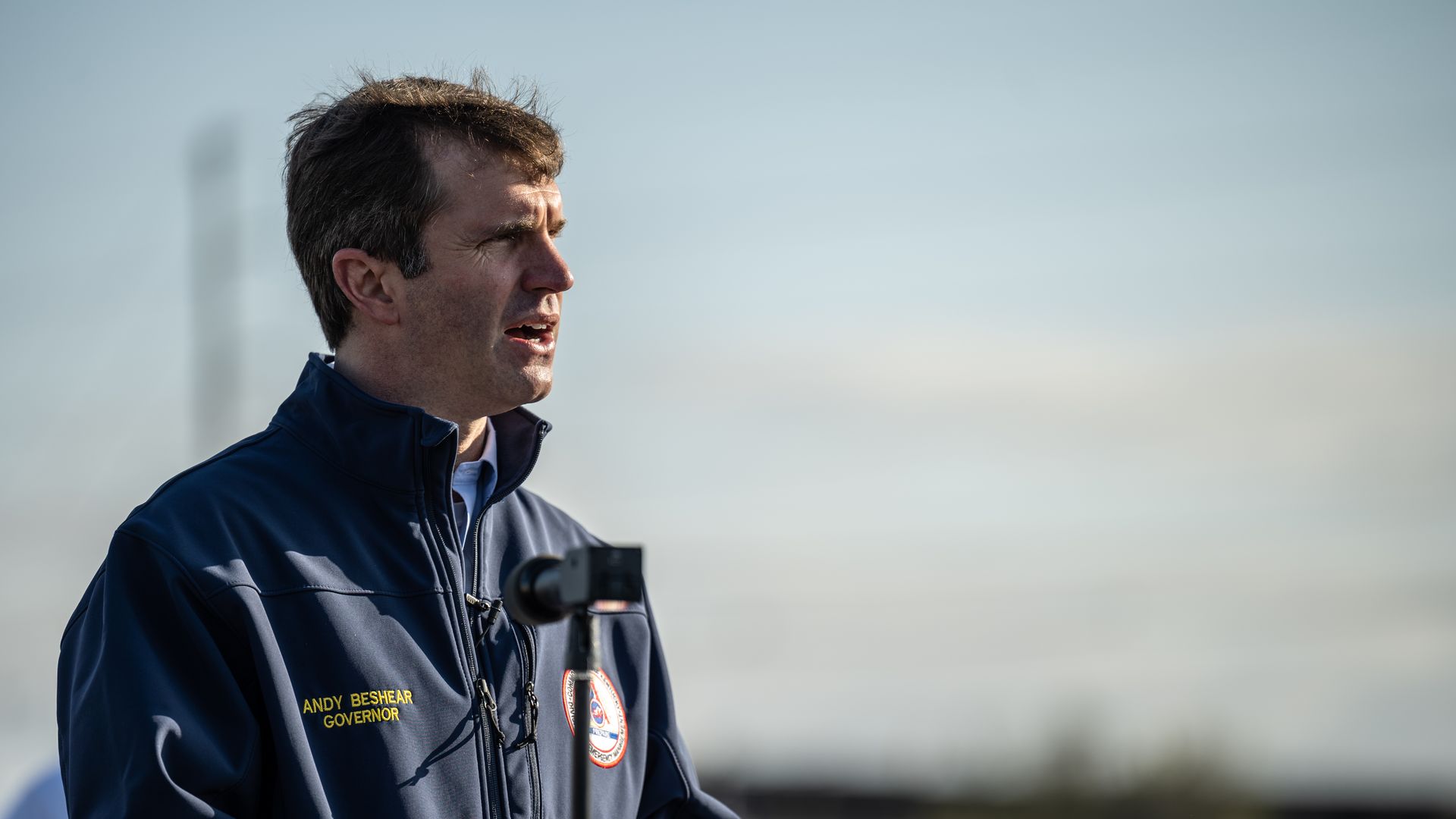
Kentucky Gov. Andy Beshear said Thursday that the record-high surge in COVID-19 cases would have led to a statewide mask mandate if that authority still lay with him.
Why it matters: Kentucky's Supreme Court recently transferred authority over pandemic-related decisions, including masking, to the GOP-controlled state legislature, according to the Democratic governor.
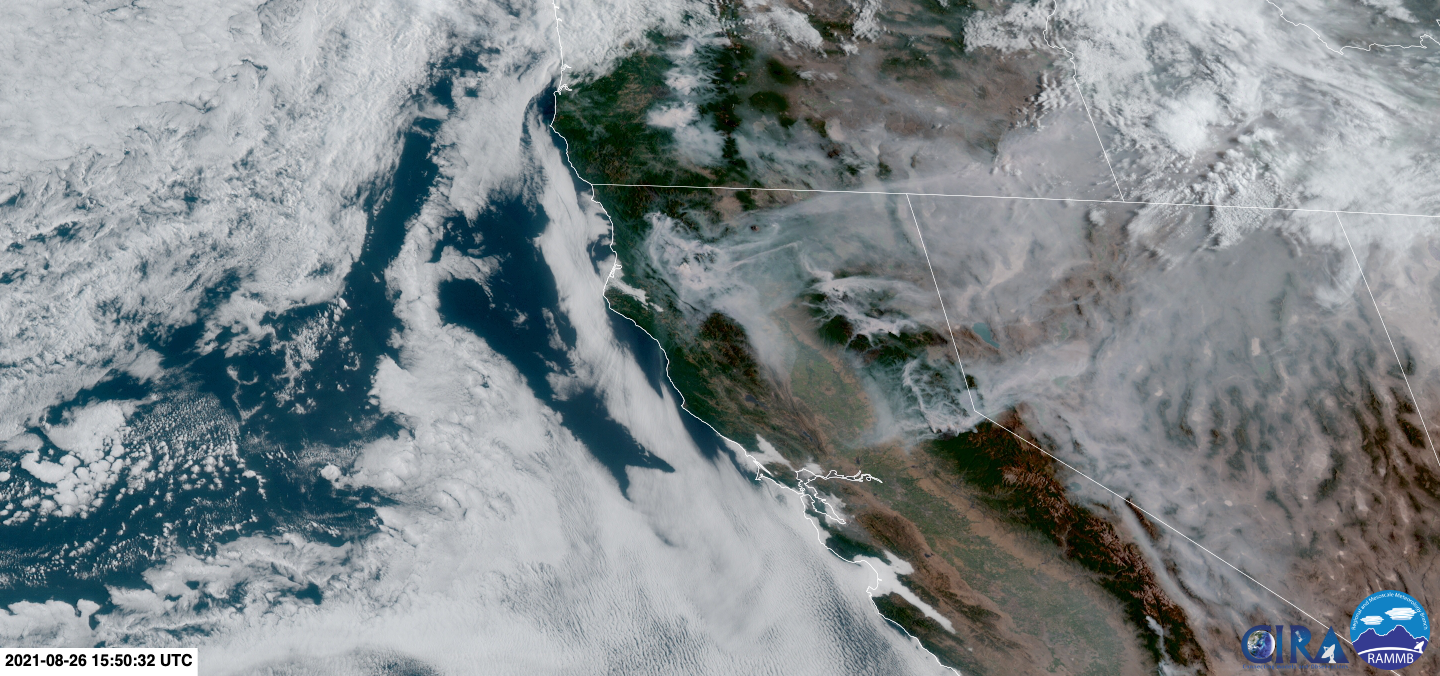
A satellite image of low-level smoke in Northern and Central California.
Towns in northern and central California registered some of the worst air quality in the world Thursday because of smoke from wildfires burning in the state, according to data from the federal government.
Why it matters: Microscopic particles suspended in wildfire smoke are a danger to the public and have been linked to decreased lung function, aggravated asthma, heart attacks and premature death in people with heart and lung disease, according to the Environmental Protection Agency.
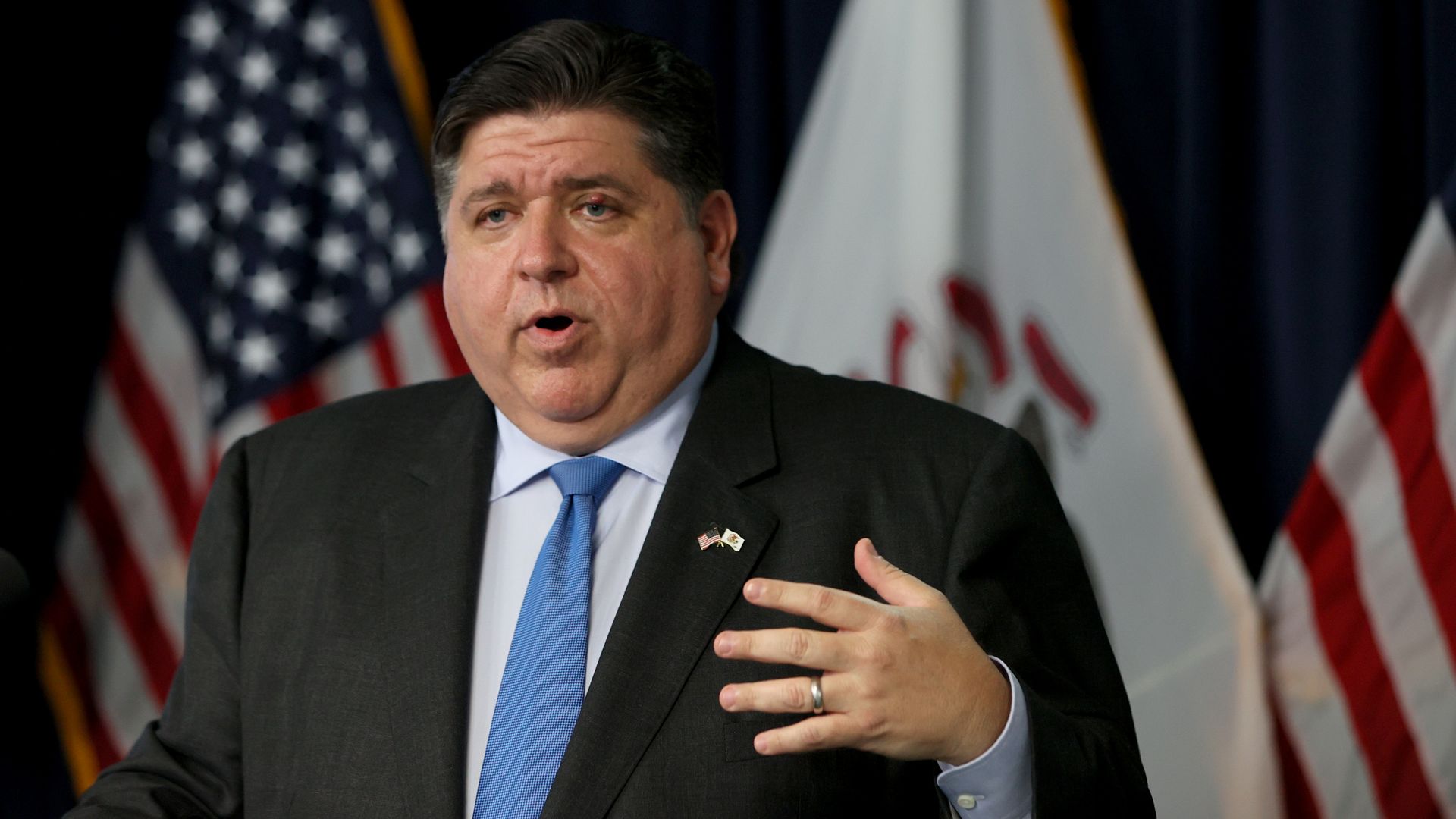
Illinois Gov. J.B. Pritzker on Thursday announced a statewide indoor mask mandate and vaccine requirements for state workers, including teachers and school staff.
Why it matters: The Democratic governor's latest restrictions come as COVID-19 cases across the state are on the upswing, largely driven by the Delta variant. "Unfortunately, we are running out of time as our hospitals run out of beds," Pritzker said at a news conference Thursday.
Pfizer and BioNTech announced on Thursday a deal with Brazilian pharmaceutical company Eurofarma to manufacture its COVID-19 vaccine for distribution in Latin America.
Why it matters: Latin American countries have struggled to vaccinate their populations due to a low supply of doses of the COVID-19 vaccines. The new deal would boost local manufacturing and distribution of doses.
Vaccinated Americans are facing a disheartening reality: Even after getting the shot, they'll have to live with some level of risk from the coronavirus for the foreseeable future.
State of play: A glut of data released over the past few weeks supports the idea that coronavirus vaccine effectiveness against infection begins to wane over time, although it remains effective against severe disease.
Most of the data suggest effectiveness is on the decline within six months post-vaccination. The Biden administration, however, plans to recommend a booster after eight months — which appears to still be well before effectiveness against severe disease significantly wanes, if that ends up happening at all.
"6 months is the time of significant waning, not 8 months. That time was likely only selected due to logistics," Eric Topol, executive vice president of Scripps Research, told Axios.
The context: But the U.S. vaccination campaign began in December which means millions of vaccinated Americans are likely significantly less protected than when they completed their first round of shots.
That's not even accounting for the possibility that the vaccines are less effective against the Delta variant specifically, in addition to losing potency over time.
That means that — at least until we get a booster — we all have to figure out how to live our lives knowing that our vaccines are imperfect at keeping us from getting sick, but work very well at keeping us alive and out of the hospital.
That's very normal for vaccines, experts say, and may remain true even with boosters.
“Where the public got spoiled here was the response to the mRNA vaccines was so strong” that it gave people protection against infection, “which was a welcome bonus," said Cornell virologist John Moore. "That was unexpected and very welcome, but it wasn’t normal."
My thought bubble: I am also trying to figure out what is a sustainable and ethical level of risk to incorporate into my life, and it's hard.
As a low-risk person, my main fear isn't getting the virus; it's contributing to its spread among the unvaccinated and the vulnerable.
That means I'm back to wondering whether I should dine indoors, struggling to make travel plans and taking coronavirus tests after being in what I perceive to be high-risk situations. These are all things I had hoped were behind me after I became fully vaccinated.
Yes, but: Just because risk will always be with us doesn't mean it will always be this bad.
A giant reason why breakthrough cases are common right now is because so much virus is circulating through the U.S. If the country's caseload decreases, everyone will be less likely to be exposed to the virus — including vaccinated people.
And at-risk Americans will likely be first in line for booster shots, meaning the people who have the most to lose from breakthrough cases will soon have extra protection.
The bottom line: It would be foolish to assume that your coronavirus vaccine will continuously provide you near-perfect protection against infection.
It is also, for most vaccinated people, unrealistic to worry that an infection would be life-threatening.
Simultaneously, visiting your grandmother in a nursing home right now does require caution, especially if you have been resuming pre-COVID life.
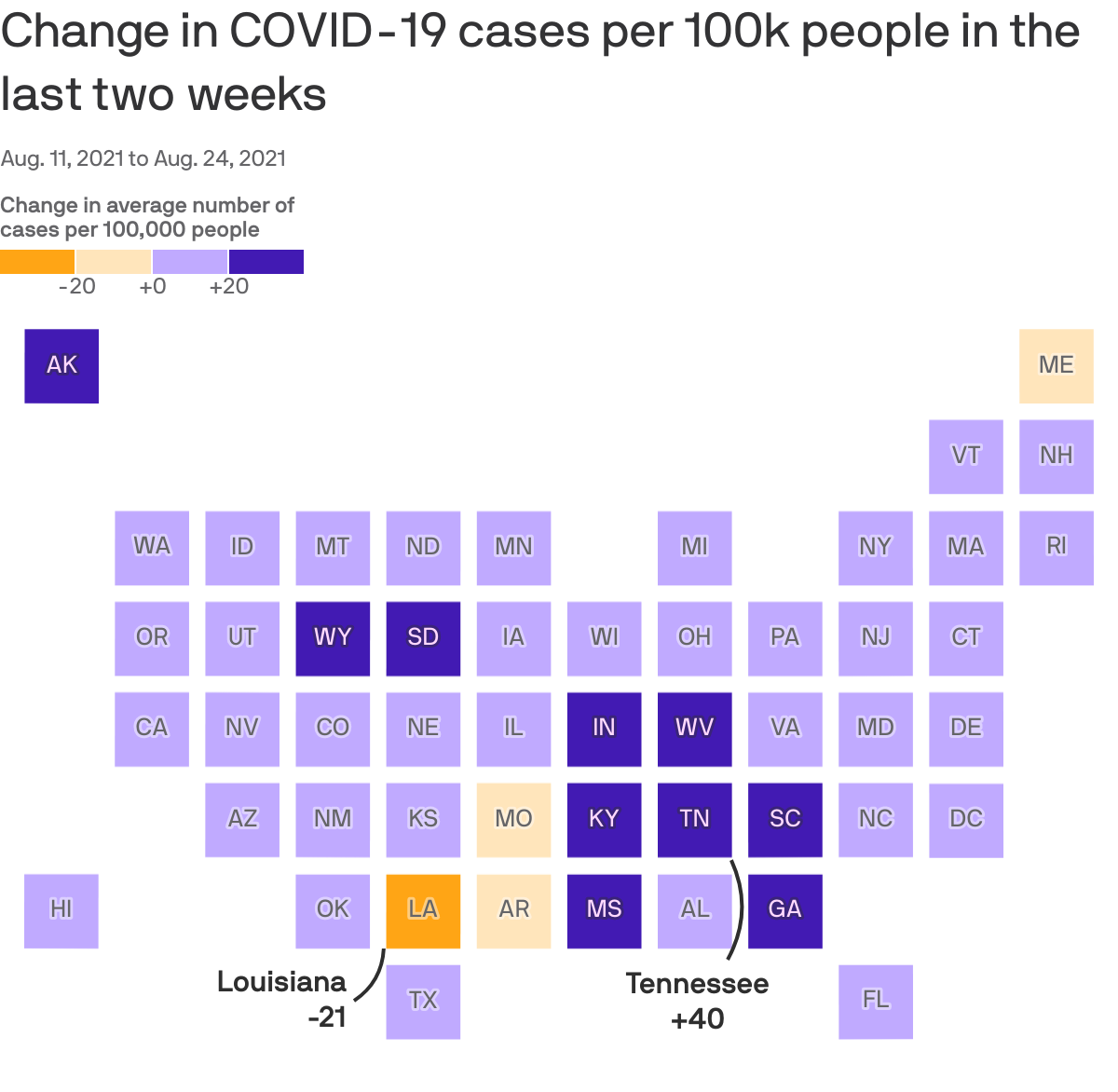
New coronavirus infections continue to rise across the U.S., perpetuating a preventable wave of suffering that's already straining hospitals and killing an average of 1,000 Americans per day.
The big picture: The biggest increases are happening primarily in a cluster of states where vaccination rates are low and safety measures like masks are spotty.
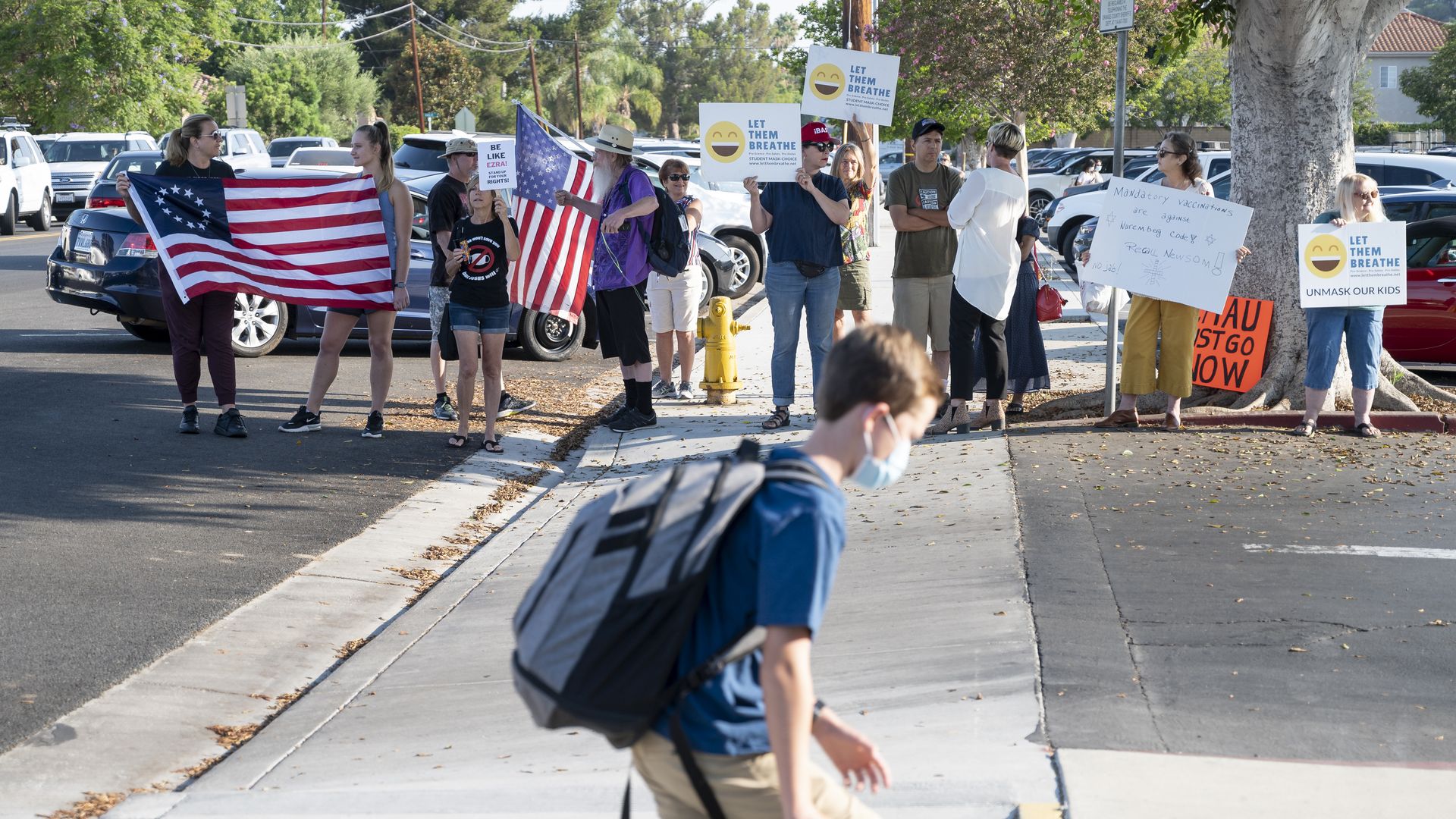
As children head back to the classroom, a "vocal minority" in the U.S. have resorted to violence or disruptive measures to protest against mask mandates in schools.
Driving the news: While the majority of Americans support the mandates, per a recent Axios/Ipsos poll, back-to-school confrontations across the U.S. have gotten so hot that teachers and other officials have been punched, hit and screamed at.
Experts studying the origins of COVID-19 for the World Health Organization (WHO) warned that the study has stalled and the "window of opportunity" is closing to trace the virus' origins.
Why it matters: The scientists warn in an essay in the journal Nature that any further delay "will render some of the studies biologically impossible," hampering understanding of the origins of the pandemic.