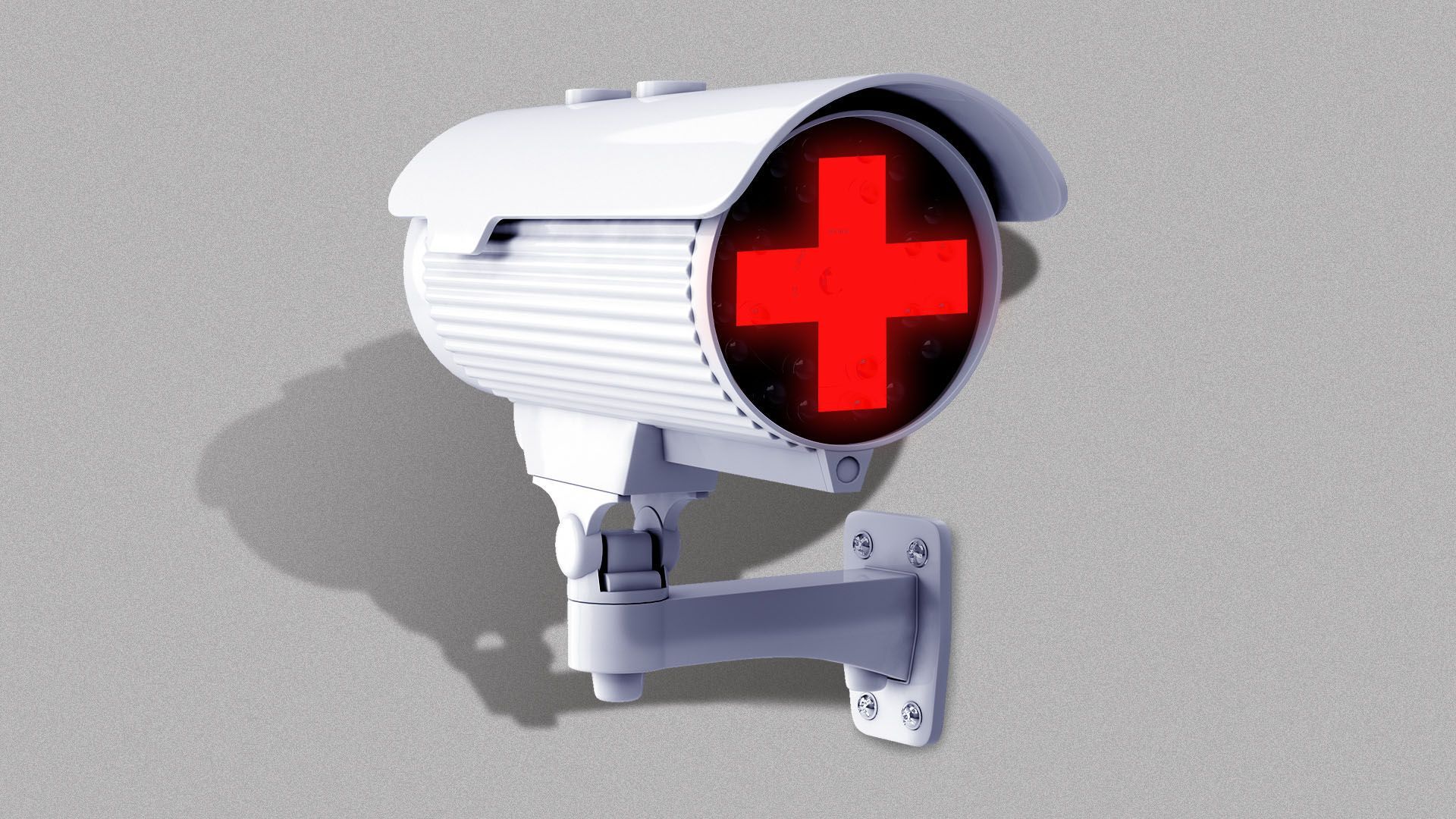
Companies are focusing on health security for returning workforces.
Why it matters: It's becoming clear that the novel coronavirus will be with us in some form for months or even years, which means companies need to invest in tools that can manage the biological safety of their workplaces.
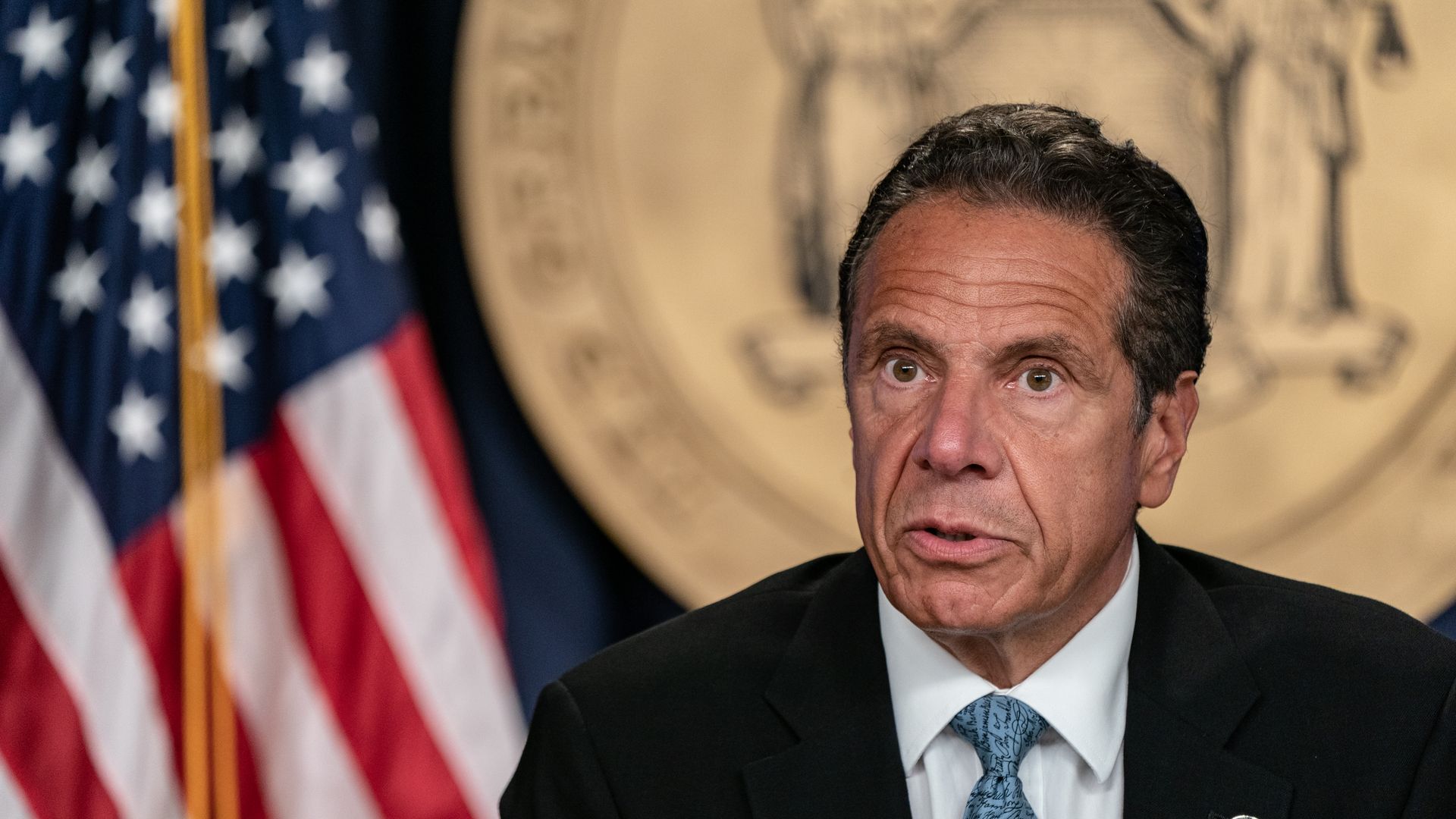
New York State Assemblyman Ron Kim (D) said Gov. Andrew Cuomo (D) threatened to "destroy" him over comments he made about the state's widening scandal on COVID-related nursing home deaths, CNN reported.
The big picture: Cuomo has come under intense scrutiny over his handling of the state's nursing homes during the pandemic, prompting widespread criticism and a damning report from the state's attorney general that found the health department significantly undercounted the number of deaths in nursing homes.
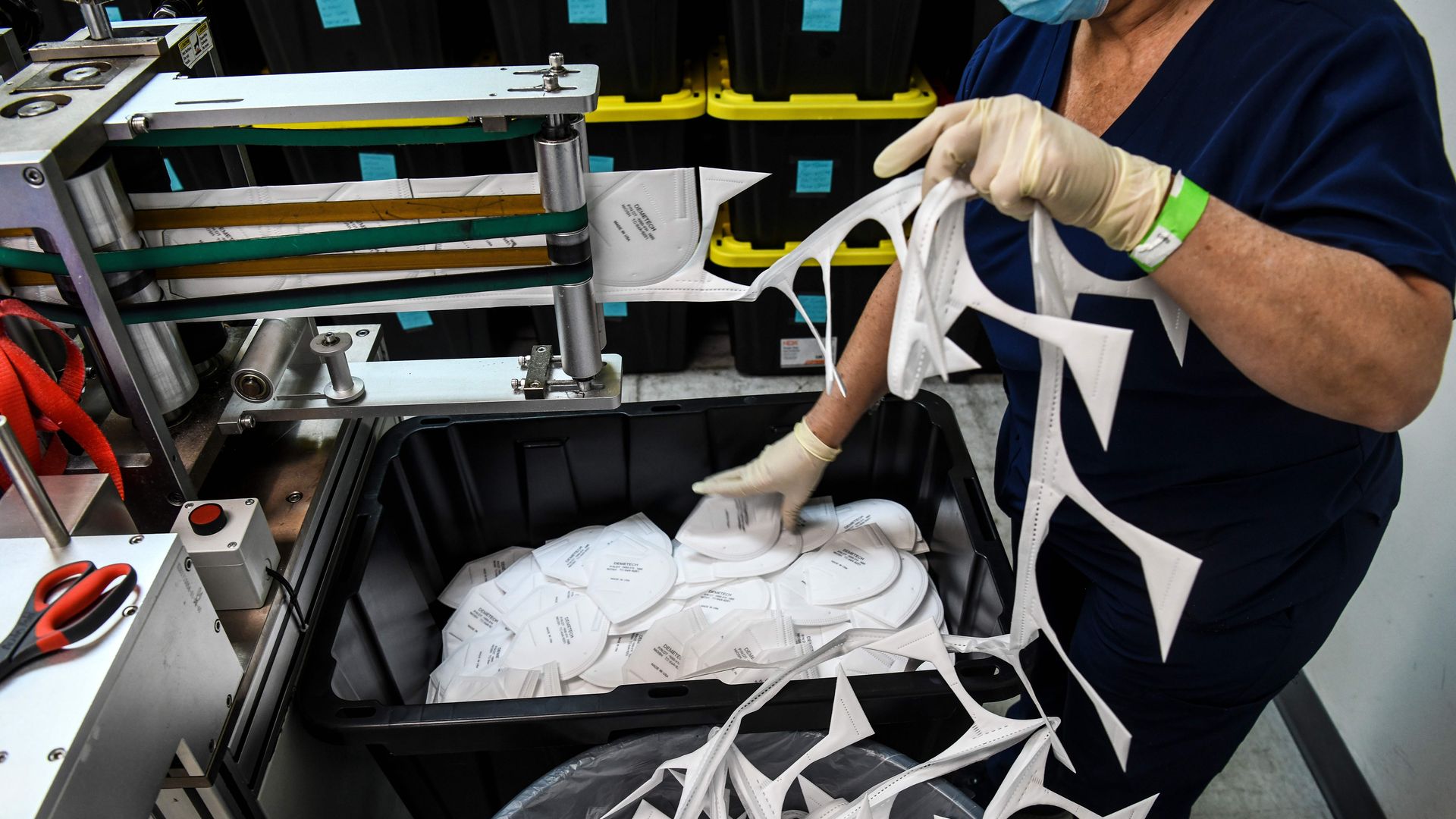
The U.S. government has seized approximately 10 million counterfeit N95 masks designed to mimic those produced by global manufacturer 3M, AP reports.
Why it matters: The fake masks do not have the same standard of protection as actual N95 masks, which are needed for healthcare workers and others on the front lines of caring for others during the coronavirus pandemic.
China, Russia and Iran — drawing on one another’s online disinformation — amplified false theories that the COVID-19 virus originated in a U.S. bioweapons lab or was designed by Washington to weaken their countries, according to a nine-month investigation by AP and the Atlantic Council’s DFRLab.
Why it matters: Through a series of overlapping, if slapdash, efforts, America's global adversaries benefited from mutually reinforcing counter-narratives propagated online that aimed to falsely place responsibility for the pandemic on the U.S. and often to sow doubt on its actual origin within China.
The COVID-19 pandemic transformed the world — and the afflictions of malware evolved with it, writes the security company Malwarebytes in its 2021 State of Malware report.
Why it matters: “The story of malware in 2020 … is a story of how the tools and tactics of cybercrime and cybersecurity changed against a backdrop of enormous changes to ordinary life,” says the report.
The seven-day average of coronavirus vaccines administered in the U.S. has reached 1.7 million per day, White House coronavirus coordinator Jeff Zients said at a Wednesday briefing.
Why it matters: That pace puts President Biden on course for meeting his goal of 100 million doses administered in his first 100 days in office, which would land on April 29. 54 million vaccine shots have been administered thus far, and 5% of Americans have received both doses.
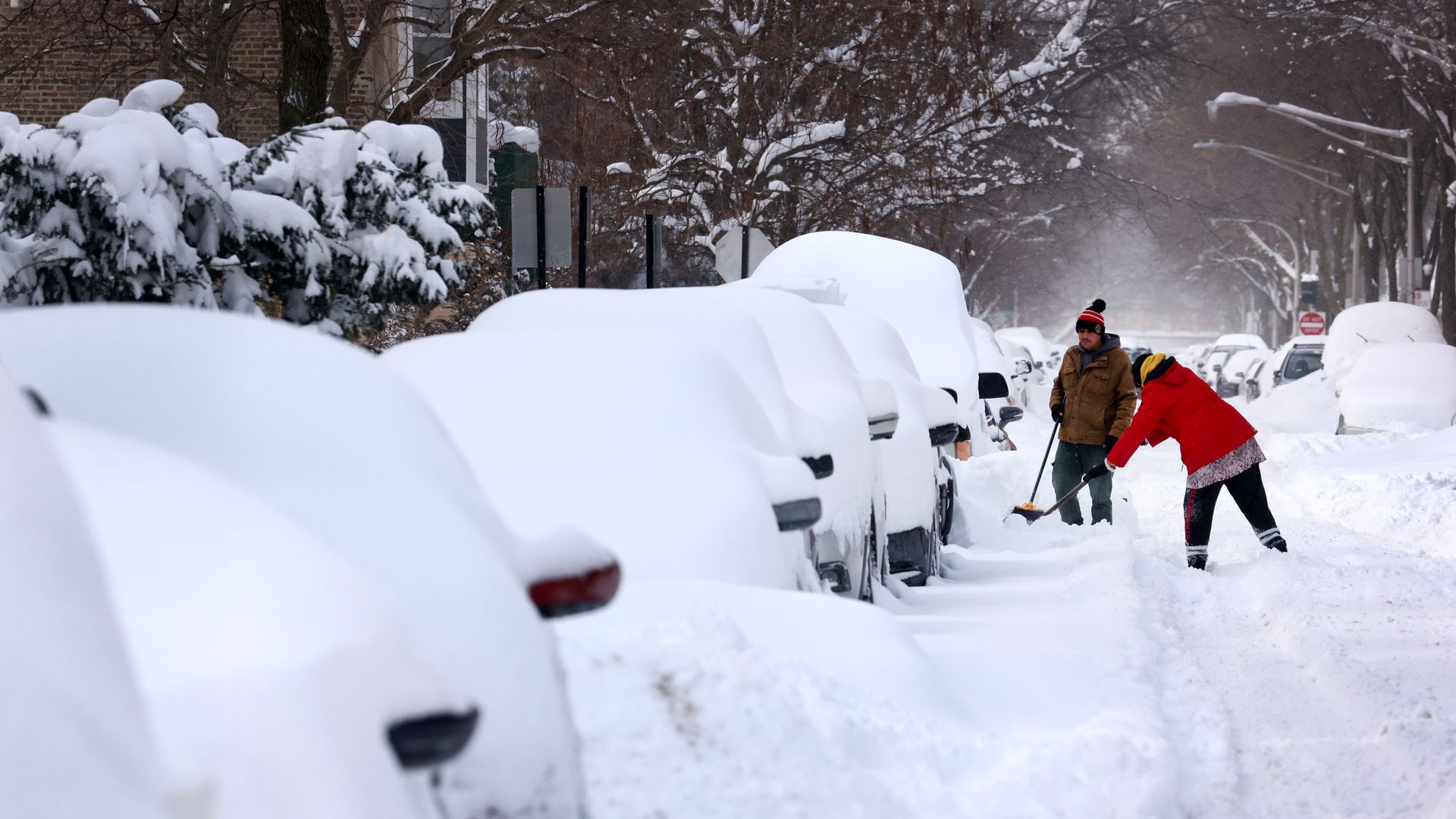
The winter storm sweeping across Texas and much of the U.S. has posed new obstacles to coronavirus vaccination efforts.
Driving the news: Hazardous weather has slowed deliveries from two central distribution hubs for the Southeast. The U.S. government is projecting "widespread delays" in vaccine shipments in the next few days, a Centers for Disease Control and Prevention (CDC) spokesperson told the Washington Post.
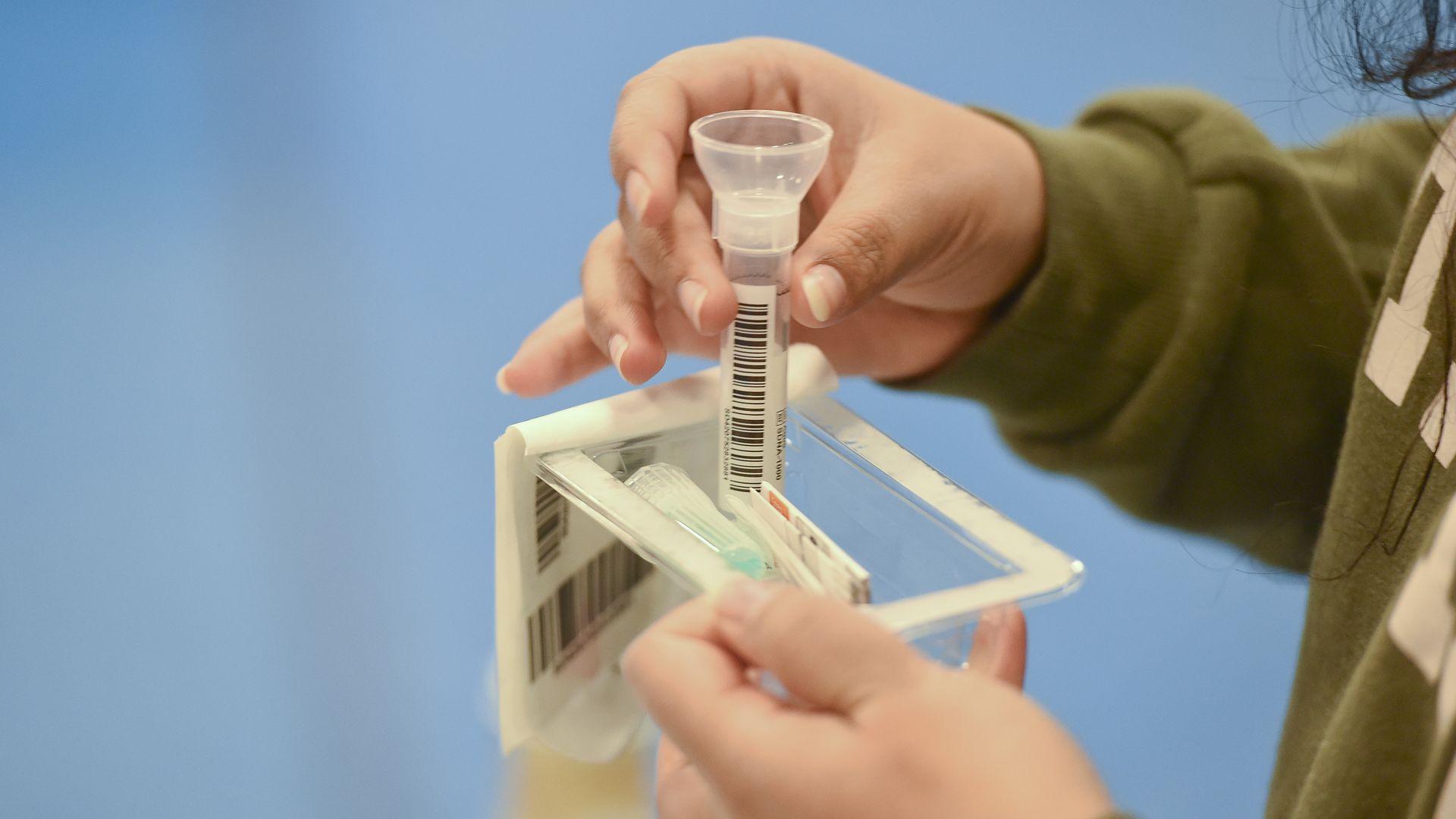
Most of us have gotten used to shoving nasal swabs up our noses to check for the virus that causes COVID-19. But there's also another kind of test that's still being researched: a saliva test that may tell us more.
Driving the news: The Yale School of Medicine is promoting a study by its researchers that suggests the saliva test might not just be less invasive — it might also be a better way to tell who's going to get severely ill.
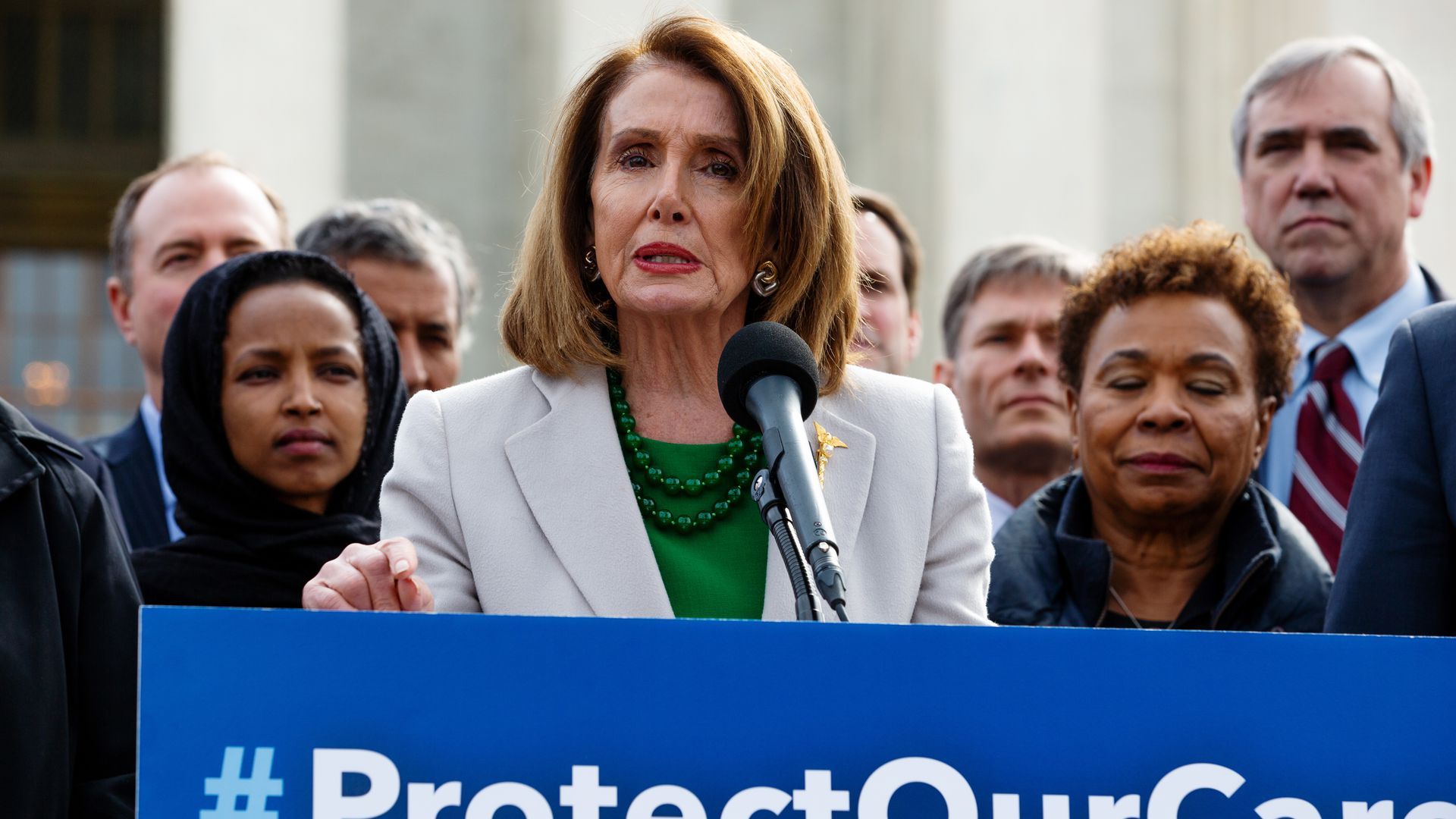
The Congressional Budget Office doesn't expect much from House Democrats' plan to temporarily expand health care coverage through the Affordable Care Act.
The big picture: According to CBO's estimates, Democrats' proposals would cover fewer than 2 million uninsured Americans — at a cumulative cost of over $50 billion.
Most teachers and school staff who are back in the classroom feel comfortable with the return to in-person classes, according to recent polling from the American Federation of Teachers.
Why it matters: Teachers who are still fully remote said they weren't comfortable with the idea of a return to the classroom — but the teachers who have returned seem to think it's gone just fine.
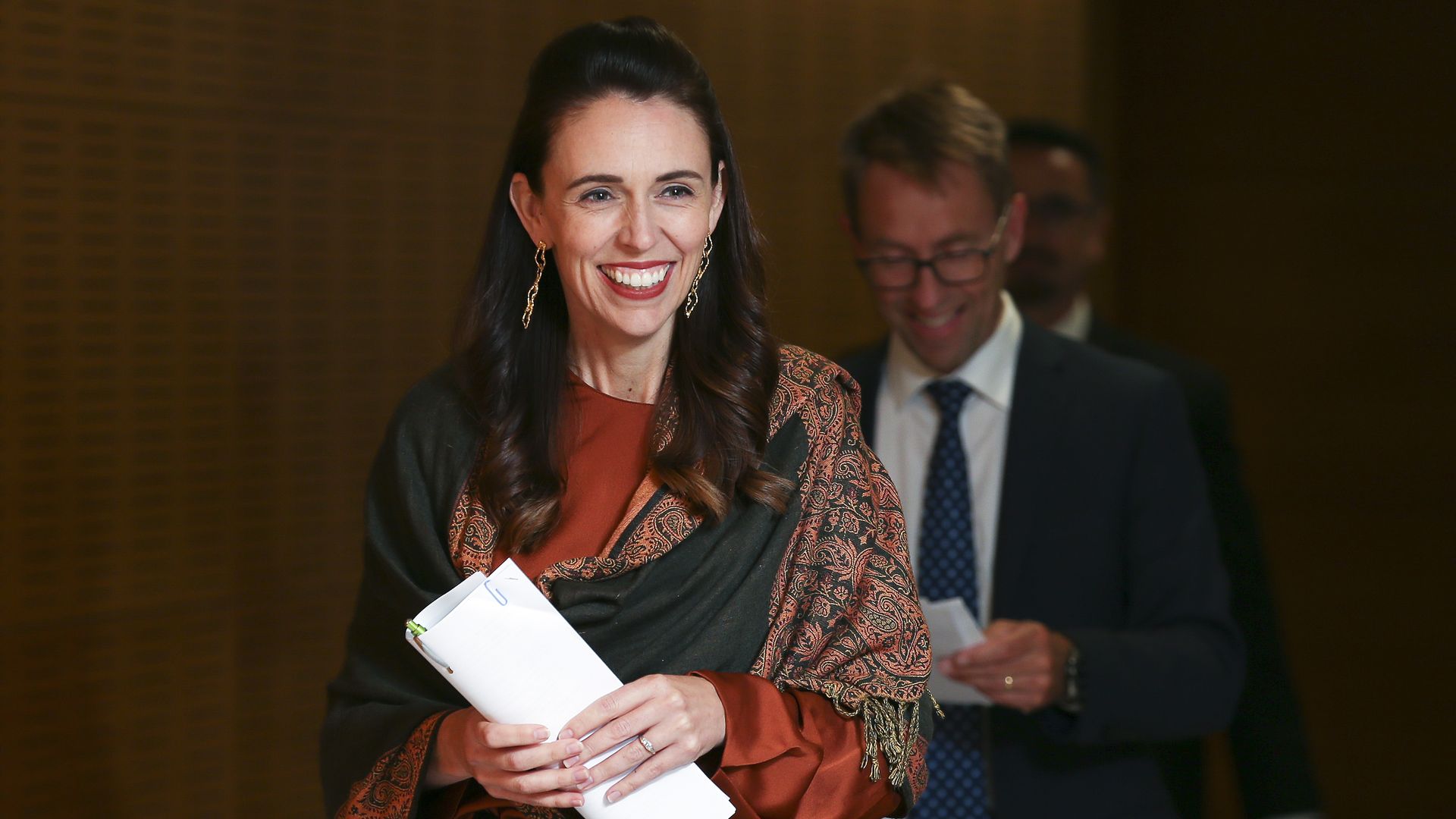
New Zealand Prime Minister Jacinda Ardern announced Wednesday Auckland's snap lockdown will end at midnight.
Why it matters: Officials confirmed two new COVID-19 community cases Wednesday. Ardern told reporters test results show "we don't have a widespread outbreak, but rather a small chain of transmission," centering around an Auckland high school, "which is manageable."
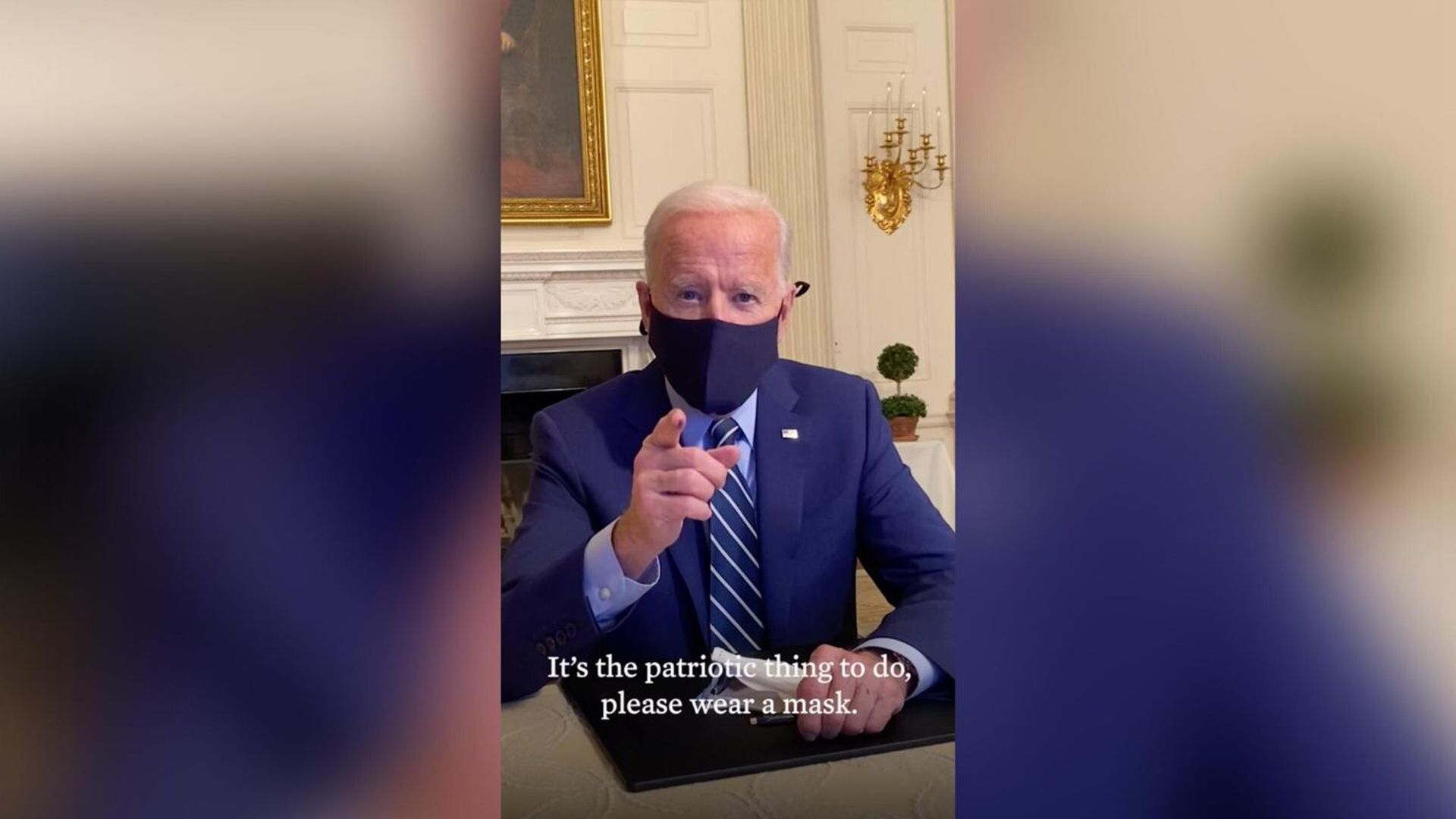
The White House marked a return to Snapchat with President Biden and his chief medical adviser, Anthony Fauci, appearing in public health video messages on the COVID-19 pandemic.
Details: In the White House Snapchat story, which appears on the "Discover" page of curated content, a masked Biden urges users to wear face coverings because "you're going to save lives."





/2021/02/17/1613583994384.gif?w=3840)