Bloomberg has a big feature that includes the story of Constance Else, who has been posting flyers across her New Jersey town offering to help older Americans who are struggling to book vaccination appointments online.
The big picture: It's part of an all-too-familiar American story of individuals having to do heroic work to make up for a systemic shortfall, akin to 7-year-olds setting up lemonade stands to help pay medical bills or employees banding together to donate sick time to a seriously ill colleague.
Top Trump health officials urged Congress last fall not to give states any additional money for the COVID-19 vaccine rollout, as state officials warned they didn't have the funding they needed, STAT scoops.
Why it matters: The vaccine rollout was ultimately sluggish, and the number of vaccines administered in the first few weeks fell way short of federal projections — partially because states faced a lack of resources.
When states decided to open vaccine eligibility more broadly to seniors, it bumped essential workers further down the vaccine line or forced them to compete with a new flood of people for shots, the Washington Post reports.
Why it matters: Essential workers, who are disproportionately people of color, are at higher risk of infection than people who can more easily social distance.
Mutated versions of the coronavirus threaten to prolong the pandemic, perhaps for years — killing more people and deepening the global economic crisis in the process.
The big picture: The U.S. and the world are in a race to control the virus before these variants can gain a bigger foothold. But many experts say they already expect things to get worse before they get better. And that also means an end to the pandemic may be getting further away.
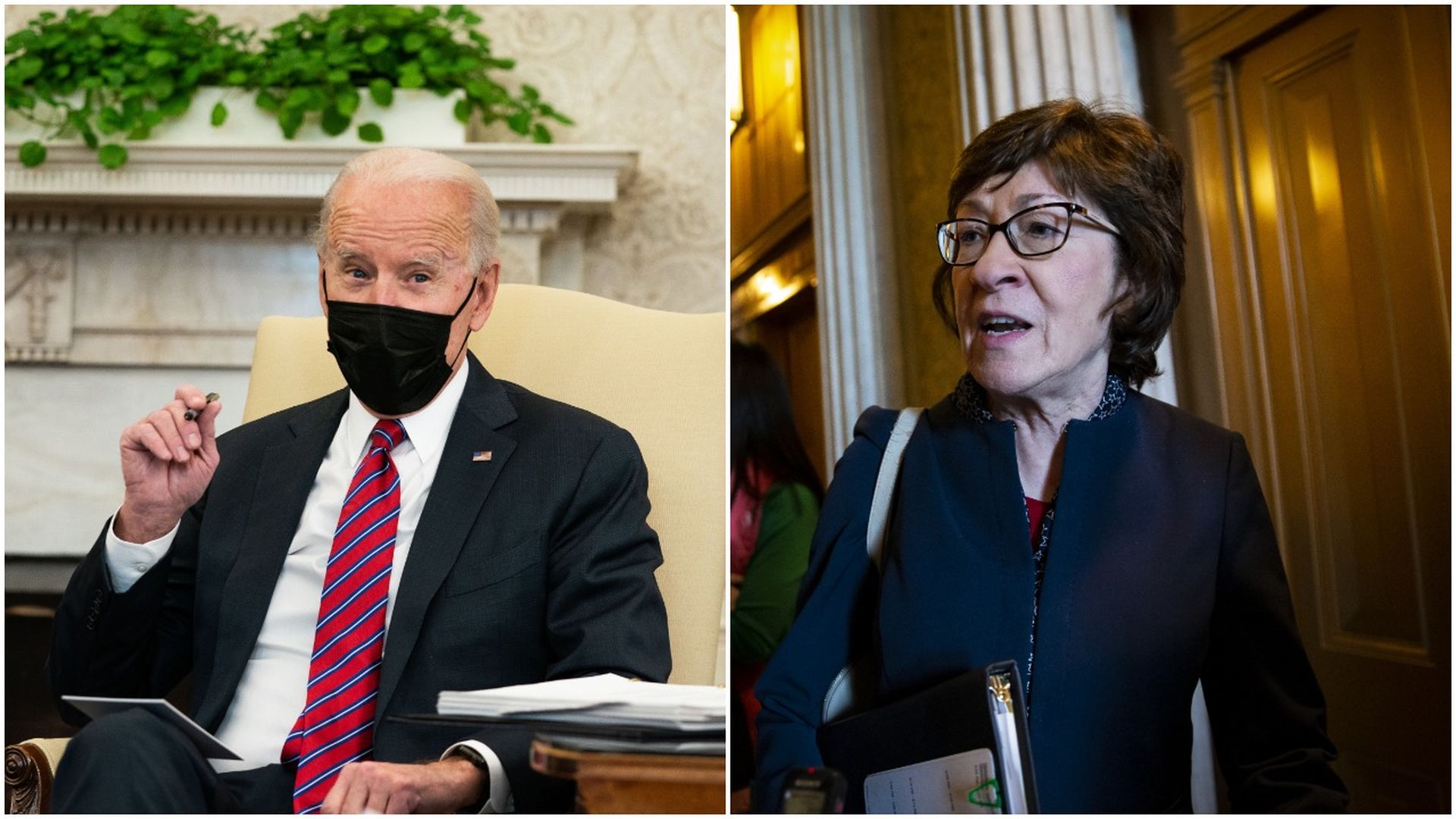
President Biden will on Monday meet at the White House with a group of 10 Republican senators who are seeking a bipartisan deal on coronavirus relief.
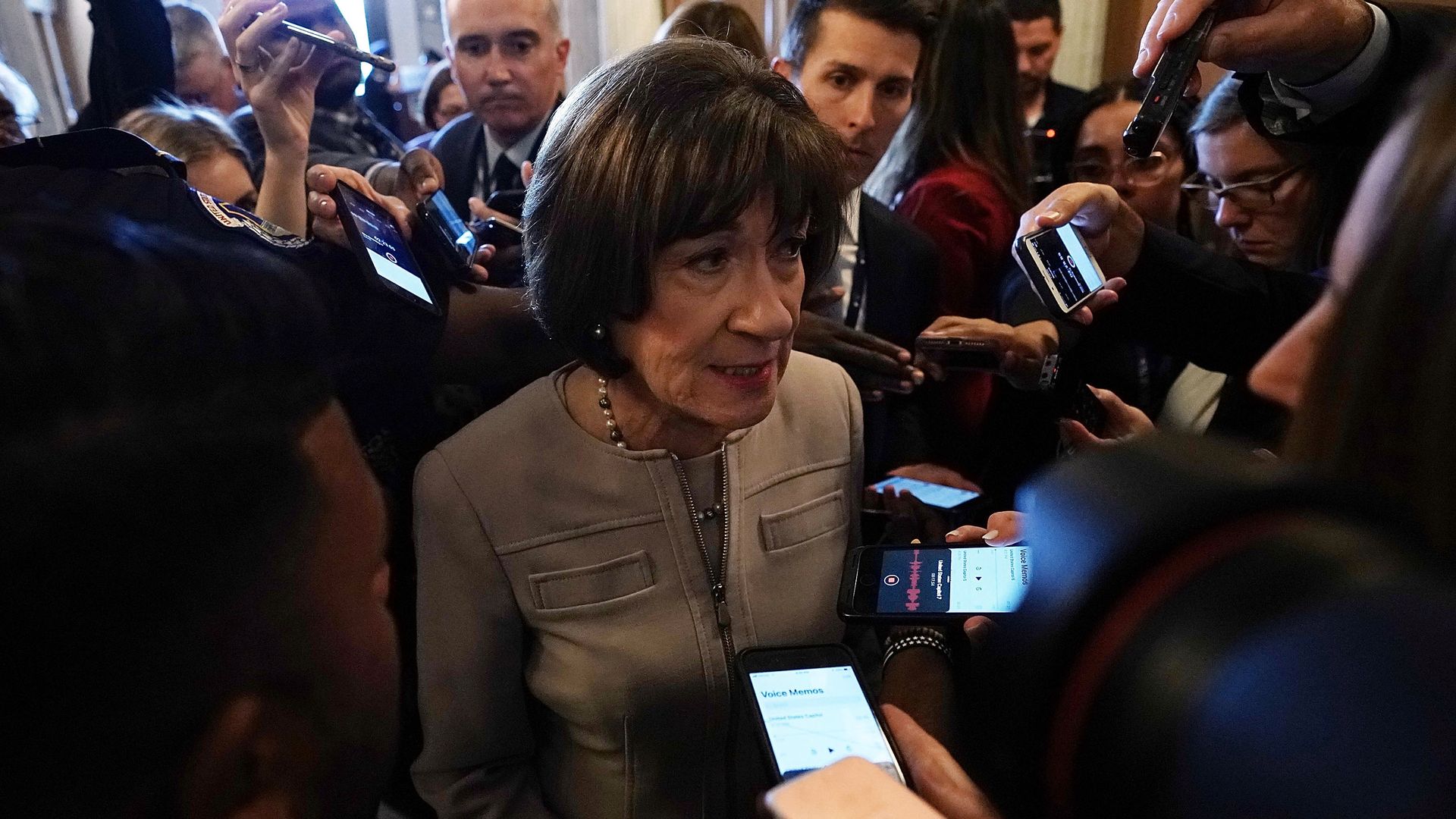
Driving the news: White House press secretary Jen Psaki said that after receiving a letter earlier Sunday from the Republicans, led by Sen. Susan Collins, Biden spoke with the Maine senator and invited them to the White House "for a full exchange of views."
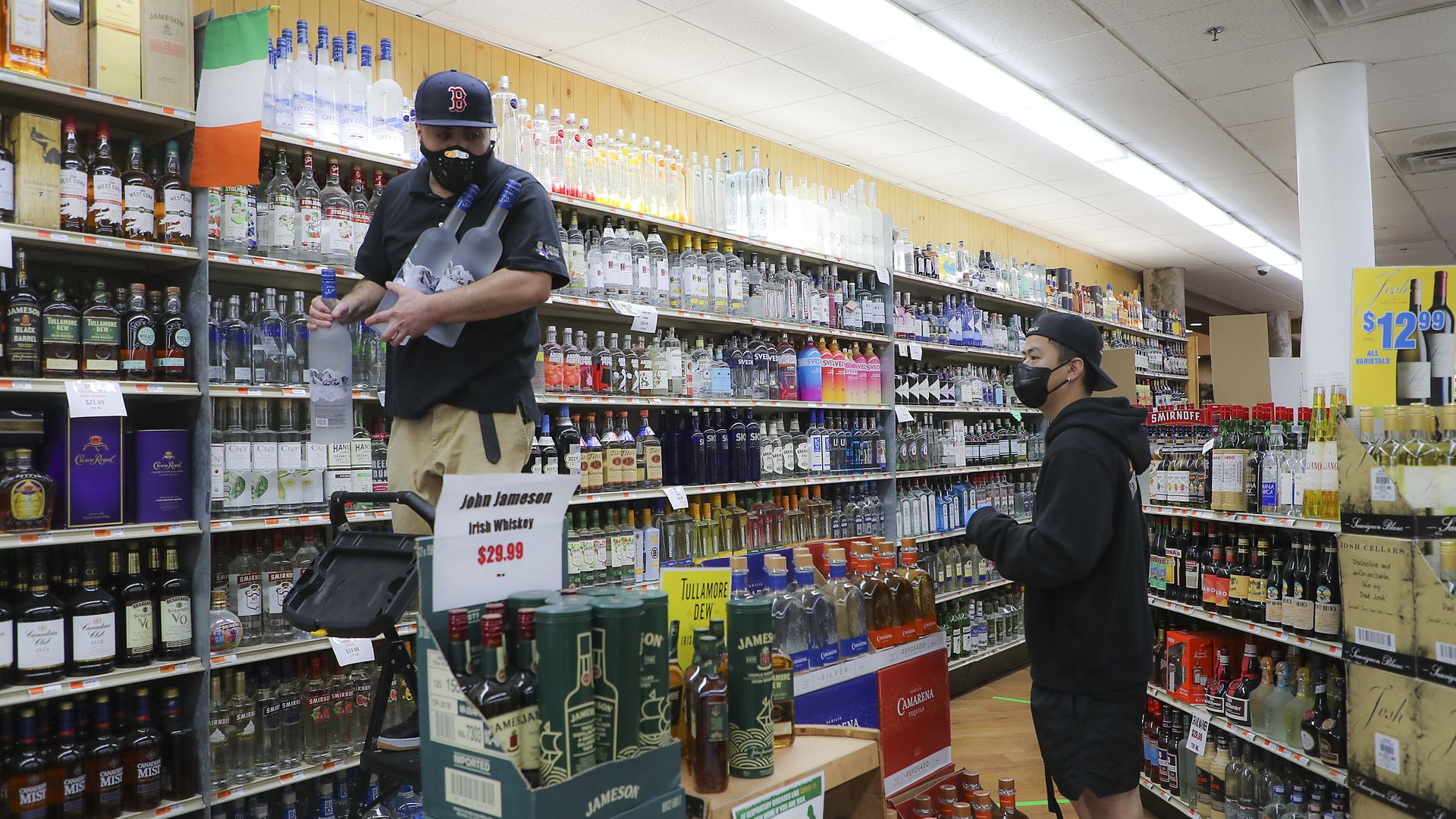
High-end liquor gained its sharpest increase in sales in at least 40 years after the coronavirus pandemic brought lockdowns across the U.S., the Wall Street Journal reports.
Why it matters: Adults in a peer-reviewed JAMA report said last September that they drank 14% more often over a five day period in 2020 than they did in 2019.
COVID-19 hospitalizations in the U.S. this week dropped below 100,000 for the first time since December, with sharp declines happening in almost all states, according to the COVID Tracking Project.
Why it matters: CNN reports that while the decrease in hospitalizations is promising, experts are concerned that new variants of the virus will increase case rates to record heights if the national vaccine rollout faces challenges.
Michael Osterholm, director of the Center for Infectious Disease Research and Policy at the University of Minnesota, urged the U.S. on Sunday to vaccinate as many people over 65 as possible ahead of a potential COVID-19 surge caused by the new strain first detected in England.
The big picture: About 1.3 million doses per day are being administered on average, per a New York Times analysis — on track with President Biden's goal to give Americans 100 million doses of the COVID-19 vaccines in 100 days. But the rollout in the states has been rocky.
A group of 10Senate Republicans, led by Sen. Susan Collins (Maine), sent a letter to President Biden Sunday requesting a meeting, saying they have developed a counterproposal to the president's COVID-19 relief plan.
The big picture: The proposal includes $160 billion in spending for vaccines, testing and tracing, treatment and medical equipment. The senators said the plan "could be approved quickly by Congress with bipartisan support," if it gained Biden's support.