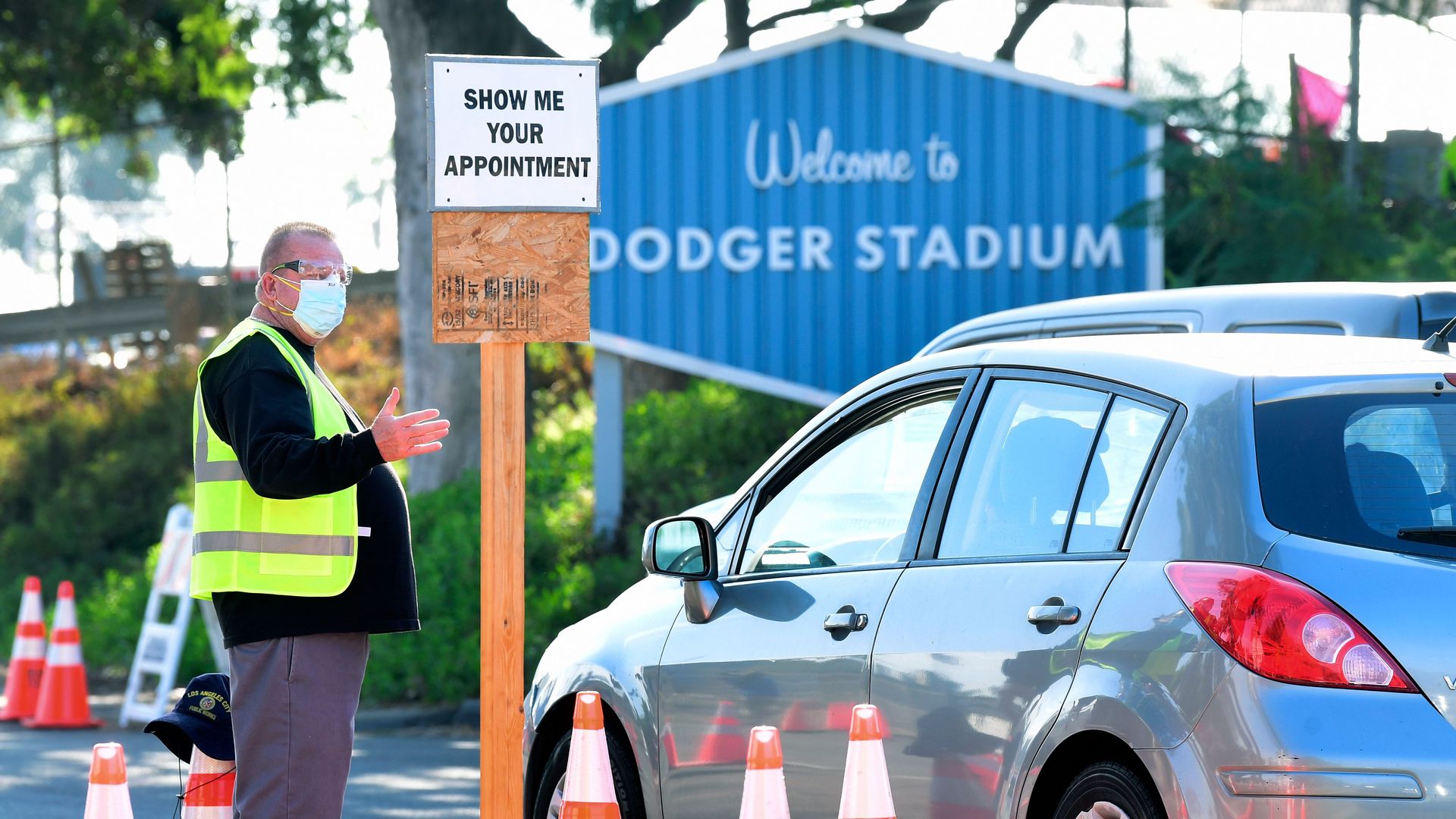
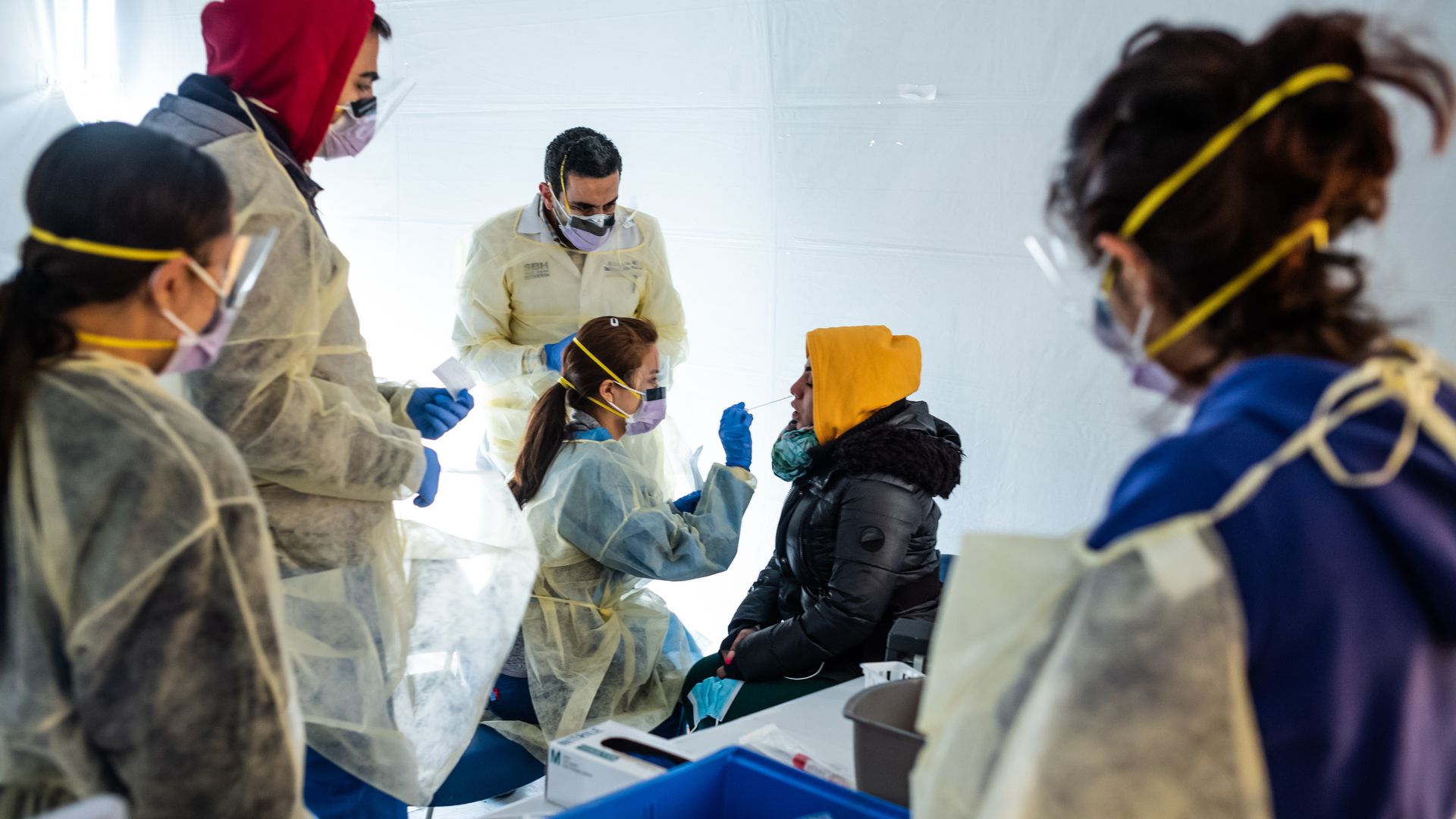
States across the U.S. are opening stadiums, fairgrounds, convention centers and other large spaces as COVID-19 vaccine "megasites" as they ramp distribution of the shots.
Driving the news: Many states are moving to the next phase of the biggest vaccination drive in history, making vaccines available to new groups, including seniors, teachers, first responders and other essential workers.
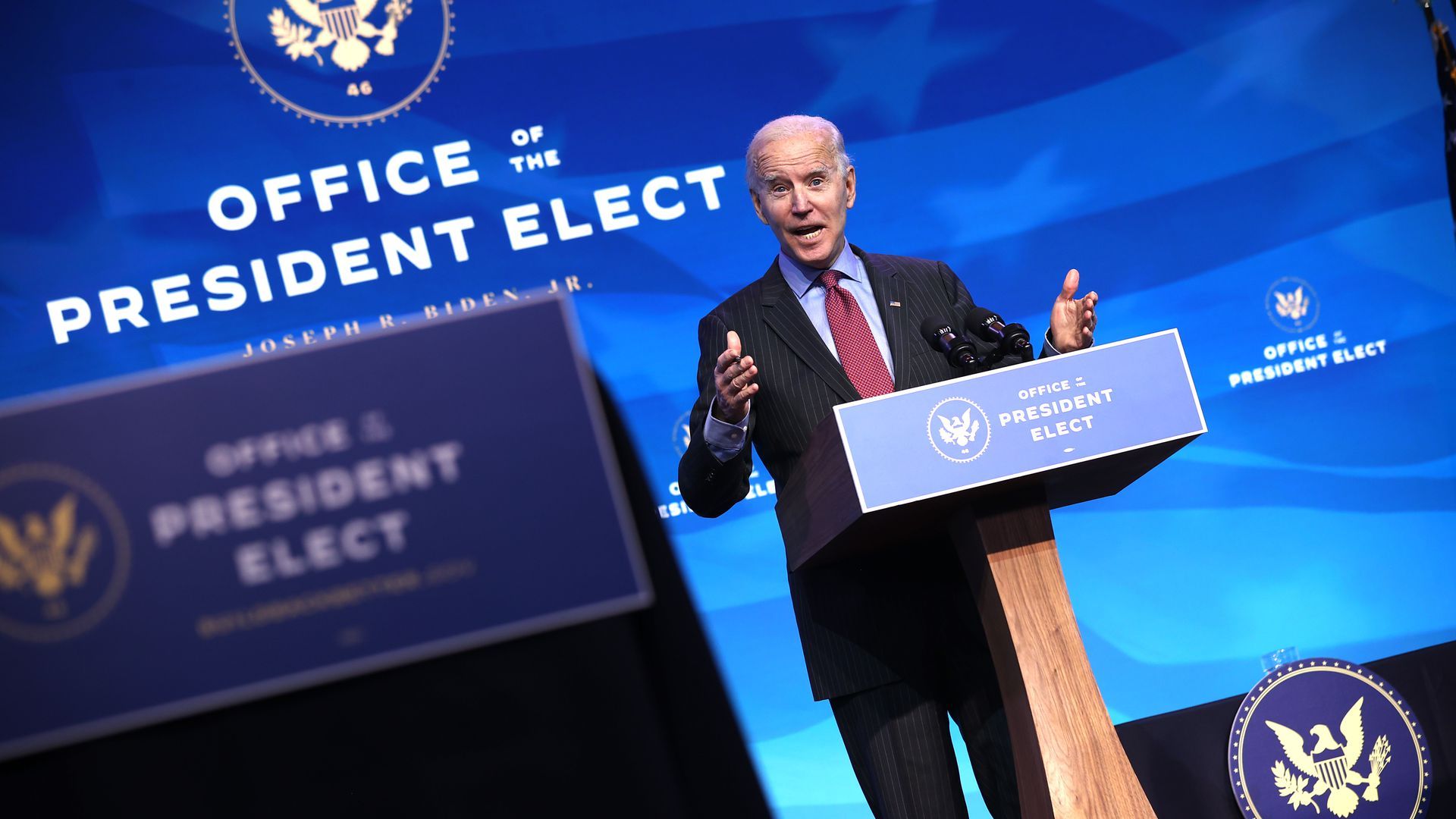
President-elect Joe Biden publicly received his second dose of the Pfizer coronavirus vaccine on Monday in Newark, Delaware.
Why it matters: Biden's effort to bolster public confidence in the vaccine, which has been found by the FDA to be safe and 95% effective, comes after an alarming number of Americans polled in December said they would reject a vaccine.
A new study of coronavirus patients discharged from a hospital in Wuhan, China, found that most participants had at least one symptom six months later, the New York Times reports.
Why it matters: The study, published in The Lancet, is a stark reminder that death isn't the only thing to fear from the virus.
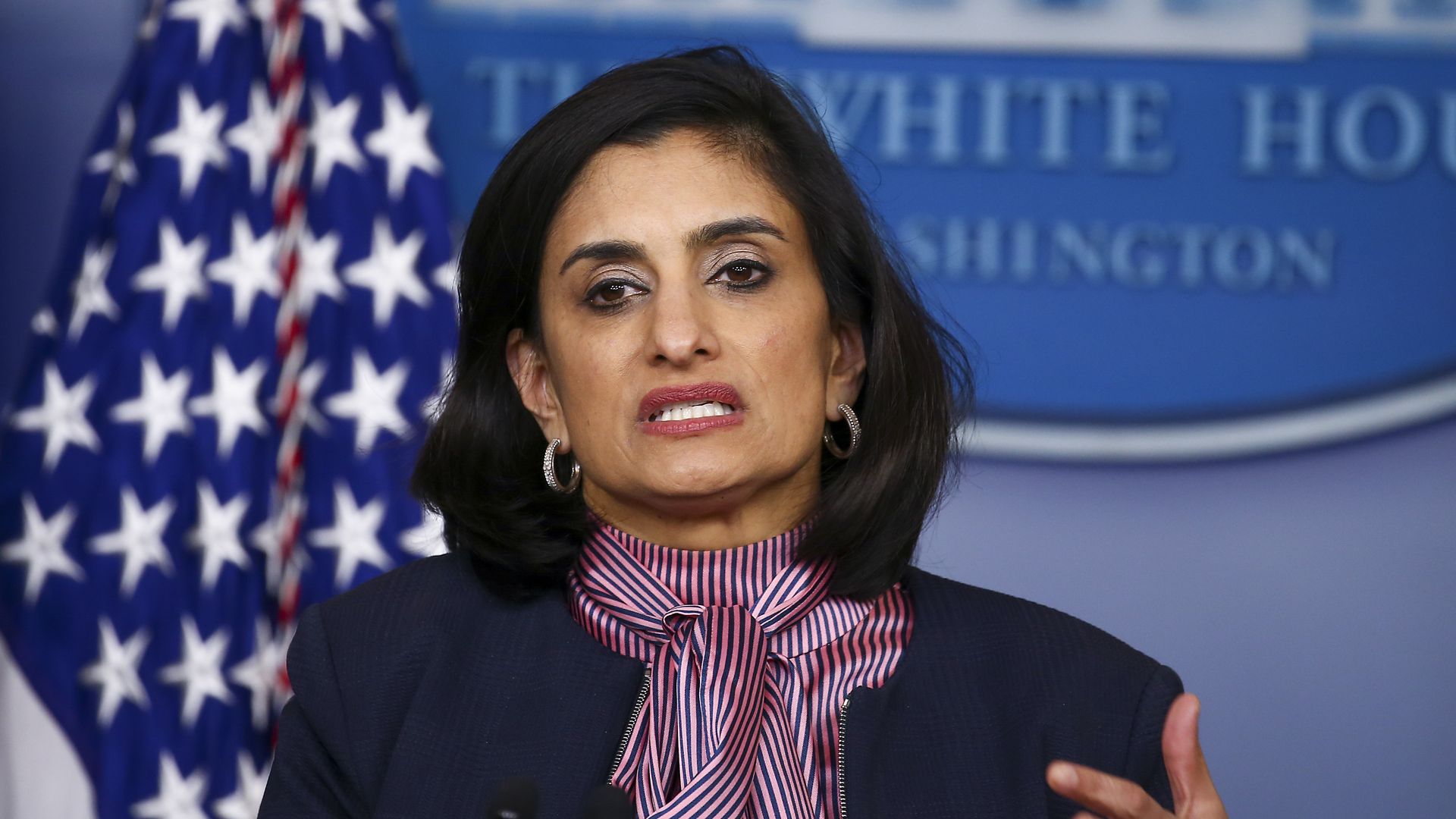
CMS administrator Seema Verma has been working steadily for four years to restructure the Medicaid program — and Friday's approval of a block grant proposal in Tennessee was one last, big parting shot.
The big picture: Medicaid waivers — most notably, waivers allowing states to impose work requirements in their Medicaid programs — have been the most focused, most significant part of the Trump administration's health care legacy.
President-elect Joe Biden said on Friday that when he takes office, he'll release nearly all available coronavirus vaccines for distribution, instead of holding some back for second doses.
Why it matters: This could help more people get a first dose of the vaccine sooner, and a person familiar with the administration's planning told WSJ that the decision won't change the timing between doses. But there's no guarantee that the policy won't delay second doses.
Many colleges will bring students back to campus for the spring semester, with or without widespread vaccination.
Why it matters: Several colleges that reopened campuses in the fall were tied to big outbreaks. But schools say they've learned from that experience and improved their safety protocols, and are now confident that they can manage fuller campuses.
Mike Bloomberg is staging a global competition that asks mayors to describe nimble responses to the pandemic in their cities, with 15 winners receiving $1 million grants.
Why it matters: Urban areas around the world have been the hardest hit by COVID-19, and by pinpointing approaches that have worked particularly well — or that have the potential to do so — Bloomberg Philanthropies hopes to foster long-lasting societal improvement.
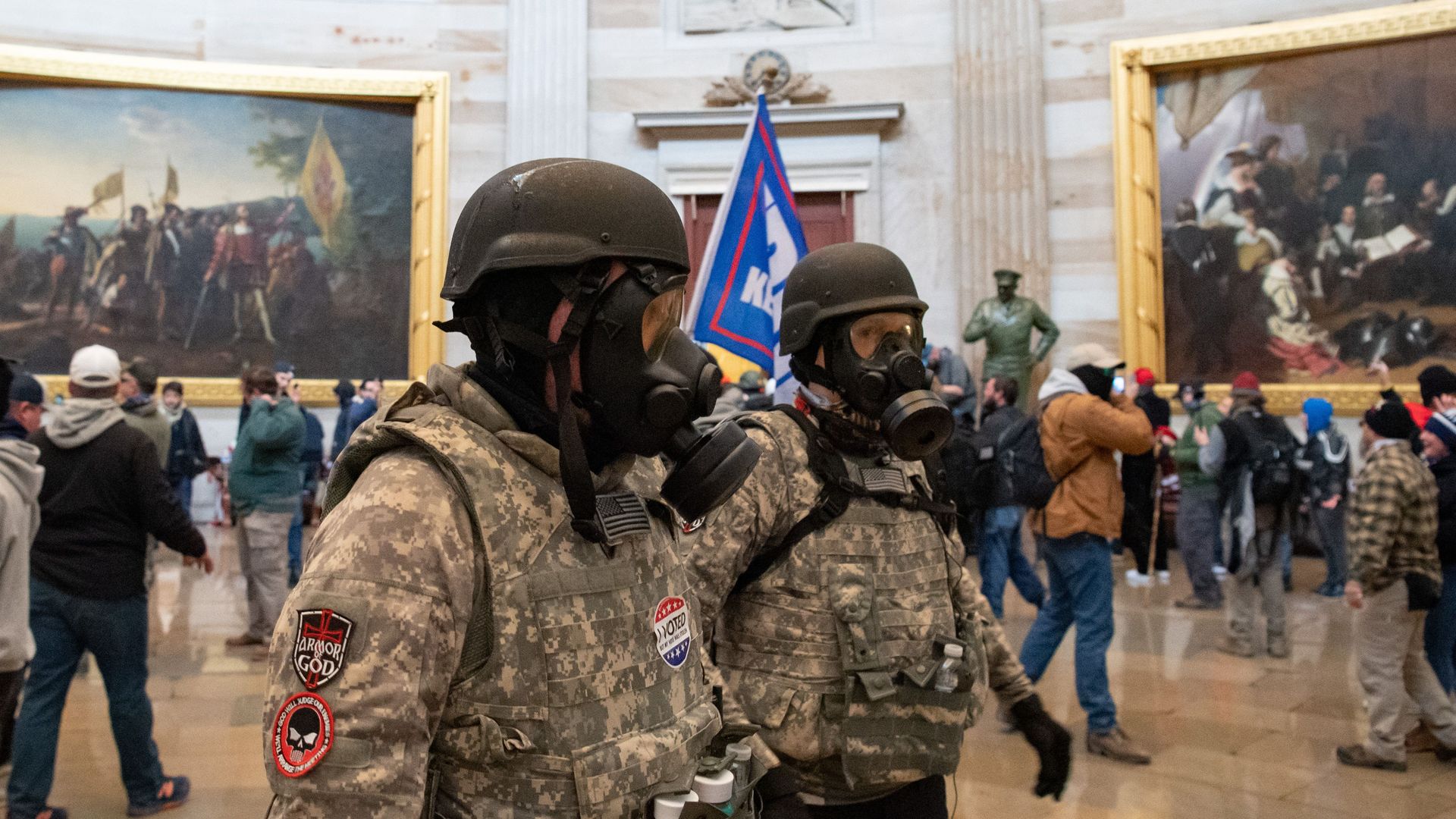
The U.S. Capitol's attending physician reportedly warned lawmakers on Sunday that they may have been exposed to someone with a coronavirus infection as they hid from a pro-Trump mob breaching the building on Wednesday.