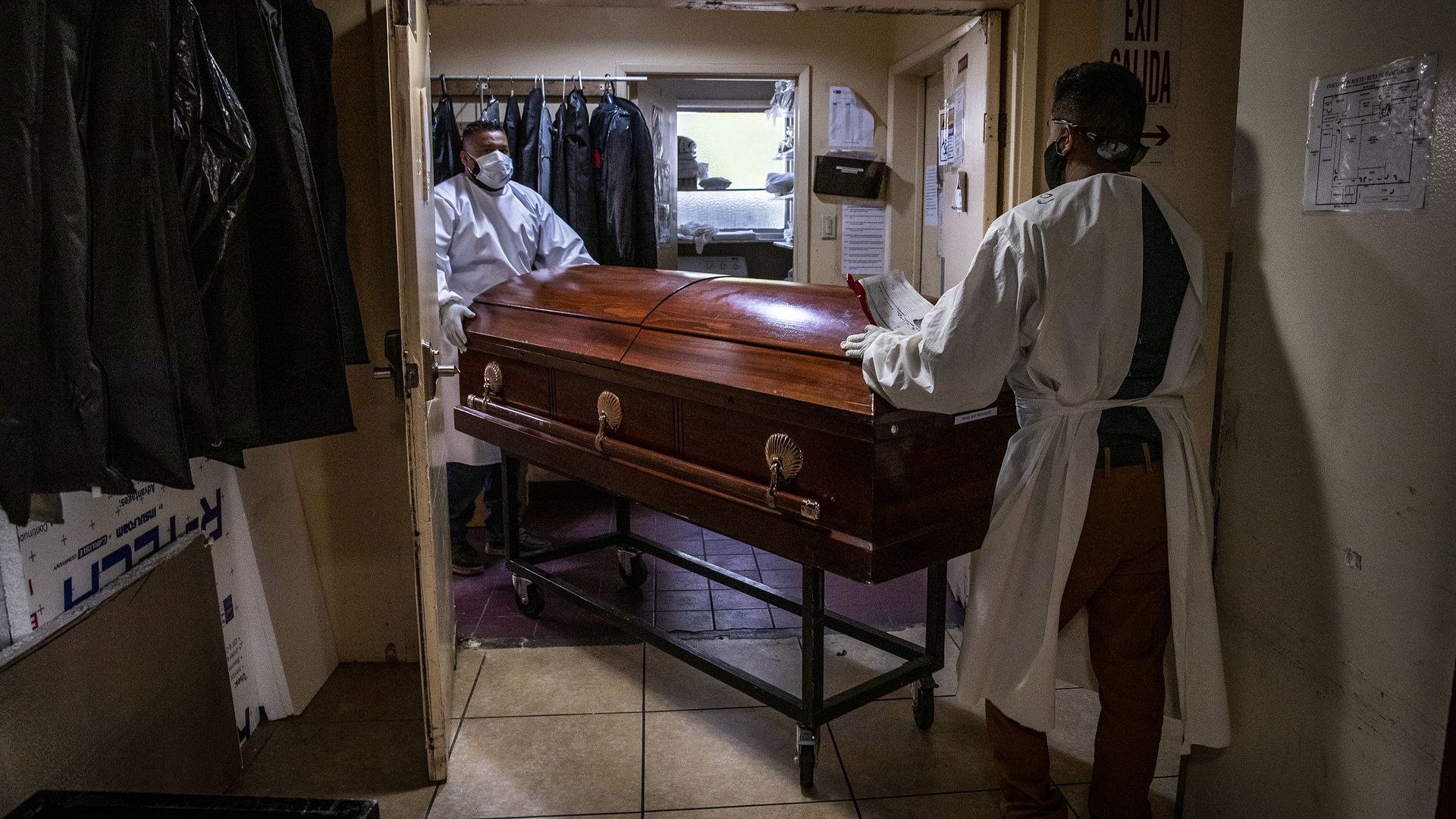
Peru's coronavirus death rate is now the highest in the world, surpassing Belgium and exceeding even Brazil (7th) and the U.S. (8th).
Why it matters: Peru and Belgium illustrate the divergence between the world's two hardest-hit regions since the eye of the storm shifted from Europe to Latin America in the spring.
Senior Trump administration officials privately warned several states that spikes in coronavirus cases put them in high-risk "red zones" while publicly downplaying the threat of the virus, according to documents released by a special House committee overseeing the coronavirus response.
Why it matters: Democrats have long called for a national plan to respond to the coronavirus pandemic, while the White House has offered only guidance and insisted that states take the lead.
At some point, this will happen again. There will be another new virus and another pandemic. And while every pandemic is different, there are some universal, concrete things we can do to try to weather that storm better than we've weathered this one.
The big picture: Here are nine things the U.S. should do in the next pandemic — some big, some small, some lessons from what went wrong this time, some lessons from what‘s gone right.
Although President Trump has said the military is “all mobilized” to help distribute a coronavirus vaccine, in the end that process will almost certainly rely heavily on the pharmacies, doctors and community hospitals we’re all familiar with.
The big picture: Deciding how to distribute a vaccine is, for now, a government-driven task, and Trump has invoked the logistical expertise of the military as a way to do the job. For the public, though, this won’t feel like a military exercise, with heavy trucks rolling into town and people lining up outside medical tents. It’ll feel like going to CVS.
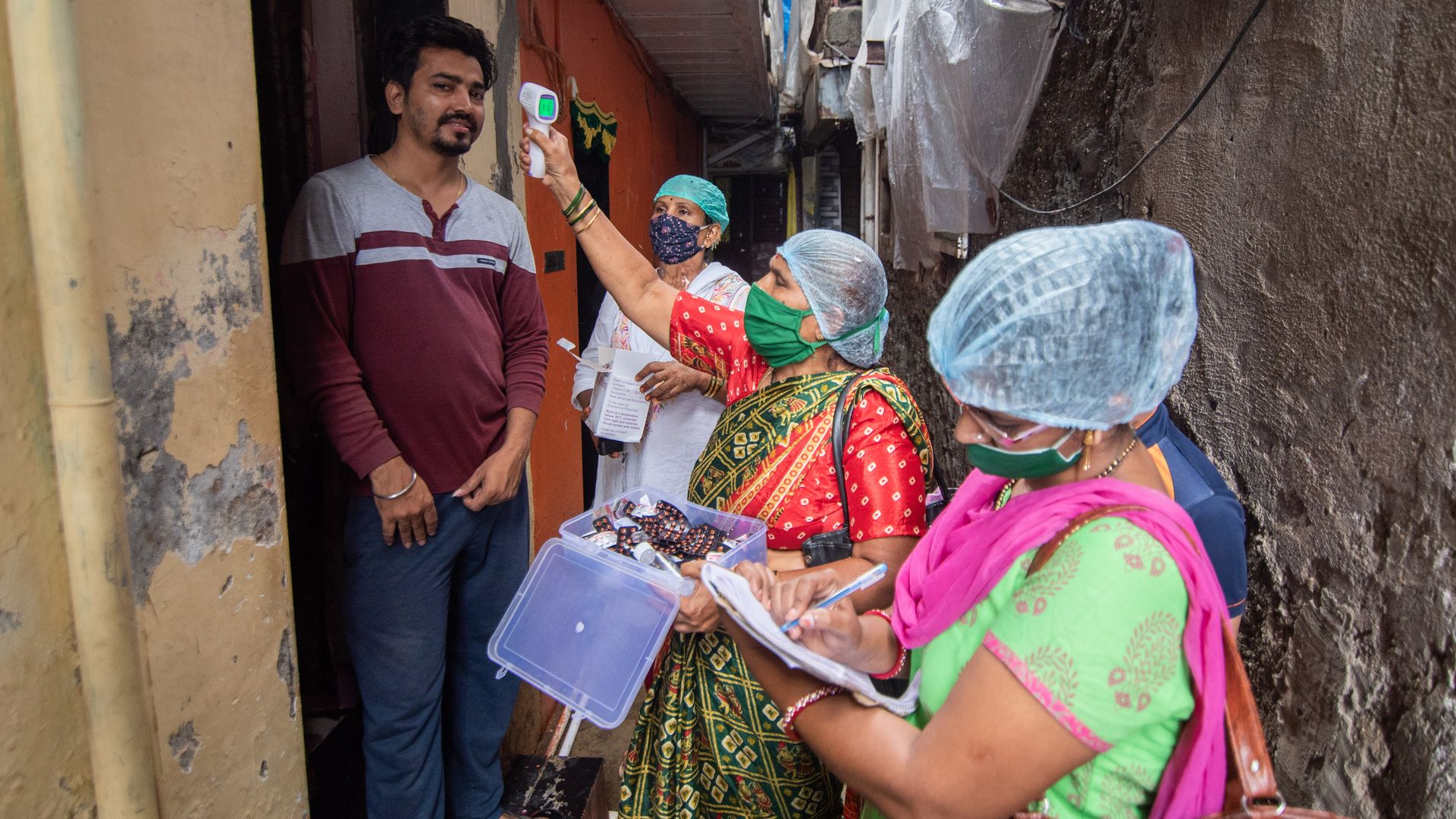
India reported Sunday 78,761 new coronavirus cases in 24 hours, taking the total number in the country to over 3.5 million.
Why it matters: It's the highest single-day spike in COVID-19 cases reported by a country since the pandemic began. India has the fastest-growing number of daily cases, with over 75,000 being reported for four consecutive days, per AP. "Crowded cities," not enough contact tracing and "lockdown fatigue" are driving the spread in the country of 1.4 billion people, as restrictions are loosened aimed a struggling economy, the New York Times notes.
Yes, but: Australian epidemiologist Gideon Meyerowitz-Katz noted in a blog post on Monday that the CDC finds COVID-19 was the underlying cause of 95% of all deaths related to the virus. Only in 5% of deaths has it been listed as a contributing cause.
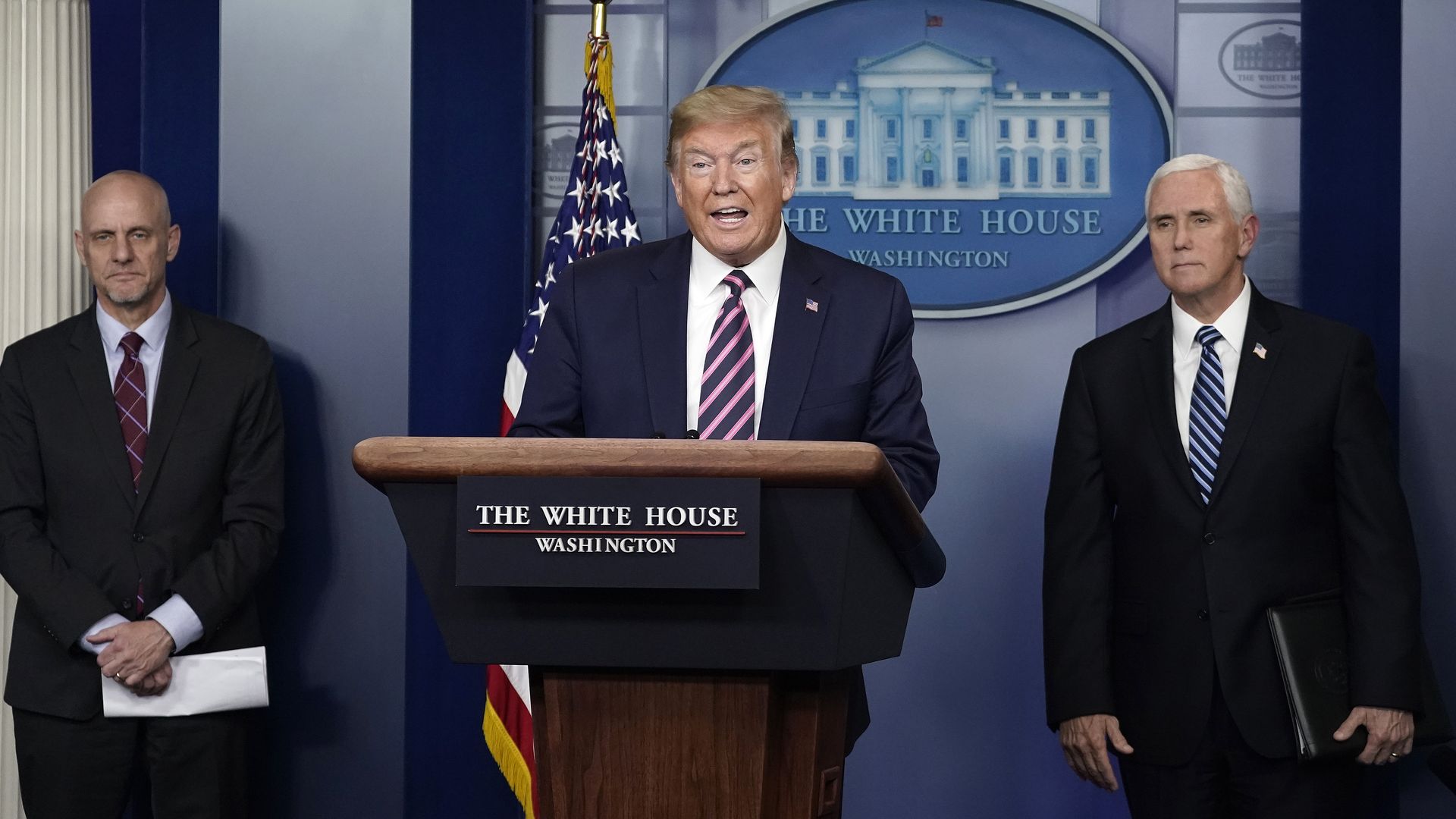
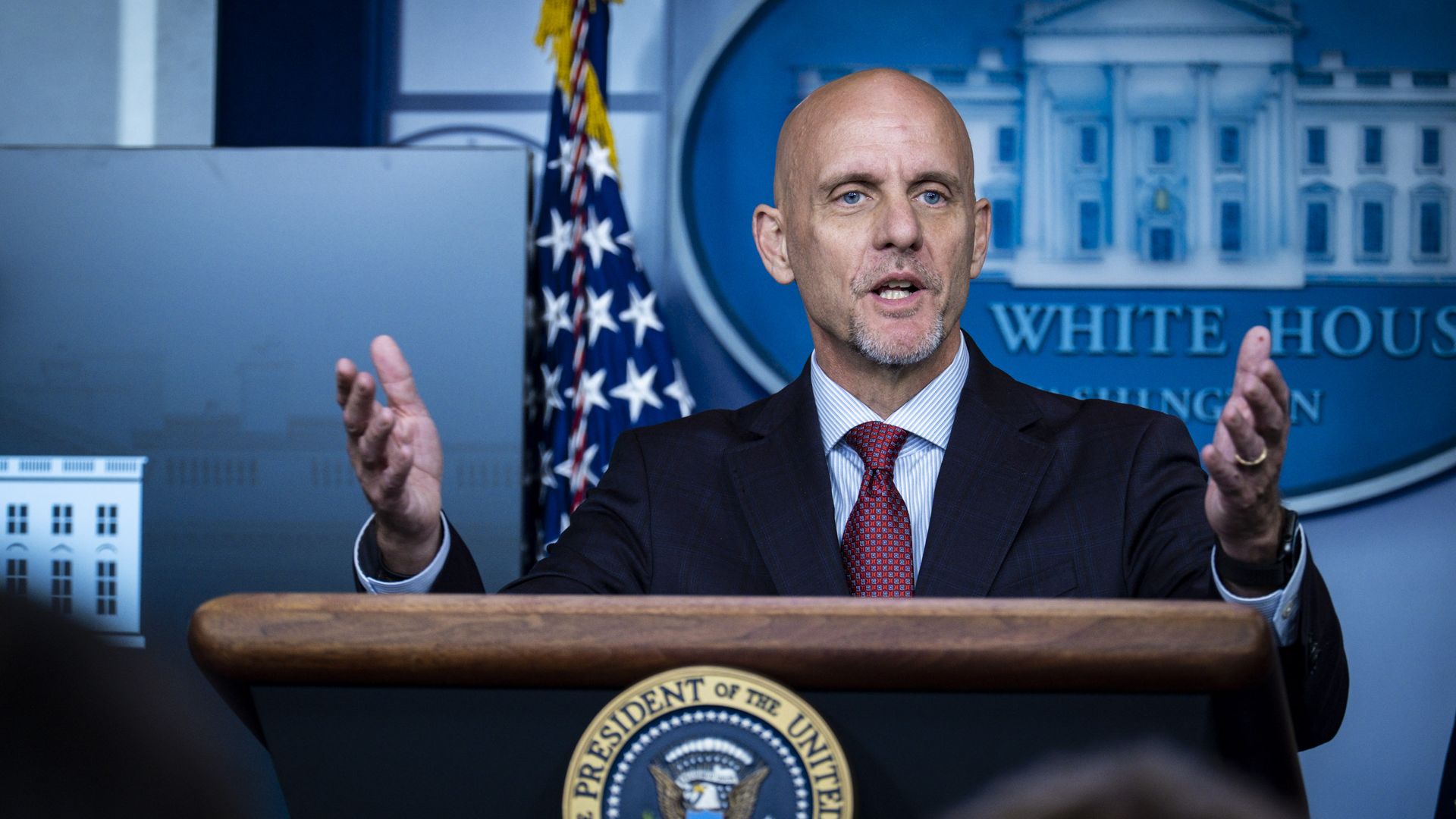
Food and Drug Administration Commissioner Stephen Hahn told the Financial Times he would be willing to fast-track the coronavirus vaccine process with an emergency use authorization before phase 3 trials are over, but insisted he would not do so for political reasons.
Why it matters: Health experts believe a vaccine — coupled with recommended public health measures — will be the path back to societal normalcy. The decision of when to green-light the vaccine will "likely to be one of the most important and sensitive in US public health history," writes the FT's Kiran Stacey.
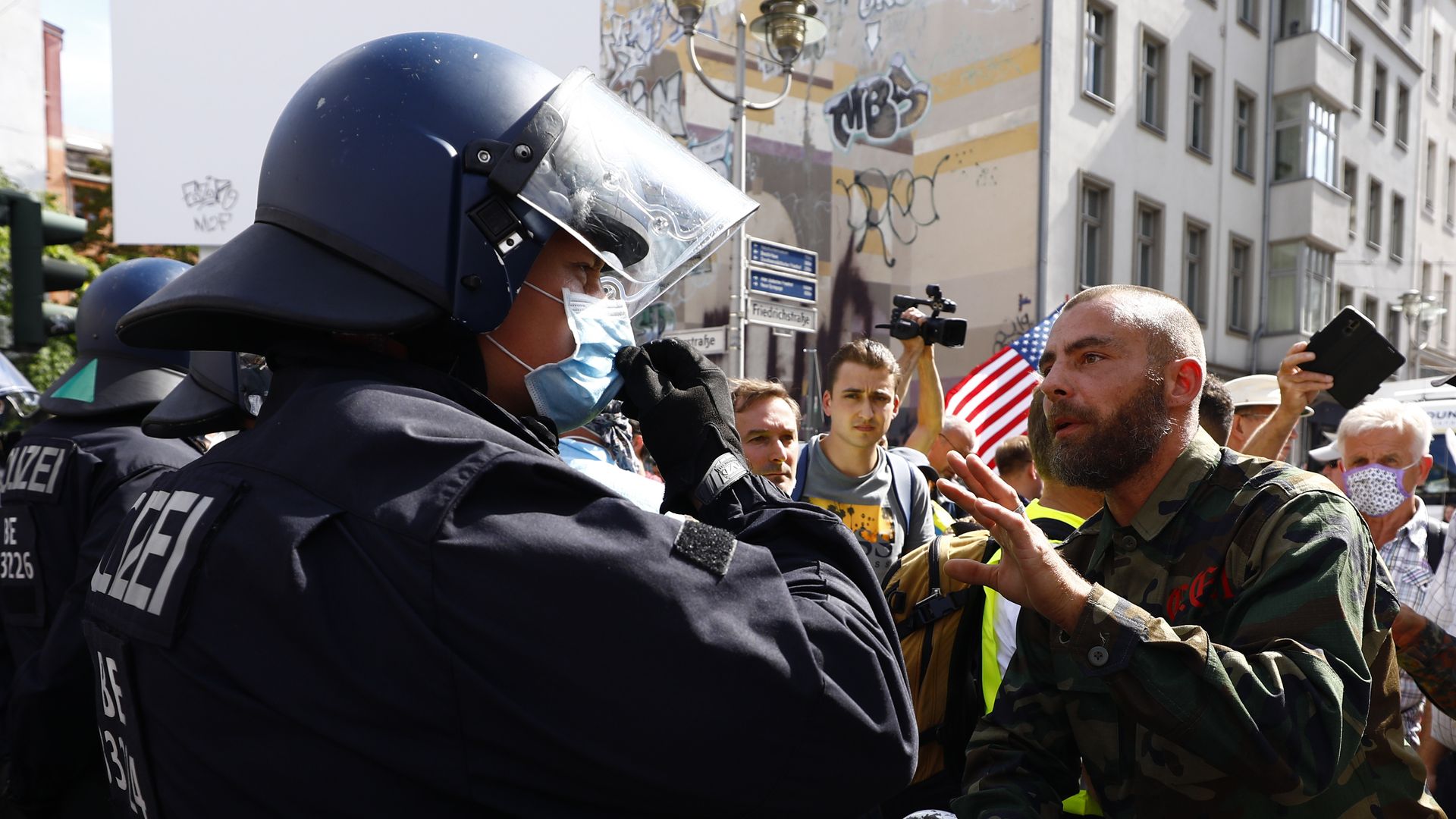
Berlin police arrested 300 demonstrators after disbanding a protest Saturday over Germany's coronavirus restrictions as tens of thousands of participants refused to maintain social distancing, per the BBC.
Why it matters: Berlin's regional government tried to ban the protest earlier this week, citing concern for public health. Protesters successfully appealed the decision on Friday, though a court required demonstrators to observe social distancing.