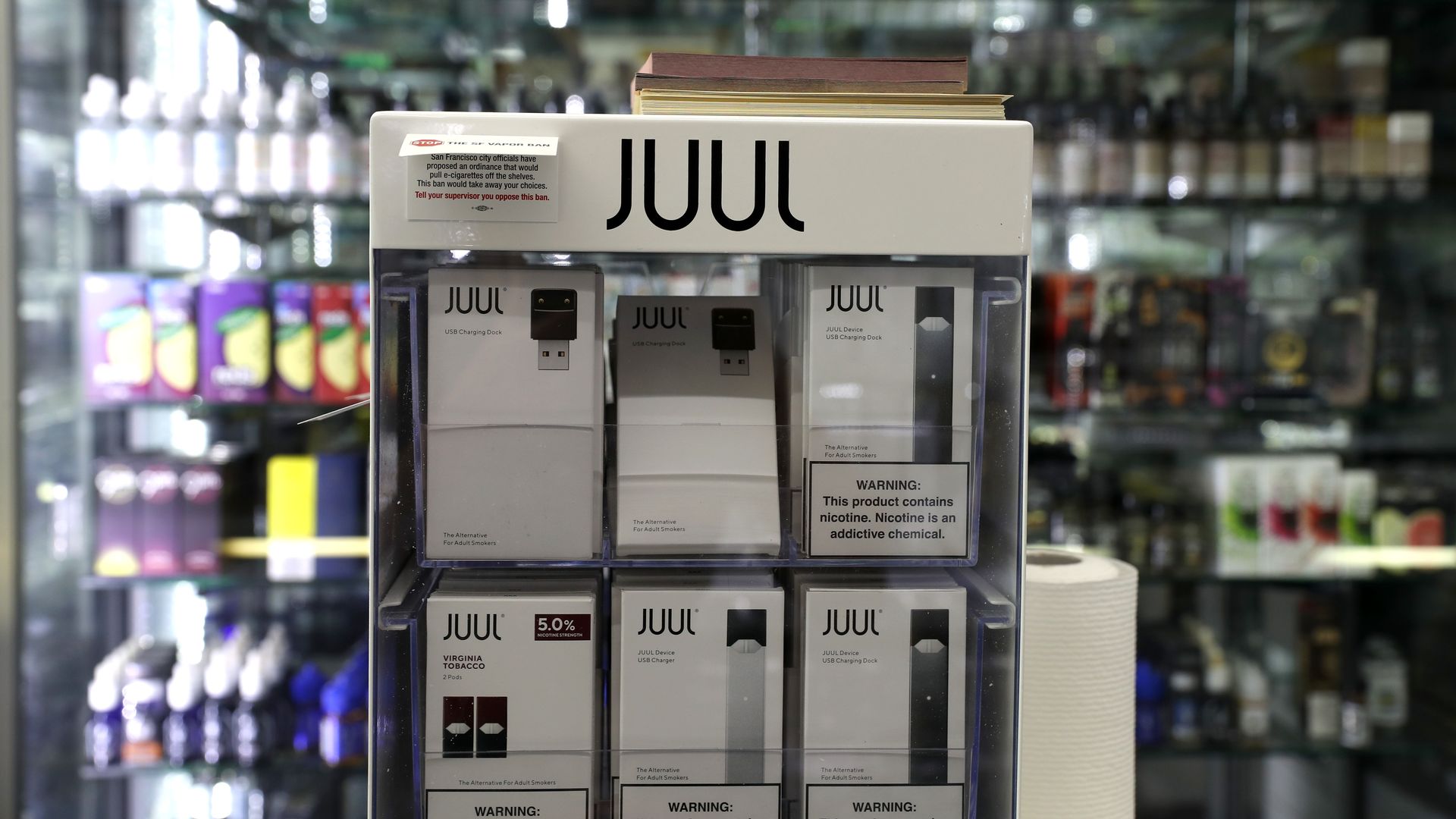
A former Juul executive alleged Tuesday in a lawsuit that it sent to market at least "one million mint-flavored e-cigarette nicotine pods that it admits were contaminated." A Juul spokesperson told Axios the company denies the claims and is contesting the suit.
Details: The suit, filed by Dhillon Law Group in the U.S. District Court for the Northern District of California on behalf of Siddharth Breja, Juul's former senior vice president of global finance, alleges Juul ignored his protests to issue a product recall for the contaminated pods, "or at a minimum, issue a public health and safety notice to consumers."
Some employers are returning to offering traditional health insurance plans again, as opposed to relying solely on those with high deductibles, Kaiser Health News reports with NPR.
Driving the news: The percentage of companies offering high-deductible plans as the only coverage option is declining for the third year in a row in 2020, per a survey of large employers by the National Business Group on Health.
Private investment into the health care sector may bring innovation, but it's also led to revenue-seeking behaviors at the expense of patients, three employees of The Commonwealth Fund argue in Harvard Business Review.
By the numbers: There were nearly 800 private equity health care deals in 2018, with a total value of more than $100 billion.
Lipitor, the cholesterol-lowering medication that has become the gold standard of statins, continues to generate roughly $2 billion per year in sales for Pfizer, even though its patent expired eight years ago.
The big picture: Almost all of Pfizer's Lipitor sales now come from China and other emerging markets. But Lipitor's ability to remain a blockbuster drug, even with so many generic competitors that cost pennies per pill, shows how distorted the global pharmaceutical system can be.
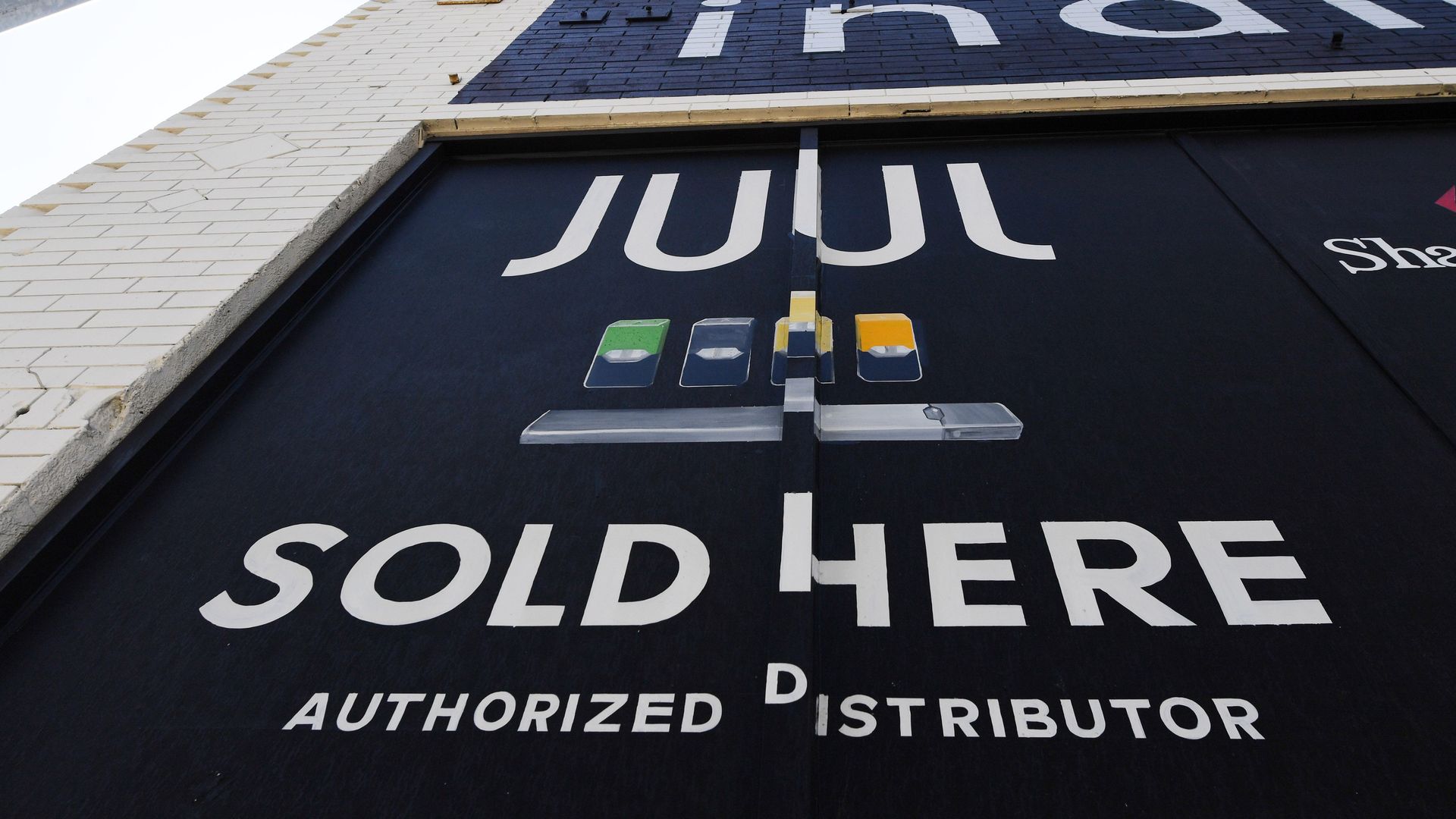
Juul plans to cut around 500 jobs by the end of the year in an attempt to mend the damaged relationship between the company and federal regulators, reports the Wall Street Journal.
Financing full-blown, single-payer Medicare for All — which is estimated to cost roughly $30 trillion over a decade — would require aggressive changes in taxes, spending or borrowing, according to an analysis by the Committee for a Responsible Federal Budget.
Between the lines: "Tax increases on high earners, corporations, and the financial sector by themselves could not cover much more than one-third of the cost of Medicare for All," the report concludes — meaning that the middle class would be forced to shoulder some of the burden.
The ongoing opioid crisis cost $696 billion in 2018 and more than $2.5 trillion between 2015 and 2018, according to a new estimate by the White House Council of Economic Advisers.
Why it matters: Much of this cost is attributable to lives lost to opioids, but a good amount of it is borne by state and federal governments — and thus taxpayers. Meanwhile, opioid litigation settlement talks are homing in on payouts nowhere near this amount.