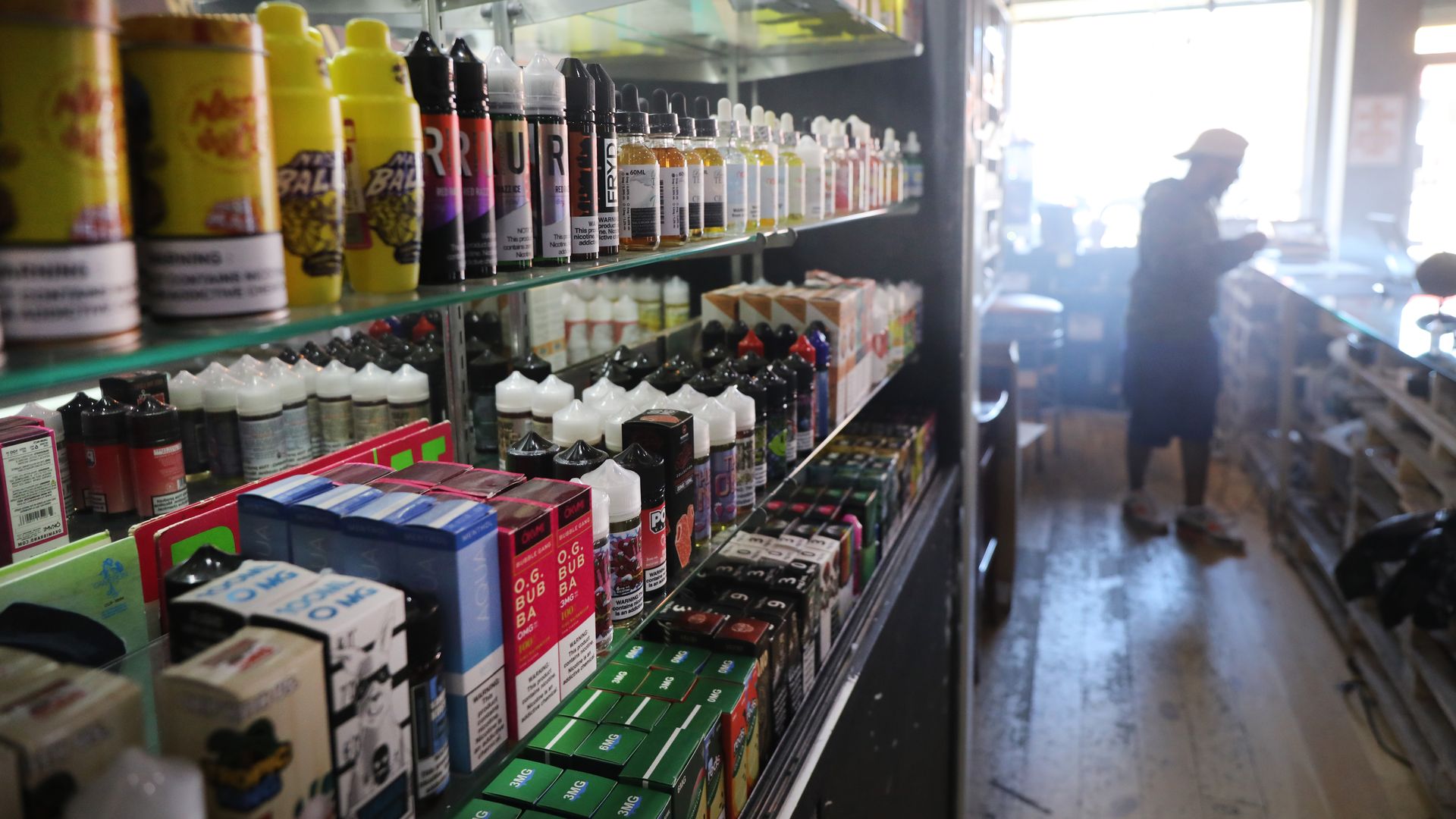
The CDC announced Friday that THC vape products have been linked to a majority of patients with vaping-related lung injuries, citing to data from 1 local and 1 national study.
Why it matters: While the CDC is not shifting its focus away from nicotine, officials said 77% of those with exposure histories reported using products that contain THC, the psychoactive component in marijuana, or both THC-containing products and nicotine-containing products.
The theory that putting patients on the hook for more of their health care costs would make them better consumers — thus driving down overall costs — hasn't panned out, the LA Times' Noam Levey writes in his latest piece in a series on deductibles.
Why it matters: Health care prices are still rising, and are largely untethered to quality. At the same time, care has become increasingly unaffordable for many Americans.
California's law prohibiting surprise billing has led to an increase in care delivered by in-network providers, according to a new analysis by the USC-Brookings Schaeffer on Health Policy initiative.
The big picture: The leading federal surprise billing solution is similar to the California bill in that it creates a benchmark payment rate for out-of-network care. Providers have lobbied fiercely against the approach.
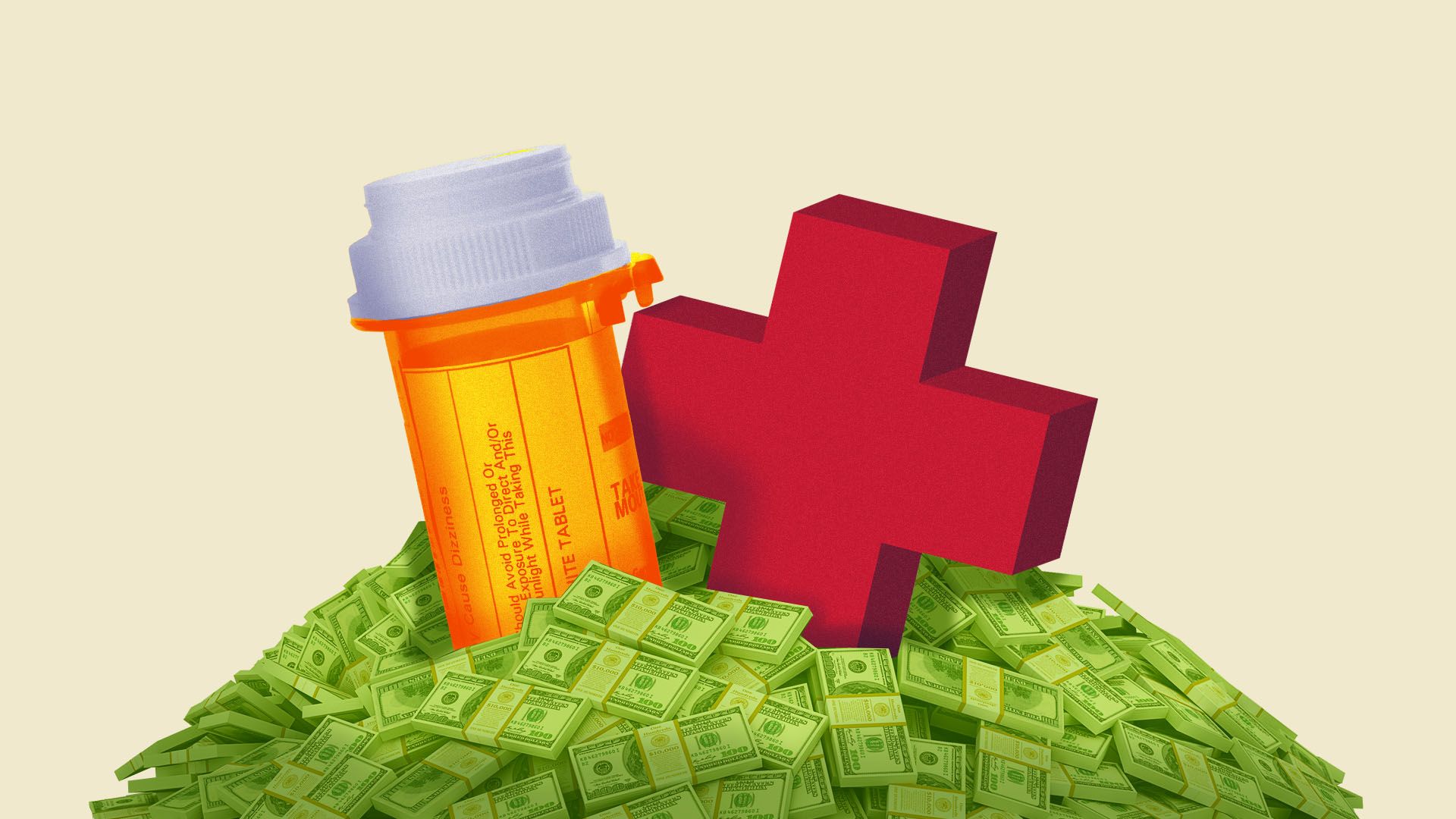
Washington hasn't yet given up on the prospect of passing a drug pricing bill into law, even as House Democrats move ahead with impeaching President Trump.
Between the lines: Speaker Nancy Pelosi and Trump already have plenty of bad blood, and the impeachment process is another layer of chaos. But people following the debate say both parties have plenty to gain politically from acting on an issue so important to voters.
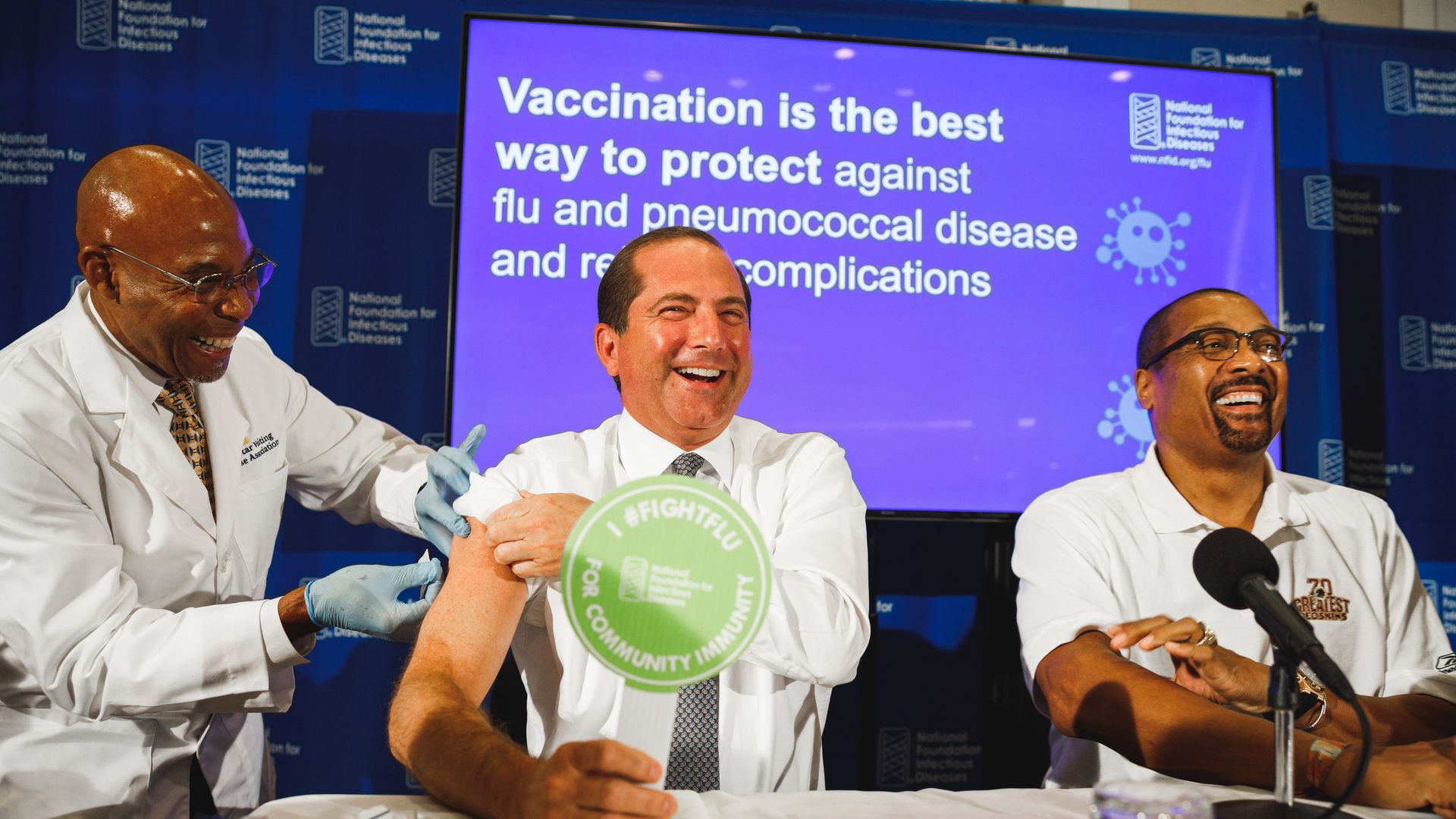
Public health officials on Thursday urged Americans to get their seasonal flu vaccine early this year, in case the U.S. follows Australia's season in which the virus hit many people early.
Why it matters: While public health officials admit the vaccine is not 100% effective, there's growing research showing that the vaccine reduces the severe and sometimes deadly complications from the disease and can protect newborns if the mother receives the vaccine while pregnant.
The legal marijuana industry's revenue from sales of vaping products has dropped 15% amid health fears stemming from a vaping-related lung illness, AP reports.
Why it matters: Most of the patients who were sickened had a history of using e-cigarette products containing THC, the chemical found in marijuana, and nearly all cases were found in people who purchased products from illegal sellers. Federal and state health agencies have advised the public to stop vaping until they can find conclusive evidence about the cause of the illness.
Altria (NYSE: MO) and Philip Morris International (NYSE: PM) said they are no longer in talks for an all-stock merger, which would have reunited the two cigarette makers after more than a decade apart.
Why it matters: It reflects tobacco industry tumult over the Trump administration's proposal to ban flavored vaping products, although the two companies still plan to launch a joint, FDA-approved, "heat-not-burn" vaping product called IQOS.
While everyone was laser-focused on the Affordable Care Act for the past decade, the backbone of the American health care system was gradually deteriorating.
Between the lines: Employer insurance has become increasingly unaffordable over the last decade, contributing to today's political debates over surprise medical bills, drug prices and "Medicare for All."
Employer-based health insurance isn’t a monolith — the cost and generosity of that coverage varies widely. And that likely affects how open workers would be to “Medicare for All” or a public insurance option.
The big picture: Democrats’ health care plans would offer a better deal to many low-wage workers than to their higher-wage counterparts.