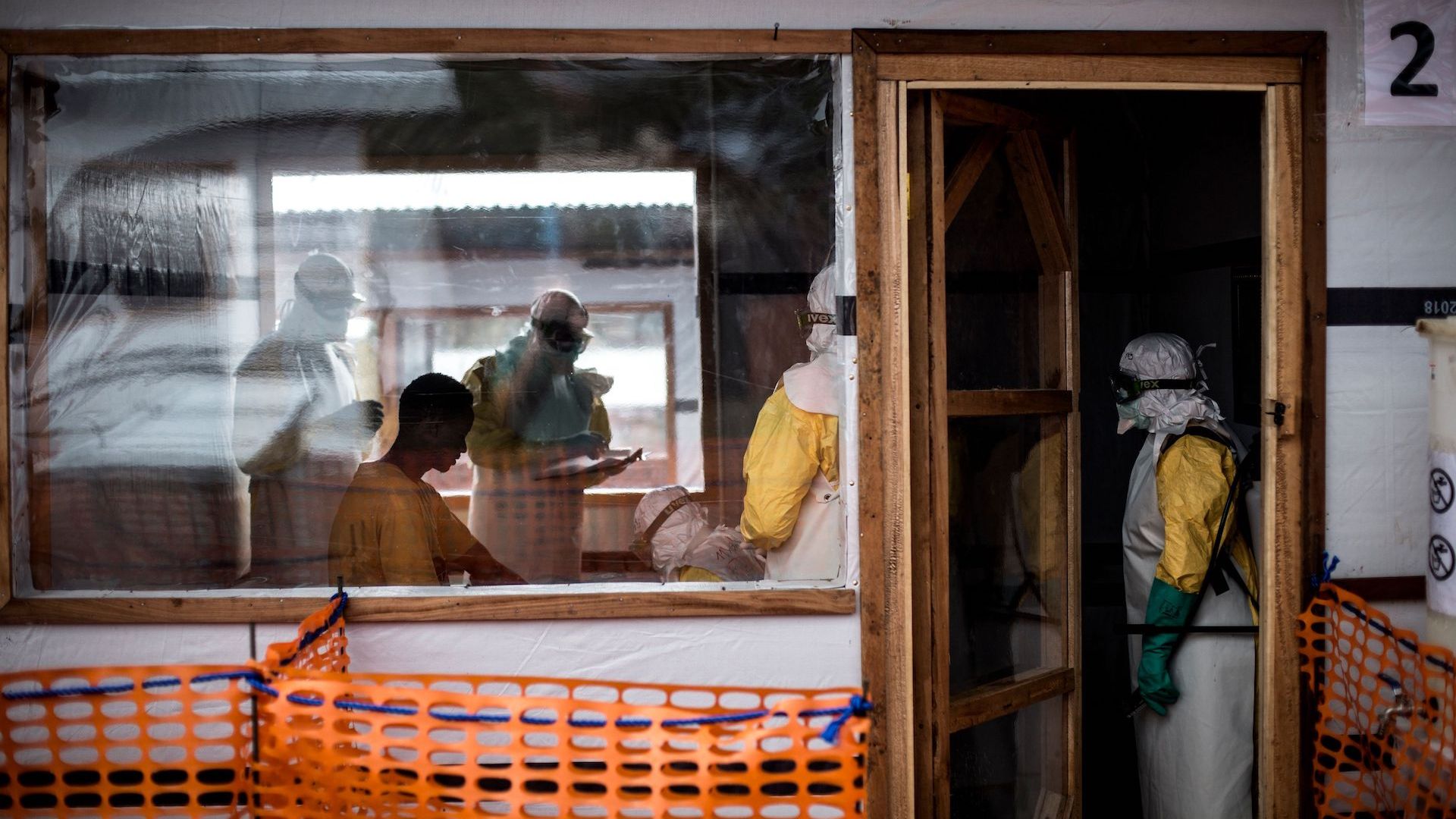
The long-simmering Ebola outbreak in the Democratic Republic of the Congo entered a new and more ominous phase this week, with the cross-border spread of a handful of cases into western Uganda.
Why it matters: The cross-border spread puts more pressure on the World Health Organization to declare the nearly yearlong outbreak a public health emergency, which it has proven reluctant to do. A committee will meet Friday to determine whether to take that step.
A top member of the House Oversight Committee sent a letter to Juul last week asking for a vast amount of internal records, the Daily Beast reports.
Details: Rep. Raja Krishnamoorthi asked for details about the company's advertising strategies, its knowledge of its products' health impacts and its business arrangements with Altria.
The collective stock prices of the largest health care companies have recovered pretty much all of their losses from April, when analysts and algorithms soured on the industry over fears of "Medicare for All" and other looming changes.
The bottom line: The health care industry is still extremely profitable, and Wall Street has the attention span of a gnat.
Uganda has recorded three cases of the Ebola virus disease, signaling that the outbreak in the neighboring Democratic Republic of the Congo that began last August has spread.
The latest: The country's first case — a 5-year-old child who traveled from the DRC to Uganda on June 9 — died Wednesday, Uganda's health minister announced.
States that have legalized medical marijuana have seen more opioid overdose deaths, according to a new study reported on by Vox — the opposite of what a 2014 study found.
The state of play: The previous study suggested that when people could use cannabis to treat pain instead of opioids, it led to less overdoses. It was embraced by some state lawmakers. However, the researchers who conducted the latest study say that there's probably no relationship between state marijuana laws and opioid deaths.
Senate Finance Committee Chairman Chuck Grassley said last week that he is interested in restructuring Medicare's prescription drug benefit, including putting drug manufacturers on the hook for some of the costs accrued in the "catastrophic phase" of coverage.
By the numbers: A new analysis by the American Action Forum shows the winners and losers. Cheaper drugs would win, and more expensive drugs would end up paying more than they do now.
Congress isn't feeling much urgency to help the fledgling market for biosimilars.
Why it matters: Advocates say that they need lawmakers' help soon, or else drugmakers will see biosimilars as a lost cause and the system will lose its only check on the cost of biologics.