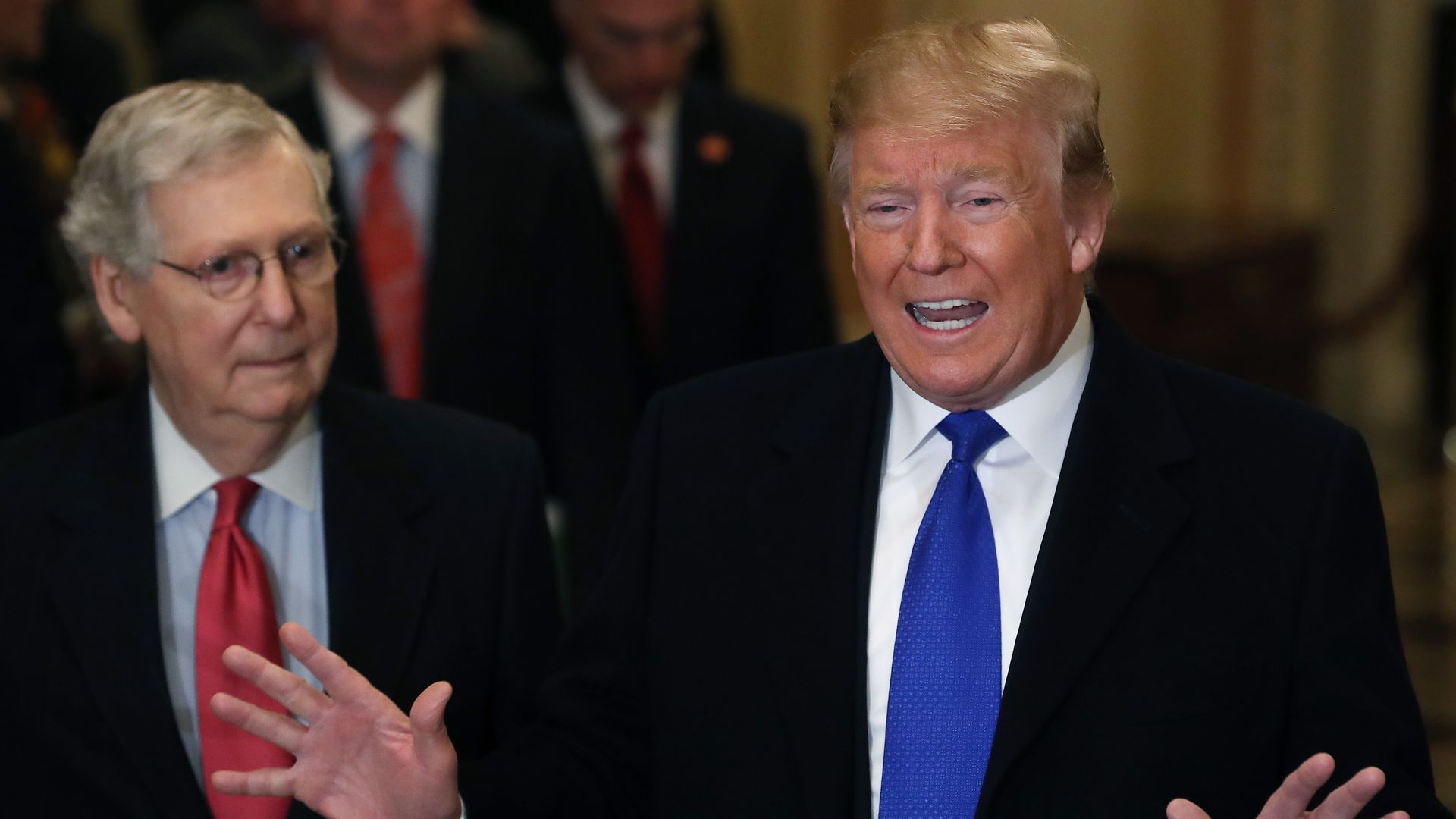
GOP leaders are trying their best to put a lid on President Trump's talk of a new and wonderful health care plan that would define the Republican Party for 2020.
Driving the news: "Not any longer," Senate Majority Leader Mitch McConnell said yesterday when asked whether he and Trump differ on health care.
John Bardis, a former HHS assistant secretary under the Trump administration, said in a speech Tuesday that employers need to take a tougher stand on health care costs.
Why it matters: If employers take Bardis' advice, hospitals and drug companies are in big trouble.
The only plausible explanation for President Trump's renewed effort through the courts to do away with the Affordable Care Act, other than muscle memory, is a desire to play to his base despite widely reported misgivings in his own administration and among Republicans in Congress.
Reality check: But the Republican base has more complicated views about the ACA than the activists who show up at rallies and cheer when the president talks about repealing the law. The polling is clear: Republicans don't like the ACA, but just like everyone else, they like its benefits and will not want to lose them.
AbbVie is facing a growing class-action lawsuit in which unions and municipalities say they have overpaid for the blockbuster drug Humira as a result of AbbVie's "anticompetitive conduct" to keep cheaper alternatives at bay.
The big picture: This has snowballed into a big case, with a lot on the line — both financially and as a referendum on the accusations that pharmaceutical companies manipulate the patent system to preserve monopoly prices for their prized drugs.
Top U.S. disease experts shared commentary in MBio on Tuesday that acute flaccid myelitis (AFM), the rare illness that strikes mostly young children and causes limb weakness or paralysis, may be caused by a "hit and run" virus and could become more prolific — but research acceleration is needed to know more.
Why it matters: Researchers have been seeking the elusive cause of the illness — which rarely leaves traces of any causative agent in the spinal fluid as expected — since AFM popped onto the national radar as a major outbreak in 2014 and reached a record number in 2018.
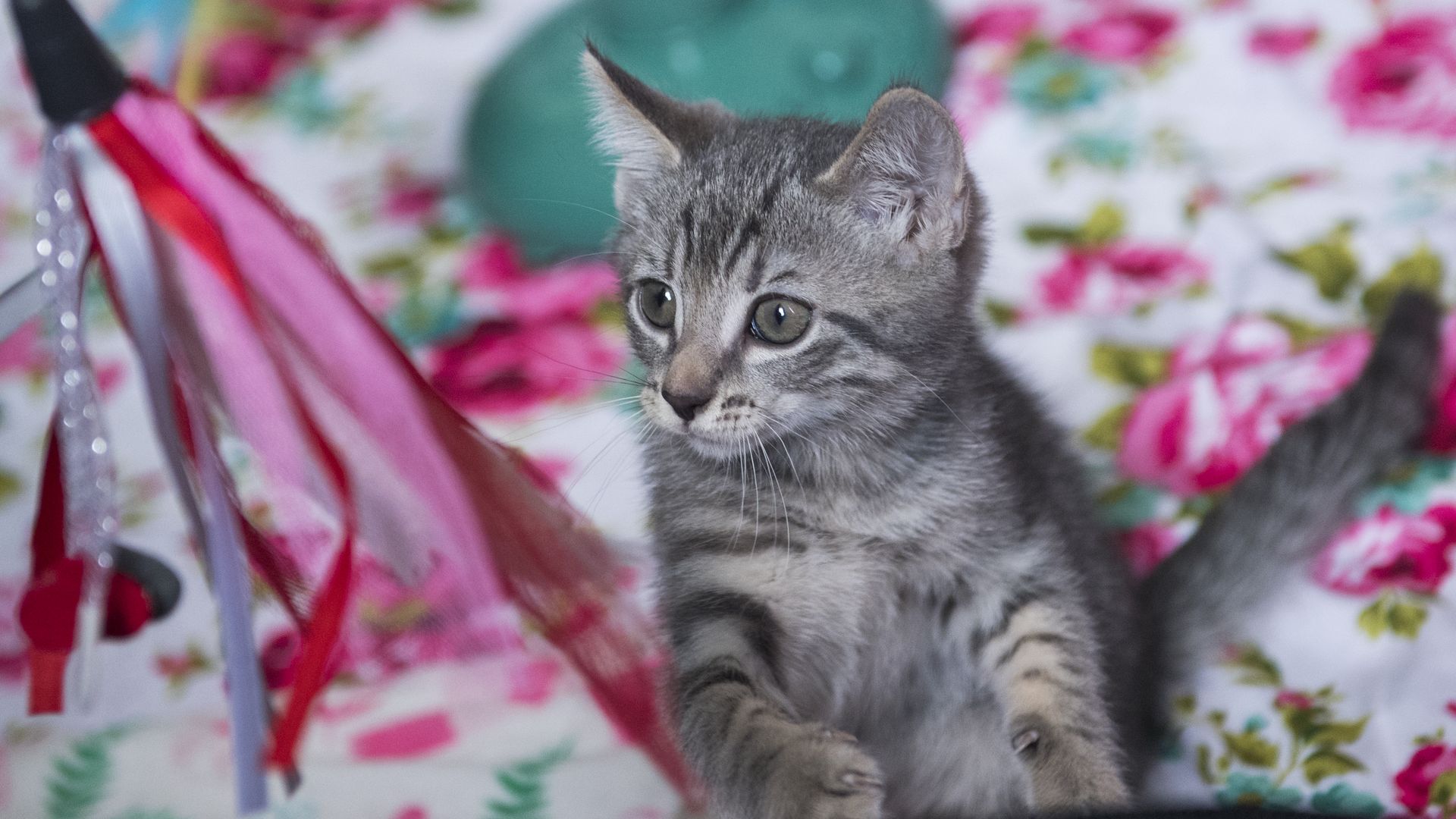
The Agriculture Department said Tuesday that the agency will cease its controversial practice of infecting kittens with the Toxoplasma gondii parasite for laboratory research to combat foodborne illness.
The backdrop: Bipartisan legislation was introduced in Congress last month to end the agency's practice.The department’s Agricultural Research Service has been using this practice to study the parasite it says is the leading cause of death from foodborne illness in the U.S. NBC News reported that since 1982, the agency had also been feeding cats with dog and cat remains obtained from "Asian meat markets." The USDA said it hasn’t infected any kittens in its facilities since last September, and the cats that were never infected will be available for adoption.
Americans' expectations about our health care system are a cascade of pessimism, according to new survey data from West Health and Gallup.
By the numbers: 76% expect health care costs to increase over the next couple of years, and 77% said they're concerned that rising health costs "will result in significant and lasting damage" to the U.S. economy. 69% said they're "not at all confident" Washington will be able to do anything about it.
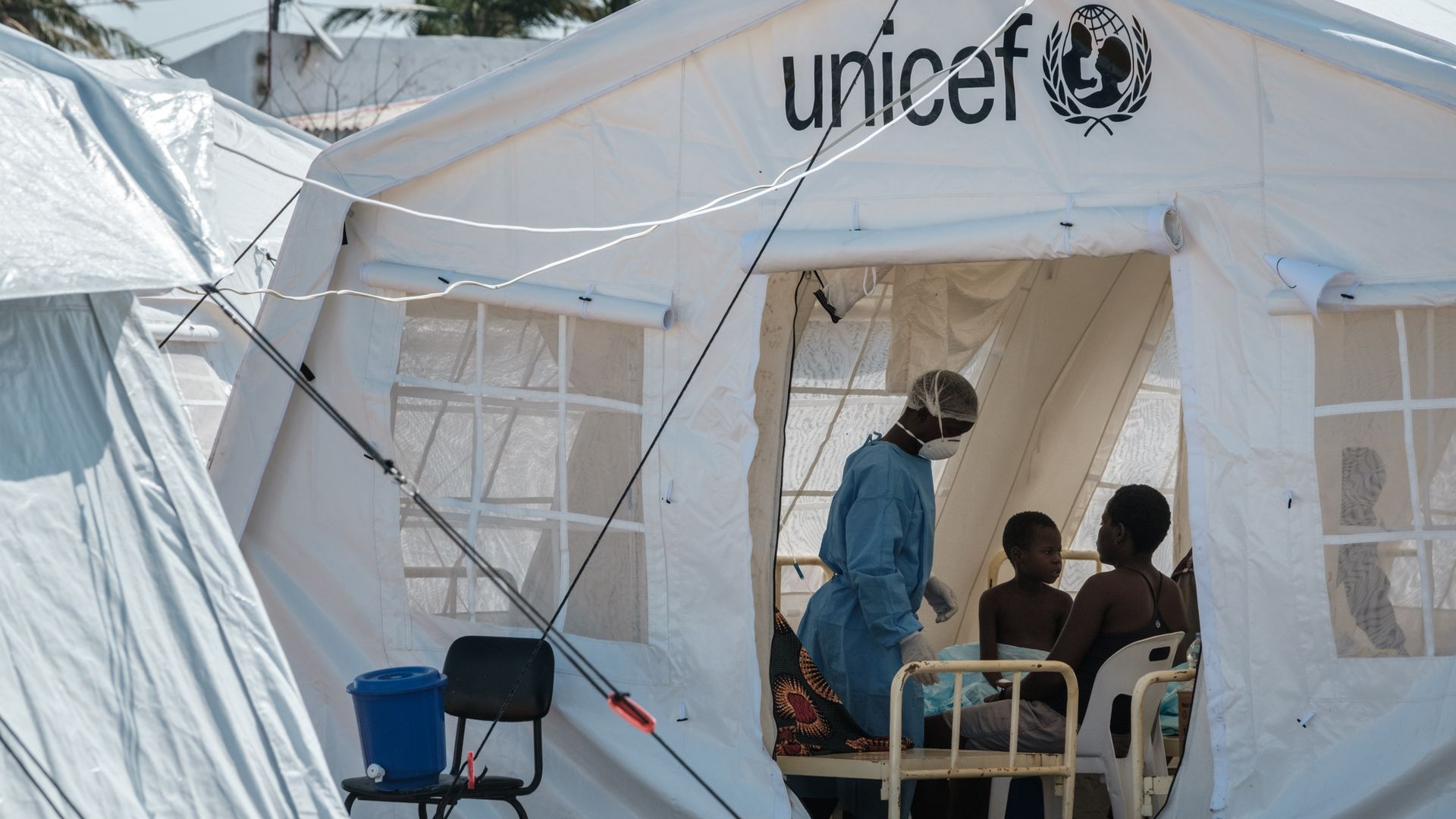
Cholera has returned in the aftermath of the deadly Cyclone Idai that devastated large swaths of southern Africa on March 15.
Why it matters: Catastrophic events have the potential to reverse health, education and income gains in countries like Mozambique and Malawi, which are among the poorest in the world. Approximately half the population in both countries live below the official poverty lines, and many lack access to safe water and toilets.
The financial burden of insurance premiums is growing, especially in sparsely populated states in the South, West and Northeast, according to a new analysis by the Leonard David Institute of Health Economics and United States of Care.
The big picture: Premiums are eating up an increasingly big share of workers' paychecks. And this analysis doesn't include out-of-pocket spending, which is rising even faster.