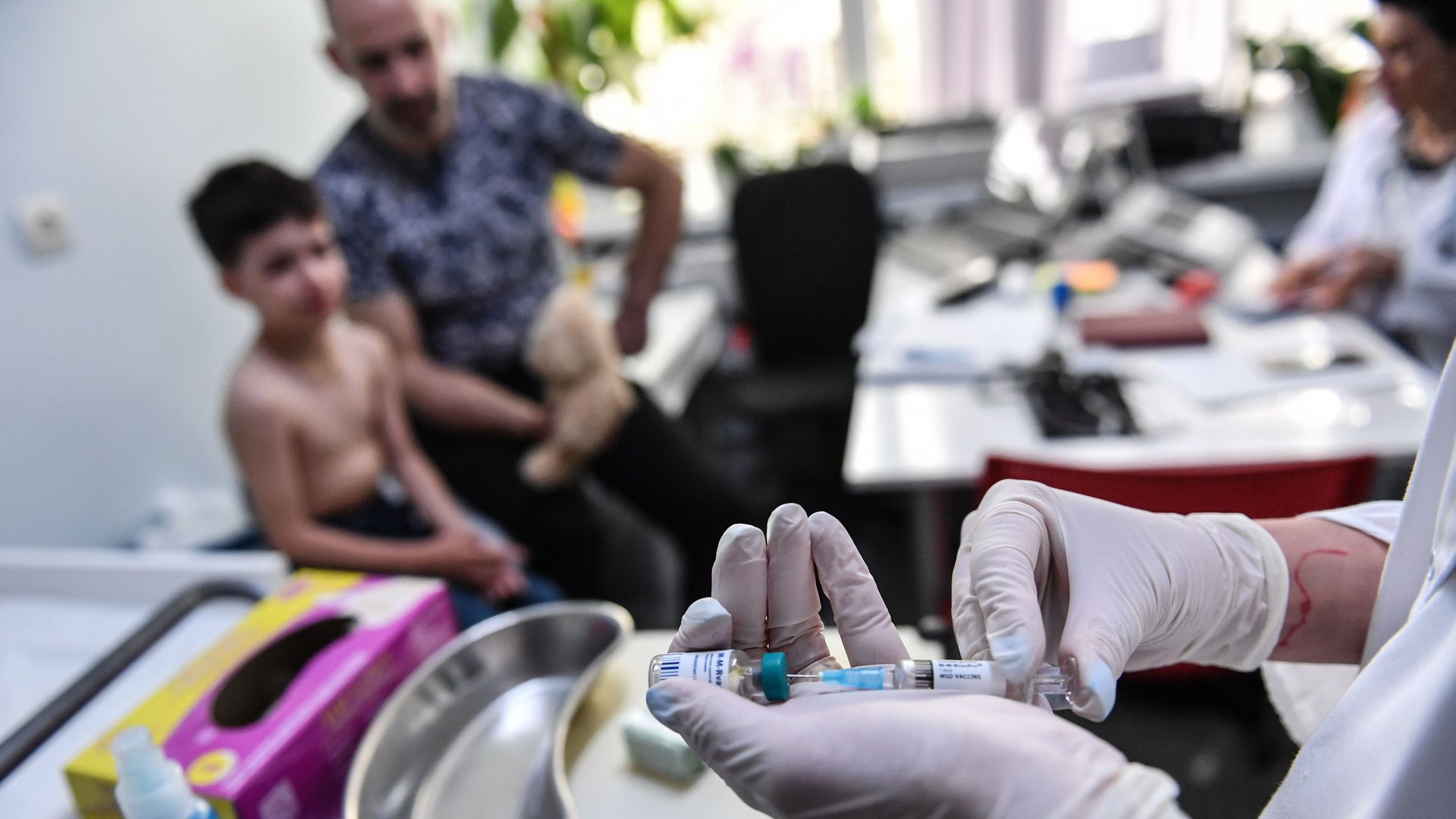
A changing picture has emerged of the U.S.' susceptibility to epidemics of infectious diseases over the next decade — driven by organized anti-vaccine activity and the lack of incentives to develop new or more effective vaccines, along with inadequate mosquito control measures.
The big picture: Reducing the risk of new epidemics will require expanding the use of existing vaccines, especially for measles and seasonal influenza, as well as introducing new vaccines for any vector-borne or zoonotic diseases that emerge.
Health officials in the Democratic Republic of the Congo announced yesterday the deadly Ebola virus has spread to a new city, Butembo, a city with almost one million people that acts as a trading hub with Uganda and other countries.
Why it matters: In addition to treating patients, public health officials also have to manage fear and distrust in some communities. DRC's Ministry of Health said this particular case was caused by a man who had been in contact with an infected person in Beni but "had refused to cooperate with the health authorities and who had fled in Butembo after falling ill."
Blue Cross Blue Shield of Tennessee, the largest health insurer in the state, will not cover the addictive OxyContin painkiller next year and instead will cover two alternative pills that are more expensive but deemed less likely to be abused, the Tennessean reports.
Why it matters: The insurer's decision is a direct response to the state and national opioid epidemic. Most people who misuse painkillers get the drugs through family or friends, not through their own prescriptions, according to federal data.
The Affordable Care Act may soon find itself in legal jeopardy yet again, if the tea leaves from a federal judge's hearing in Texas yesterday are any indication.
The big picture: Most on-the-ground accounts of the hearing say Judge Reed O'Connor seemed open to red states' latest challenge to the health care law, raising the prospect that what was once seen as a long-shot lawsuit could be a more serious threat than many experts had anticipated.
Martin VanTrieste, a former executive at pharmaceutical firm Amgen, has been named CEO of Civica Rx, the new hospital-owned company that will make 14 generic drugs and start selling them to a third of U.S. hospitals by next year. The not-for-profit Civica Rx said VanTrieste won't draw any salary or health benefits.
The big picture: The idea for Civica Rx spawned earlier this year because the founding hospitals were fed up with generic drug companies raising prices on products that were in short supply. Civica Rx would not say which hospital-based drugs it will manufacture, but it's reasonable to expect some may be on the FDA's shortage list.
Juul, the e-cigarette company, accepts that it has a "high burden" to prove its good intentions about keeping its products away from minors, company co-founder James Monsees said Wednesday at TechCrunch's Disrupt conference.
Why it matters: Juul has been under fire for using marketing that appeals to a younger audience, including its ad campaigns and candy-like names for its tobacco flavors. In response, the company has announced several efforts, including support for a push to make the smoking age 21 in all states.
Antitrust regulators at the Department of Justice are expected to approve two major health care deals — CVS Health's $69 billion buyout of Aetna and Cigna's $67 billion deal for Express Scripts — within a matter of weeks, the Wall Street Journal reports.
Why it matters: The health insurance and pharmacy benefits industries would be even more heavily consolidated than they currently are, which has worried consumer advocates and providers. The WSJ reports the only required antitrust remedies would be for CVS and Aetna to divest overlapping assets in their Medicare prescription drug plans.
PhRMA, the drug industry’s main lobbying group, is out with a new report today that says hospitals mark up prescription drugs by an average of almost 500%. One in six hospitals set prices that are at least seven times more than what the hospital paid.
The details: Consultants at the Moran Company analyzed 2016 federal cost reports for roughly 3,800 hospitals, comparing hospitals’ purchase price for certain drugs to the maximum amounts they would charge for those drugs.
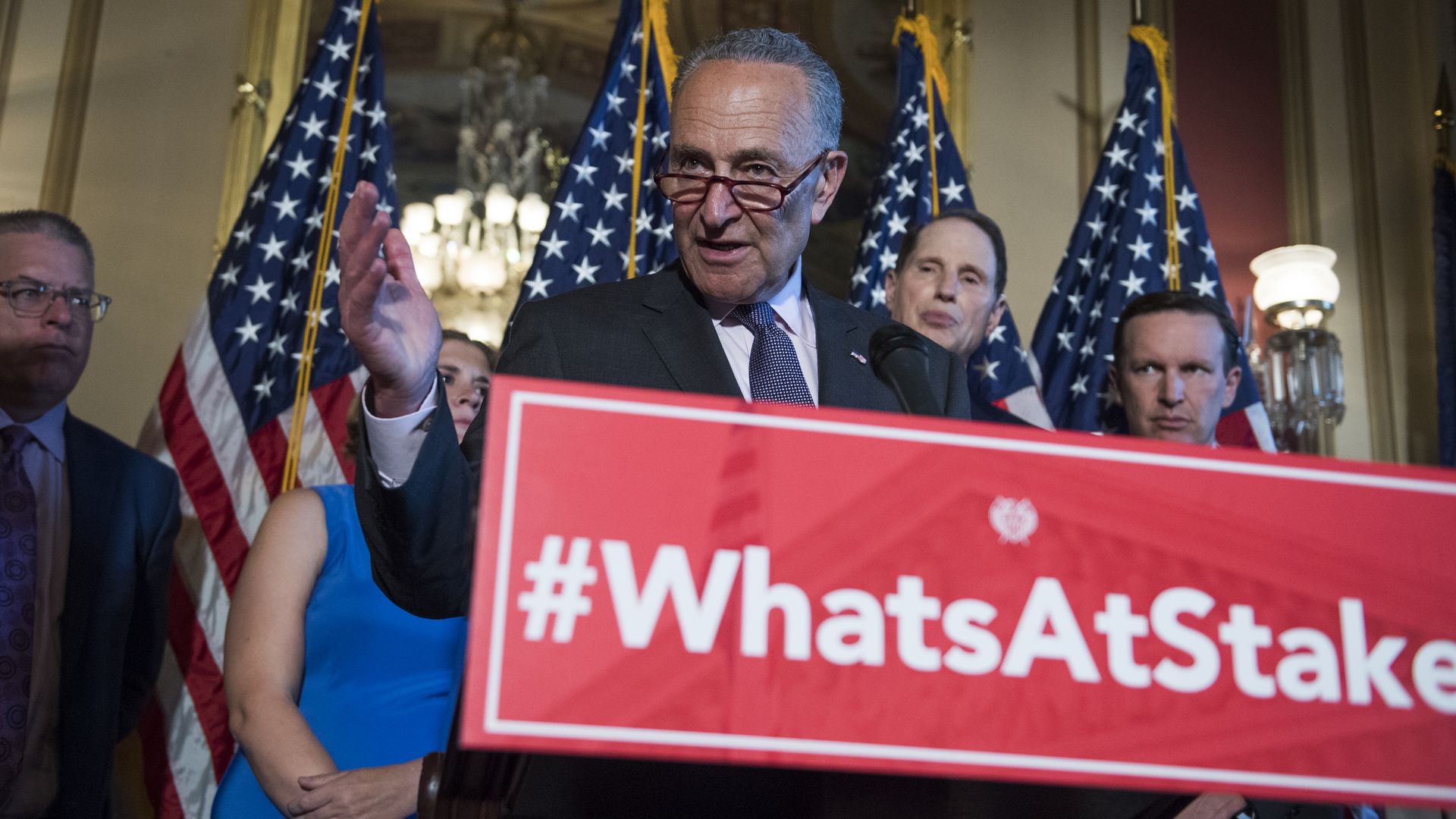
Today is all about the courts, the threats they might pose to the Affordable Care Act, and Democrats’ goal of using those threats to drive turnout in the midterm elections.
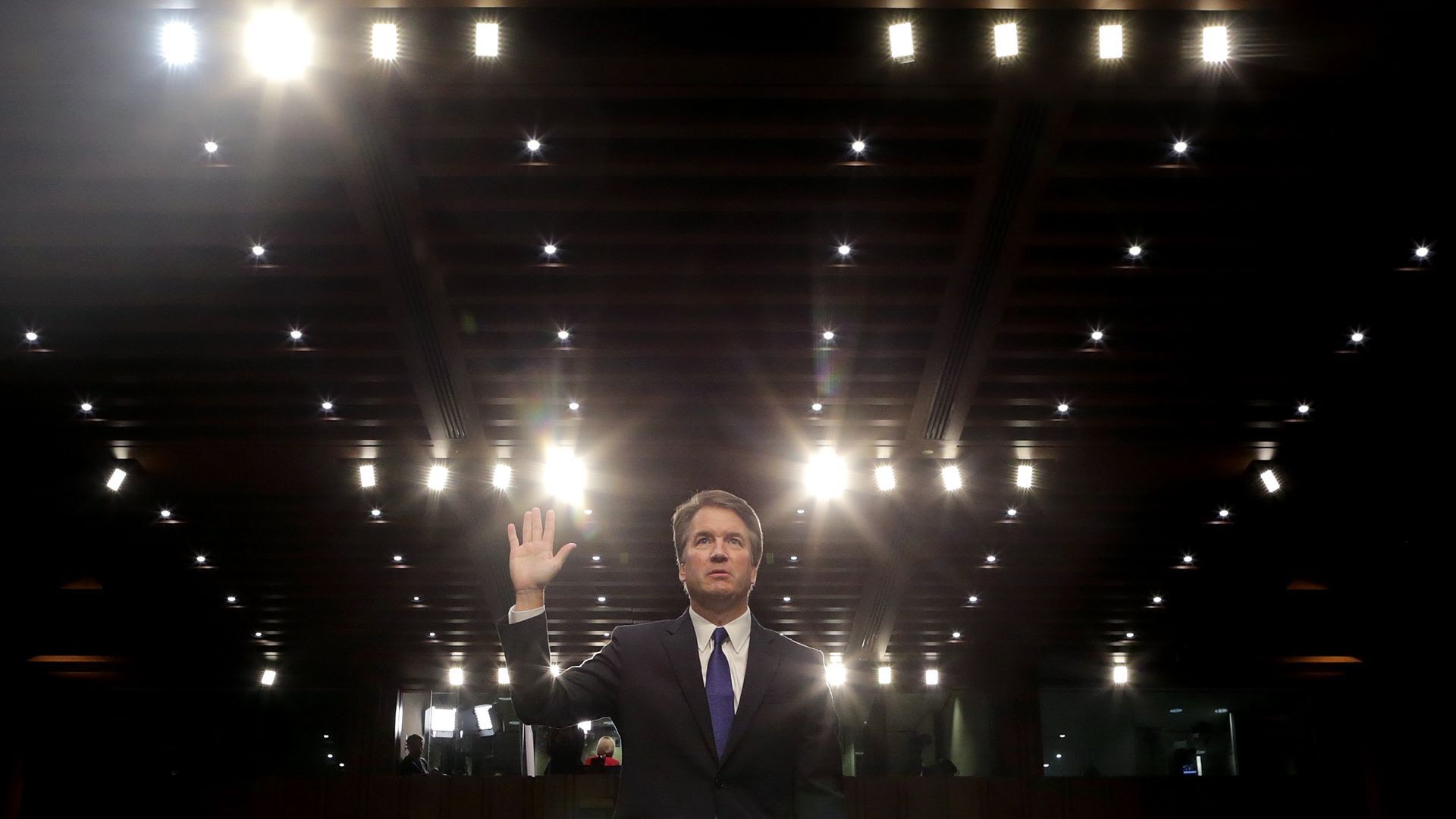
Driving the news: A federal district judge in Texas will hear oral arguments this morning on red states’ latest legal challenge to the ACA. At the same time, Brett Kavanaugh will be answering senators’ questions about his nomination to the Supreme Court.