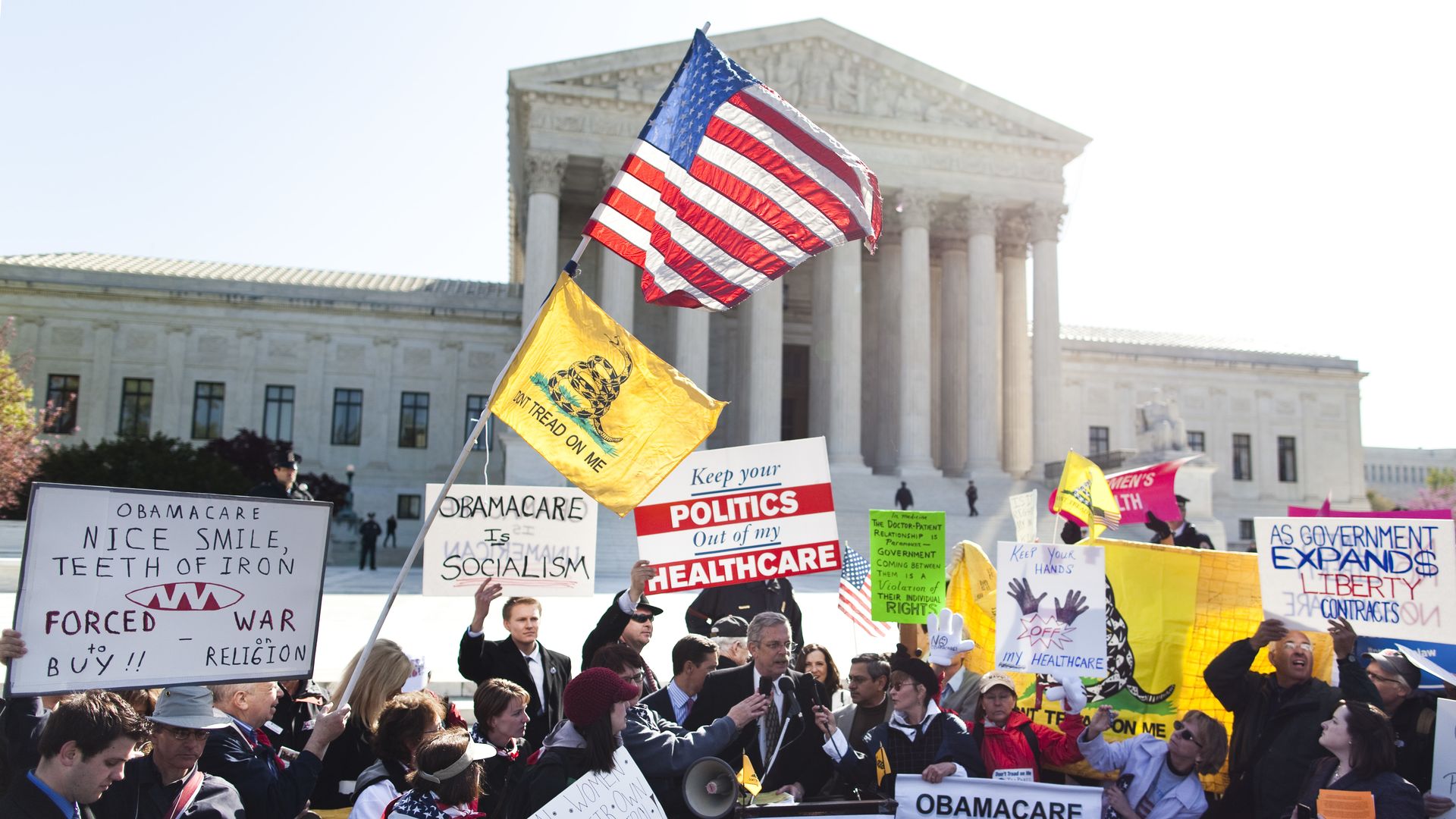
The Justice Department will not defend the Affordable Care Act in court, and says it believes the law's individual mandate — the provision the Supreme Court upheld in 2012 — has become unconstitutional.
Why it matters: The Justice Department almost always defends federal laws when they're challenged in court. Its departure from that norm in this case is a major development — career DOJ lawyers removed themselves from the case as the department announced this shift in its position.
The Trump administration has released a series of four public service advertisements designed to highlight the dangers of opioid addiction, described to Axios last week as having a "shock the conscience" rawness.
The details: The ads, featuring the true stories of four Americans, graphically illustrate the lengths young people saddled with an opioid addiction have gone to in order to obtain more prescription drugs, including breaking one's own bones and purposefully crashing a car.
Now that Jonathan Bush is out at Athenahealth, the health tech company he co-founded, expect an intense bidding war.
The big picture: The revelations of Bush's assault on his ex-wife and allegations of inappropriate sexual behavior at work tipped the scales for his ouster, all while Paul Singer's hedge fund was breathing down Athenahealth's neck. Even though the company has underwhelmed its investors, its cloud-based technology and data in the rapidly digitizing health care system are extremely appealing to a wide range of suitors.
The next great health care war is already starting. It’ll be about costs this time, not coverage, and Democrats are the ones firing the first shots — though neither party has a complete strategy just yet.
Why it matters: After a bruising, decade-long fight over the Affordable Care Act, plenty of candidates and lawmakers would love to keep their distance from the politics of health care. But the issue is so personal, and the system is so dysfunctional, that may be impossible.
Last night's primaries set up a major role for health care in November’s midterms, both in individual races and as a part of Democrats’ search for a nationwide wave.
The bottom line: The results firmed up the emerging national dynamic. Health care motivates Democrats more than Republicans, and Democrats are moving left on the issue. Advocates for single-payer or "Medicare for All" (whatever that ends up meaning) aren’t running the table, but they continue to win important primaries.
It’s a practice that has not received much attention, but some employers have moved to "progressive," or wage-related, health benefits in recent years. That's where their lower wage employees pay a smaller share of insurance premiums, deductibles or health account contributions than higher-wage employees do.
Why it matters: Unlike consumers in the Affordable Care Act marketplaces, lower wage workers in the far larger group market don’t get any help with premiums or cost sharing. With premiums and deductibles rising and wage growth stubbornly flat, progressive benefits are one way for employers to help their low wage employees with their health care costs.



/2018/06/06/1528316385170.gif?w=3840)