The White House has walked back its plan to cut $252 million in leftover funding from the Obama administration to curb the Ebola virus in Africa, the AP reports.
Why it matters: There has recently been an Ebola outbreak in the Democratic Republic of the Congo. The White House said last week the USAID has contributed up to $8 million to combat the Ebola outbreak, including $5 million allocated from the Secretary of State.
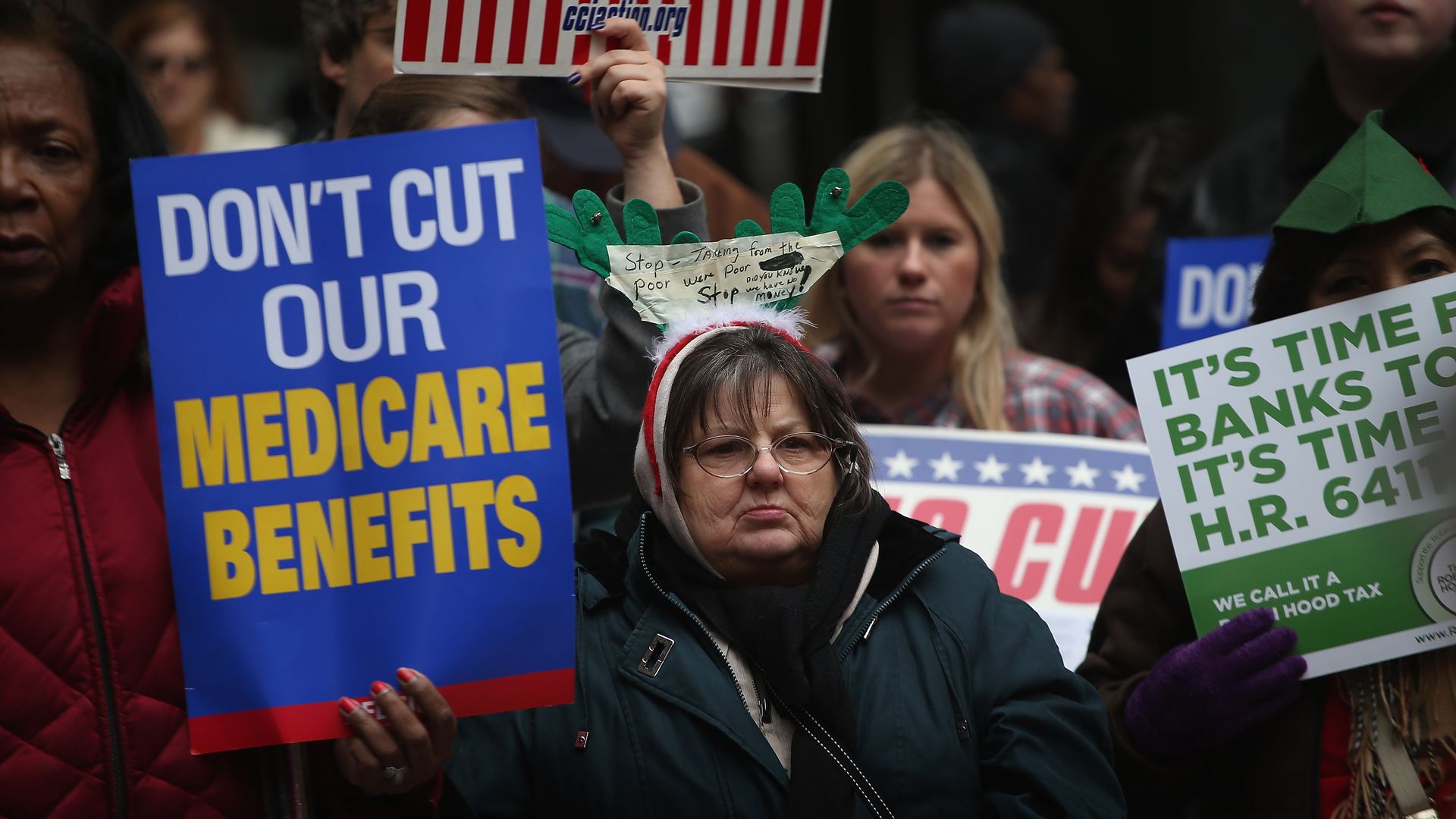
Medicare's primary fund is expected to be depleted by 2026, three years earlier than health care officials expected last year, per the 2018 report from Medicare's trustees.
Why it matters: More than 58 million seniors and disabled people rely on Medicare to get health care services. But a dwindling and aging tax base, higher payments to providers and health insurers, and overall high health care prices could result in fewer covered hospital bills for Medicare enrollees in the not-too-distant future.
Two more states have released proposed rates for the next year of Affordable Care Act coverage and, no surprise, they’re all pretty steep.
The details: Insurers in Washington state’s individual market are seeking a 19% increase, on average, the state said yesterday. Specific insurers’ hikes range from less than 1% up to nearly 30%. In New York, the average proposed increase is 24%.
A Maine court ordered the state on Monday to start expanding Medicaid, a move that was approved by voters last year but blocked by the state’s Republican Governor Paul LePage. Maine has until June 11 to submit a detailed expansion plan.
Why it matters: The ruling shows that popular votes for Medicaid expansion matter — and that Republican governors can’t just choose to ignore them. Meanwhile, the expansion will allow roughly 70,000 people to get health care. Maine is the first state to expand Medicaid through a ballot initiative.
A research team says they have developed a trial HIV vaccine that is able to neutralize dozens of strains of the virus from around the world in animals, according to a new study published in Nature Medicine Monday. The vaccine, the product of a team at the National Institutes of Allergy and Infectious Diseases (NIAID), targets a peptide in the virus' entry machinery.
Why it matters: Great strides have been made in improving the lives of those infected with the HIV virus — nearly 37 million people around the world — but researchers have been unable to develop an effective vaccine. Also, the rate of transmission remains high.
"One of the last holy grails of HIV research is the development of an HIV vaccine."
The federal government paid more money to fill fewer prescriptions in Medicare Part D between 2011 and 2015, according to a new federal report.
The bottom line: "Increasing prices for these drugs will affect beneficiaries and the government for years to come," Ed Burley, a deputy regional inspector general involved with the report, said on a podcast.
Vulnerable Senate Democrats have found a common villain: the pharmaceutical industry. They're highlighting both drug prices and the opioid epidemic as they try to make their cases to voters.
The big picture: Democrats already think health care is a strong issue for them this year, given the unpopularity of the GOP's repeal and replace effort. Opioids and drug prices both resonate deeply with voters, and some Democratic incumbents do have long track records on one or both issues.